Fortuna Claudia, Remoli Maria Elena, Rizzo Caterina, Benedetti Eleonora, Fiorentini Cristiano, Bella Antonino, Argentini Claudio, Farchi Francesca, Castilletti Concetta, Capobianchi Maria Rosaria, Zammarchi Lorenzo, Bartoloni Alessandro, Zanchetta Nadia, Gismondo Maria Rita, Nelli Luca Ceccherini, Vitale Giustina, Baldelli Franco, D'Agaro Pierlanfranco, Sodano Giuseppe, Rezza Giovanni, Venturi Giulietta
Department of Infectious Diseases, Istituto Superiore di Sanità, Rome, Italy.
National Center for Epidemiology and Health Promotion, Istituto Superiore di Sanità, Rome, Italy.
BMC Infect Dis. 2017 Mar 16;17(1):216. doi: 10.1186/s12879-017-2320-1.
Imported cases of infections due to Dengue (DENV) and Chikungunya (CHIKV) viruses and, more recently, Zika virus (ZIKV) are commonly reported among travelers returning from endemic regions. In areas where potentially competent vectors are present, the risk of autochthonous transmission of these vector-borne pathogens is relatively high. Laboratory surveillance is crucial to rapidly detect imported cases in order to reduce the risk of transmission. This study describes the laboratory activity performed by the National Reference Laboratory for Arboviruses (NRLA) at the Italian National Institute of Health in the period from July 2014 to October 2015.
Samples from 180 patients visited/hospitalized with a suspected DENV/CHIKV/ZIKV infection were sent to the NRLA from several Italian Hospitals and from Regional Reference Laboratories for Arboviruses, in agreement with the National Plan on human surveillance of vector-borne diseases. Both serological (ELISA IgM test and Plaque Reduction Neutralization Test-PRNT) and molecular assays (Real Time PCR tests, RT-PCR plus nested PCR and sequencing of positive samples) were performed.
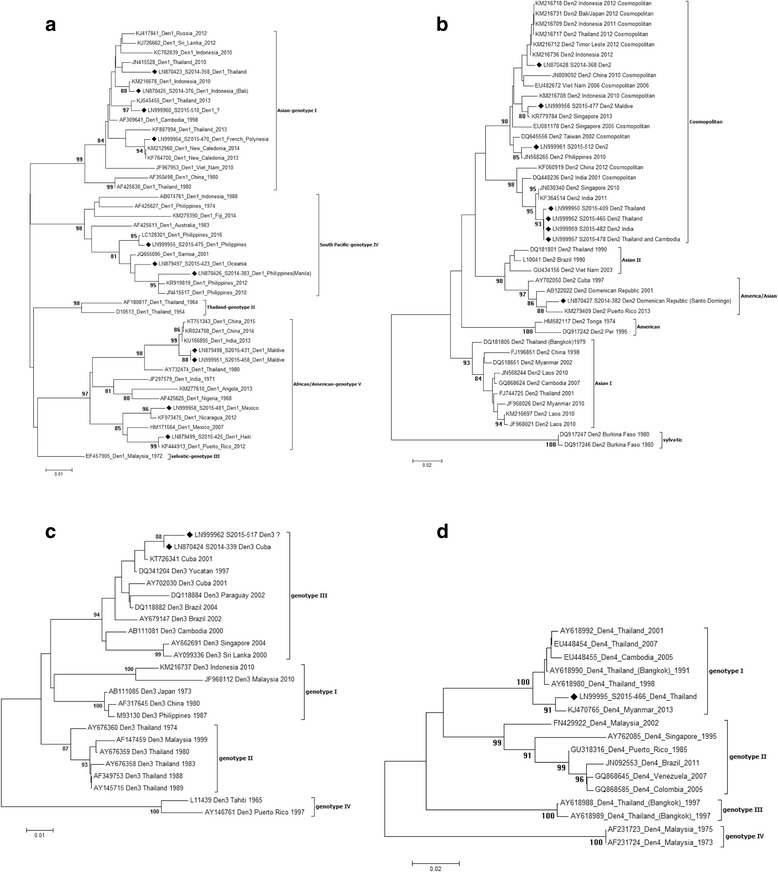
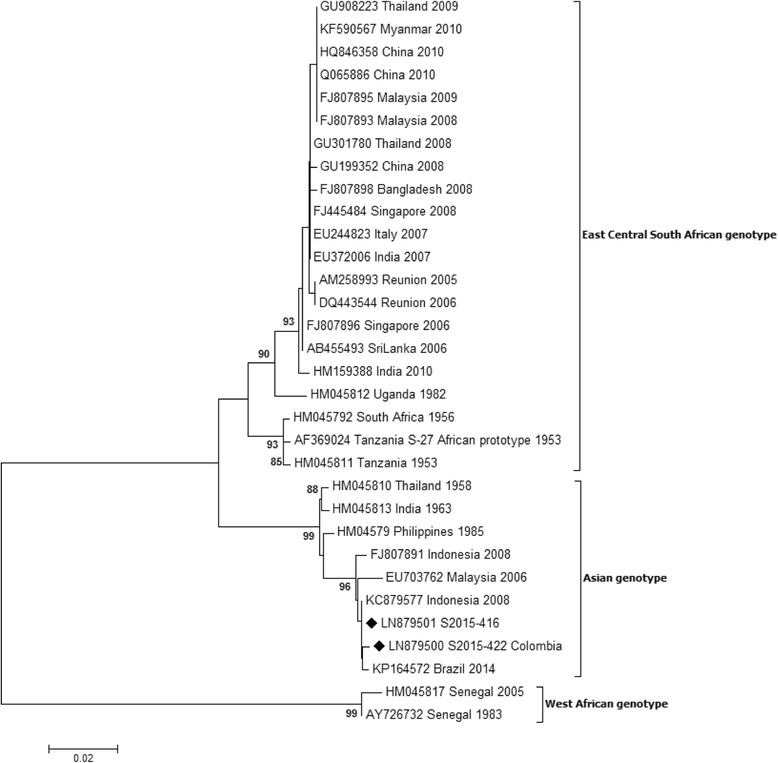
DENV infection was the most frequently diagnosed (80 confirmed/probable cases), and all four genotypes were detected. However, an increase in imported CHIKV cases (41 confirmed/probable cases) was observed, along with the detection of the first ZIKV cases (4 confirmed cases), as a consequence of the recent spread of both CHIKV and ZIKV in the Americas.
Main diagnostic issues highlighted in our study are sensitivity limitations of molecular tests, and the importance of PRNT to confirm serological results for differential diagnosis of Arboviruses. The continuous evaluation of diagnostic strategy, and the implementation of laboratories networks involved in surveillance activities is essential to ensure correct diagnosis, and to improve the preparedness for a rapid and proper identification of viral threats.
登革热病毒(DENV)、基孔肯雅病毒(CHIKV)感染的输入性病例,以及最近的寨卡病毒(ZIKV)感染病例,在从流行地区返回的旅行者中屡有报道。在存在潜在适宜媒介的地区,这些媒介传播病原体的本地传播风险相对较高。实验室监测对于快速检测输入性病例以降低传播风险至关重要。本研究描述了2014年7月至2015年10月期间,意大利国家卫生研究院的虫媒病毒国家参考实验室(NRLA)所开展的实验室活动。
根据国家虫媒传播疾病人类监测计划,来自几家意大利医院和地区虫媒病毒参考实验室的180例疑似DENV/CHIKV/ZIKV感染的就诊/住院患者样本被送至NRLA。同时进行了血清学检测(ELISA IgM检测和蚀斑减少中和试验-PRNT)和分子检测(实时PCR检测、RT-PCR加巢式PCR以及阳性样本测序)。
DENV感染是最常被诊断出的(80例确诊/疑似病例),且检测到了所有四种基因型。然而,由于CHIKV和ZIKV最近在美洲地区的传播,观察到输入性CHIKV病例有所增加(41例确诊/疑似病例),同时还检测到了首例ZIKV病例(4例确诊病例)。
我们的研究中突出的主要诊断问题是分子检测的灵敏度限制,以及PRNT对于确认血清学结果以进行虫媒病毒鉴别诊断的重要性。持续评估诊断策略以及实施参与监测活动的实验室网络,对于确保正确诊断以及提高快速准确识别病毒威胁的准备工作至关重要。