Ng R, Carbon J
Department of Biological Sciences, University of California, Santa Barbara 93106.
Mol Cell Biol. 1987 Dec;7(12):4522-34. doi: 10.1128/mcb.7.12.4522-4534.1987.
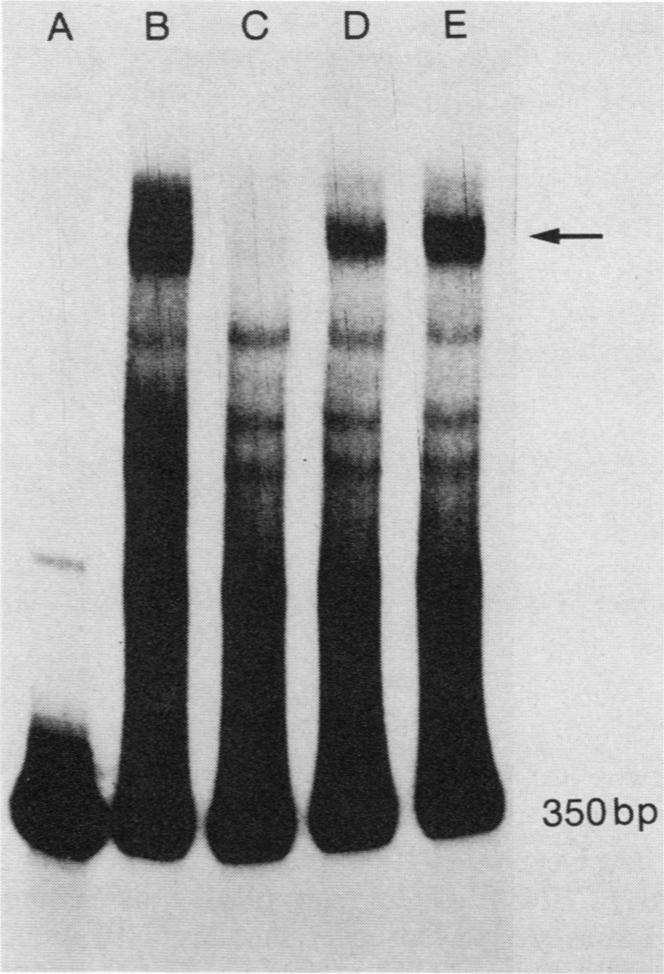
Centromeres on chromosomes in the yeast Saccharomyces cerevisiae contain approximately 140 base pairs (bp) of DNA. The functional centromere (CEN) region contains three important sequence elements (I, PuTCACPuTG; II, 78 to 86 bp of high-AT DNA; and III, a conserved 25-bp sequence with internal bilateral symmetry). Various point mutations or deletions in the element III region have a profound effect on CEN function in vivo, indicating that this DNA region is a key protein-binding site. This has been confirmed by the use of two in vitro assays to detect binding of yeast proteins to DNA fragments containing wild-type or mutationally altered CEN3 sequences. An exonuclease III protection assay was used to demonstrate specific binding of proteins to the element III region of CEN3. In addition, a gel DNA fragment mobility shift assay was used to characterize the binding reaction parameters. Sequence element III mutations that inactivate CEN function in vivo also prevent binding of proteins in the in vitro assays. The mobility shift assay indicates that double-stranded DNAs containing sequence element III efficiently bind proteins in the absence of sequence elements I and II, although the latter sequences are essential for optimal CEN function in vivo.
酵母酿酒酵母染色体上的着丝粒含有约140个碱基对(bp)的DNA。功能性着丝粒(CEN)区域包含三个重要的序列元件(I,PuTCACPuTG;II,78至86 bp的高AT含量DNA;以及III,具有内部双侧对称的保守25 bp序列)。元件III区域中的各种点突变或缺失对体内CEN功能有深远影响,表明该DNA区域是关键的蛋白质结合位点。这已通过使用两种体外测定法得以证实,以检测酵母蛋白与含有野生型或突变改变的CEN3序列的DNA片段的结合。使用核酸外切酶III保护测定法来证明蛋白与CEN3的元件III区域的特异性结合。此外,使用凝胶DNA片段迁移率变动测定法来表征结合反应参数。在体内使CEN功能失活的序列元件III突变在体外测定中也会阻止蛋白结合。迁移率变动测定表明,尽管后两个序列对于体内最佳CEN功能至关重要,但含有序列元件III的双链DNA在不存在序列元件I和II的情况下仍能有效结合蛋白。