Easterbrook Philippa J, Roberts Teri, Sands Anita, Peeling Rosanna
aGlobal Hepatitis Programme, HIV Department, World Health OrganizationbMédecins Sans FrontièrescDepartment of Essential Medicines and Health Products, World Health Organization, Geneva, SwitzerlanddLondon School of Hygiene and Tropical Medicine, London, UK.
Curr Opin HIV AIDS. 2017 May;12(3):302-314. doi: 10.1097/COH.0000000000000370.
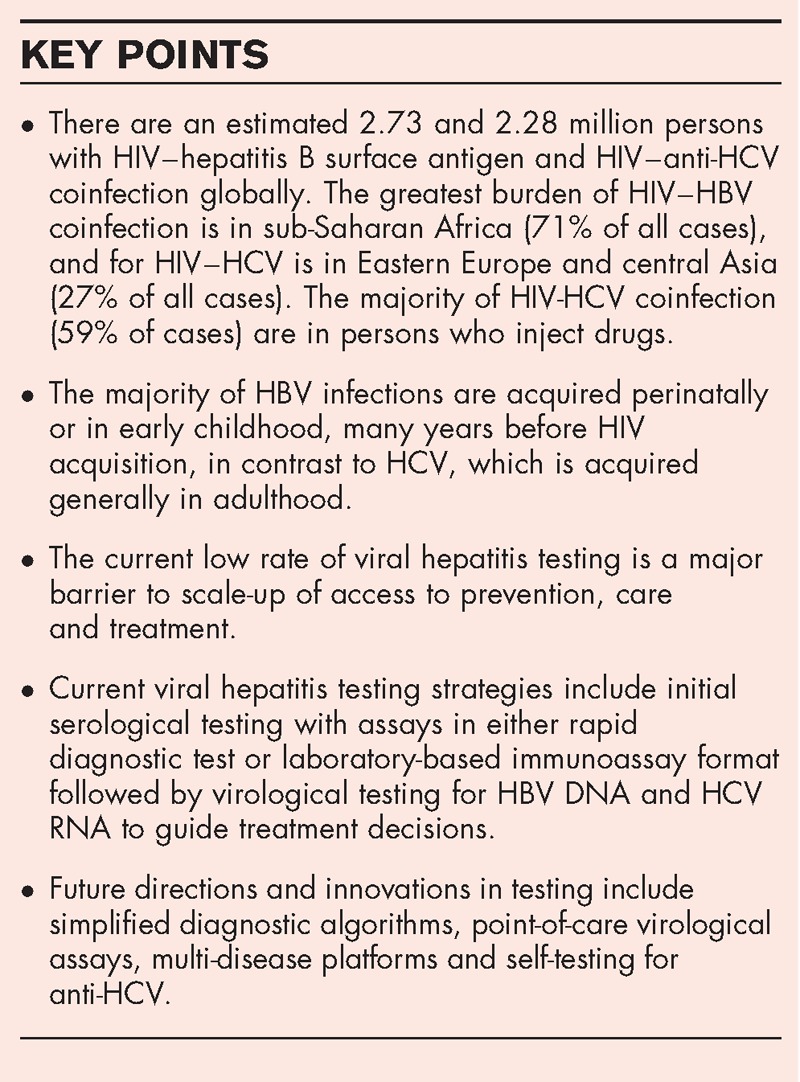
Chronic hepatitis B virus (HBV) and hepatitis C virus (HCV) infections and HIV-HBV and HCV coinfection are major causes of chronic liver disease worldwide. Testing and diagnosis is the gateway for access to both treatment and prevention services, but there remains a large burden of undiagnosed infection globally. We review the global epidemiology, key challenges in the current hepatitis testing response, new tools to support the hepatitis global response (2016-2020 Global Hepatitis Health Sector strategy, and 2017 WHO guidelines on hepatitis testing) and future directions and innovations in hepatitis diagnostics.
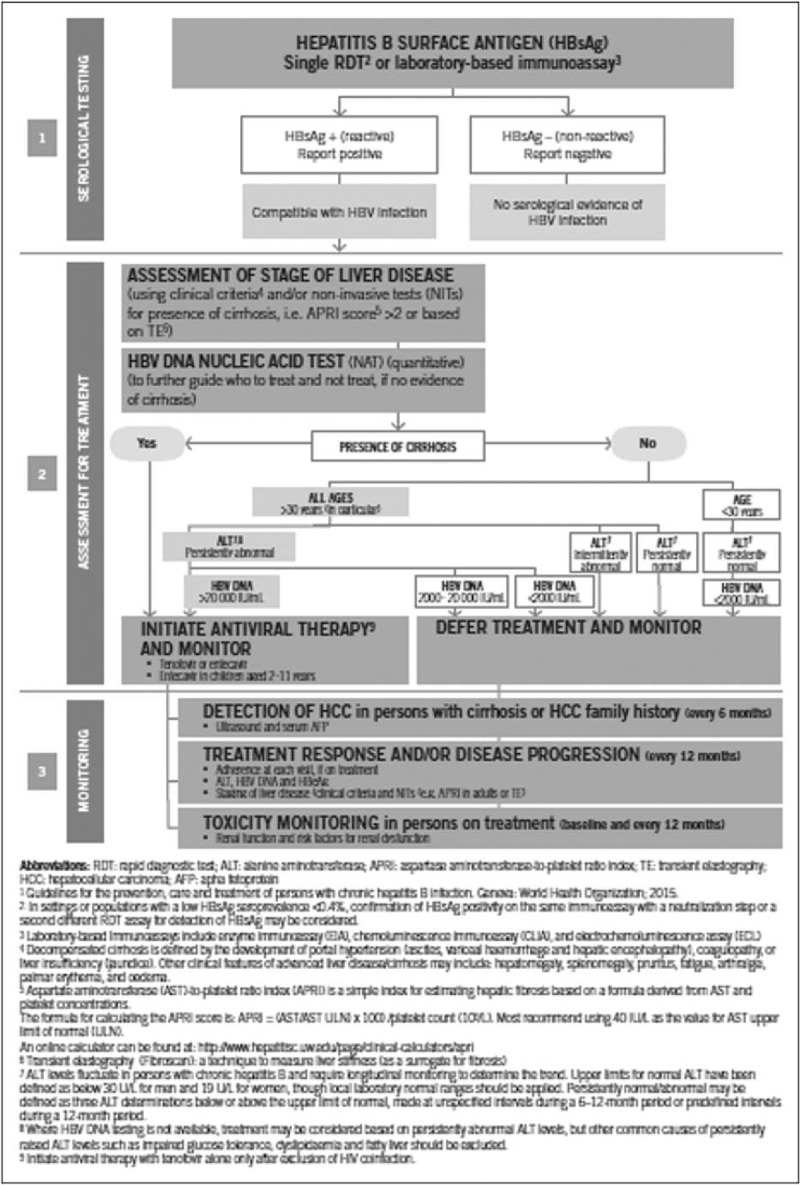
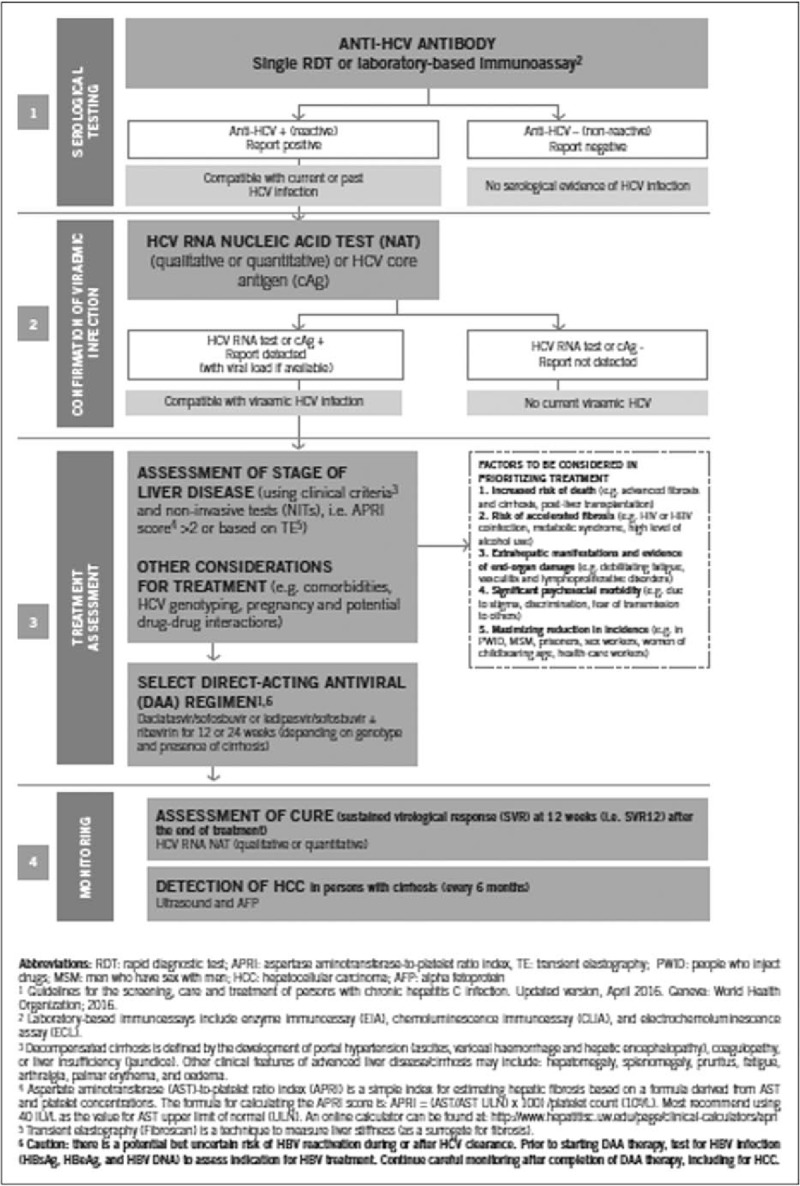
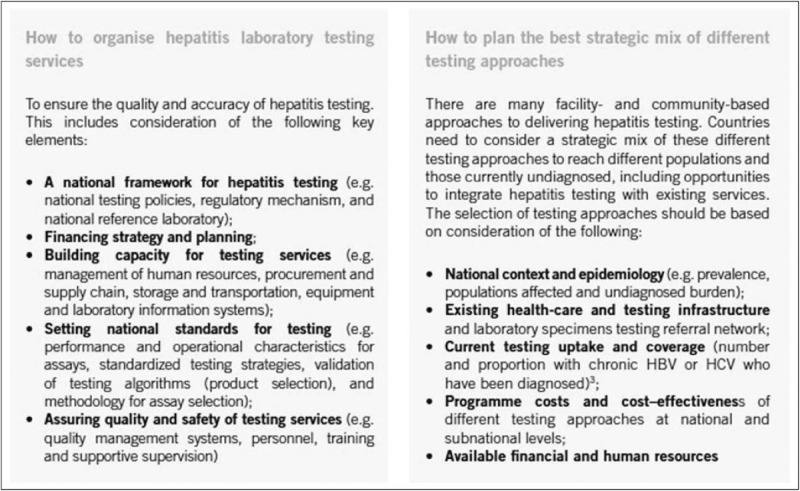
Key challenges in the current hepatitis testing response include lack of quality-assured serological and low-cost virological in-vitro diagnostics, limited facilities for testing, inadequate data to guide country-specific hepatitis testing approaches, stigmatization of those with or at risk of viral hepatitis and lack of guidelines on hepatitis testing for resource-limited settings. The new Global Hepatitis Health Sector strategy sets out goals for elimination of viral hepatitis as a public health threat by 2030 and gives outcome targets for reductions in new infections and mortality, as well as service delivery targets that include testing, diagnosis and treatment. The 2017 WHO hepatitis testing guidelines for adults, adolescents and children in low-income and middle-income countries outline the public health approach to strengthen and expand current testing practices for viral hepatitis and addresses who to test (testing approaches), which serological and virological assays to use (testing strategies) as well as interventions to promote linkage to prevention and care.
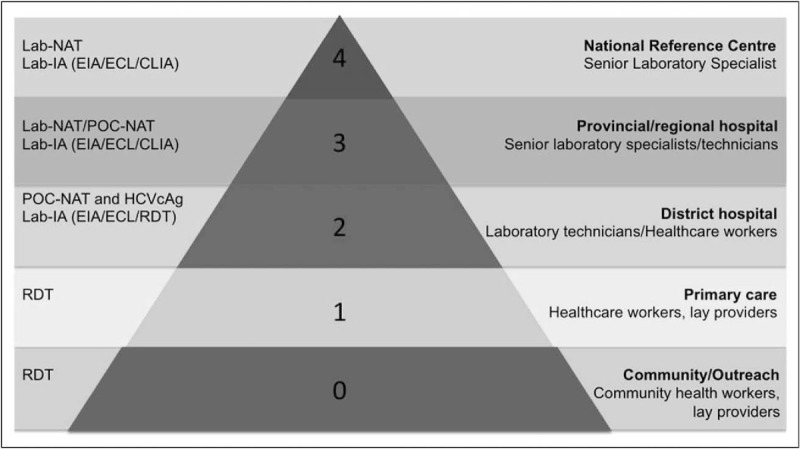
Future directions and innovations in hepatitis testing include strategies to improve access such as through use of existing facility and community-based testing opportunities for hepatitis testing, near-patient or point-of-care assays for virological markers (nucleic acid testing and HCV core antigen), dried blood spot specimens used with different serological and nucleic acid test assays, multiplex and multi-disease platforms to enable testing for multiple analytes/pathogens and potential self-testing for viral hepatitis.
慢性乙型肝炎病毒(HBV)和丙型肝炎病毒(HCV)感染以及HIV-HBV和HCV合并感染是全球慢性肝病的主要病因。检测和诊断是获得治疗和预防服务的途径,但全球仍有大量未被诊断的感染负担。我们综述了全球流行病学、当前肝炎检测应对中的关键挑战、支持肝炎全球应对的新工具(《2016-2020年全球肝炎卫生部门战略》以及2017年世界卫生组织肝炎检测指南)以及肝炎诊断的未来方向和创新。
当前肝炎检测应对中的关键挑战包括缺乏质量保证的血清学检测和低成本的病毒学体外诊断方法、检测设施有限、缺乏指导各国肝炎检测方法的数据、对病毒性肝炎患者或有感染风险者的污名化以及缺乏针对资源有限环境的肝炎检测指南。新的《全球肝炎卫生部门战略》设定了到2030年消除病毒性肝炎作为公共卫生威胁的目标,并给出了减少新感染和死亡率的结果目标,以及包括检测、诊断和治疗在内的服务提供目标。2017年世界卫生组织针对低收入和中等收入国家成人、青少年和儿童的肝炎检测指南概述了加强和扩大当前病毒性肝炎检测实践的公共卫生方法,并涉及检测对象(检测方法)、使用哪些血清学和病毒学检测方法(检测策略)以及促进与预防和护理相联系的干预措施。
肝炎检测的未来方向和创新包括改善可及性的策略,如通过利用现有的设施和基于社区的肝炎检测机会、用于病毒学标志物(核酸检测和HCV核心抗原)的近患者或即时检测方法、与不同血清学和核酸检测方法一起使用的干血斑标本、用于检测多种分析物/病原体的多重和多病种平台以及病毒性肝炎的潜在自我检测。