Grigsby-Toussaint Diana S, Shin Jong Cheol, Reeves Dayanna M, Beattie Ariana, Auguste Evan, Jean-Louis Girardin
Department of Kinesiology and Community Health, Division of Nutritional Sciences, University of Illinois Urbana Champaign, United States.
Department of Kinesiology and Community Health, University of Illinois-Urbana Champaign, United States.
Prev Med Rep. 2017 Feb 21;6:126-129. doi: 10.1016/j.pmedr.2017.02.018. eCollection 2017 Jun.
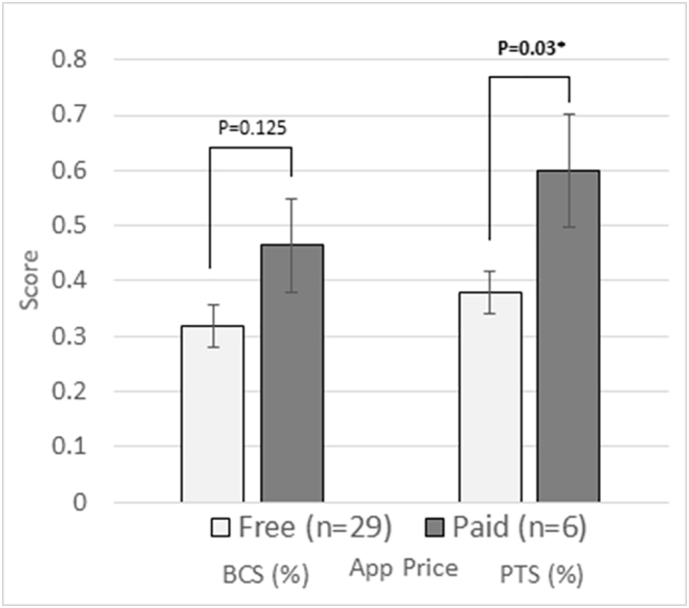
Although sleep apps are among the most popular commercially available health apps, little is known about how well these apps are grounded in behavioral theory. Three-hundred and sixty-nine apps were initially identified using the term "sleep" from the Google play store and Apple iTunes in September 2015. The final sample consisted of 35 apps that met the following inclusion criteria: 1) Stand-alone functionality; 2) Sleep tracker or monitor apps ranked by 100 + users; 3) Sleep Alarm apps ranked by 1000 + users; and 4) English language. A coding instrument was developed to assess the presence of 19 theoretical constructs. All 35 apps were downloaded and coded. The inter-rater reliability between coders was 0.996. A "1" was assigned if a construct was present in the app and "0" if it was not. Mean scores were calculated across all apps, and comparisons were made between total scores and app ratings using R. The mean behavior construct scores (BCS) across all apps was 34% (5% - 84%). Behavioral constructs for realistic goal setting (86%), time management (77%), and self-monitoring (66%) were most common. Although a positive association was observed between BCS and user ratings, this was not found to be statistically significant ( > 0.05). The mean persuasive technology score was 42% (20% to 80%), with higher scores for paid compared to free apps ( < 0.05). While the overall behavior construct scores were low, an opportunity exists to develop or modify existing apps to support sustainable sleep hygiene practices.
尽管睡眠应用程序是市面上最受欢迎的健康应用程序之一,但对于这些应用程序在行为理论方面的基础有多扎实,人们却知之甚少。2015年9月,通过在谷歌应用商店和苹果应用商店中使用“睡眠”一词,初步识别出369个应用程序。最终样本包括35个符合以下纳入标准的应用程序:1)独立功能;2)被100多名用户排名的睡眠追踪器或监测器应用程序;3)被1000多名用户排名的睡眠闹钟应用程序;4)英语语言。开发了一种编码工具来评估19种理论结构的存在情况。下载并对所有35个应用程序进行编码。编码人员之间的评分者间信度为0.996。如果应用程序中存在某个结构,则赋值为“1”,否则赋值为“0”。计算所有应用程序的平均得分,并使用R对总分与应用程序评级进行比较。所有应用程序的平均行为结构得分(BCS)为34%(5%-84%)。现实目标设定(86%)、时间管理(77%)和自我监测(66%)的行为结构最为常见。尽管观察到BCS与用户评级之间存在正相关,但未发现具有统计学意义(>0.05)。平均说服技术得分为42%(20%至80%),付费应用程序的得分高于免费应用程序(<0.05)。虽然总体行为结构得分较低,但仍有机会开发或修改现有应用程序,以支持可持续的睡眠卫生习惯。