Han Kyuho, Jeng Edwin E, Hess Gaelen T, Morgens David W, Li Amy, Bassik Michael C
Department of Genetics, Stanford University, Stanford, California, USA.
Program in Cancer Biology, Stanford University, Stanford, California, USA.
Nat Biotechnol. 2017 May;35(5):463-474. doi: 10.1038/nbt.3834. Epub 2017 Mar 20.
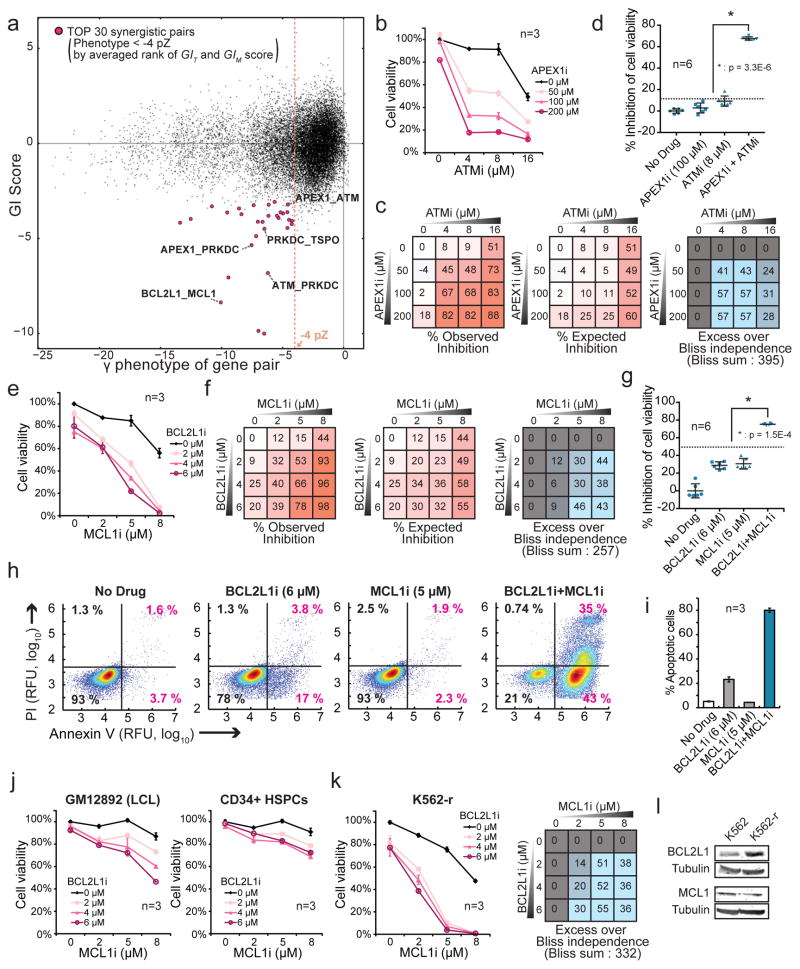
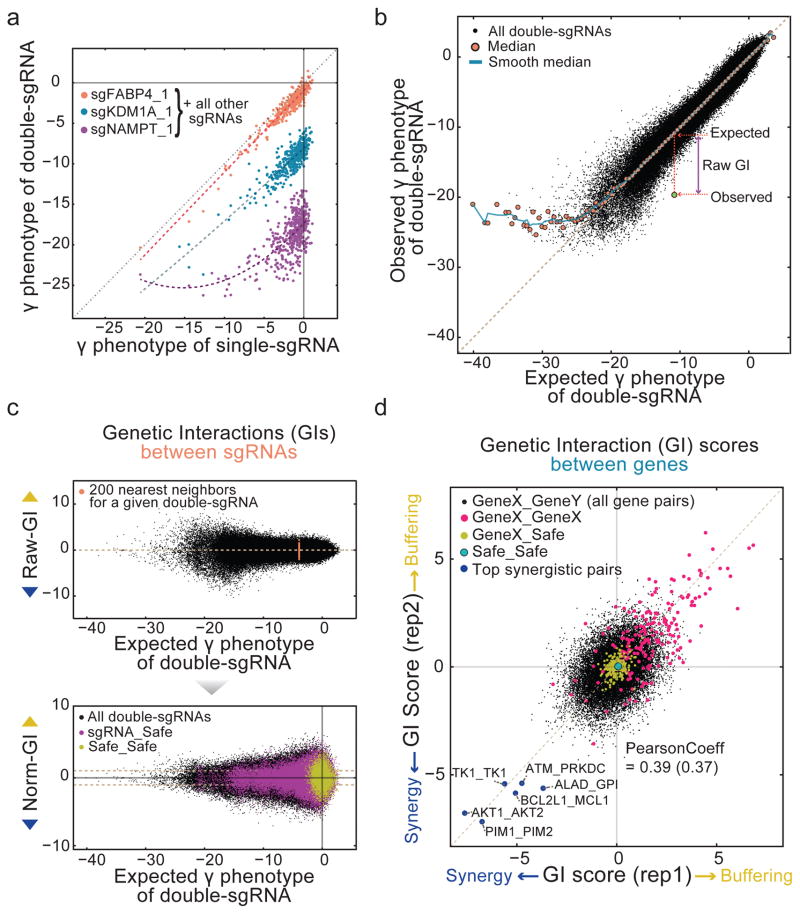
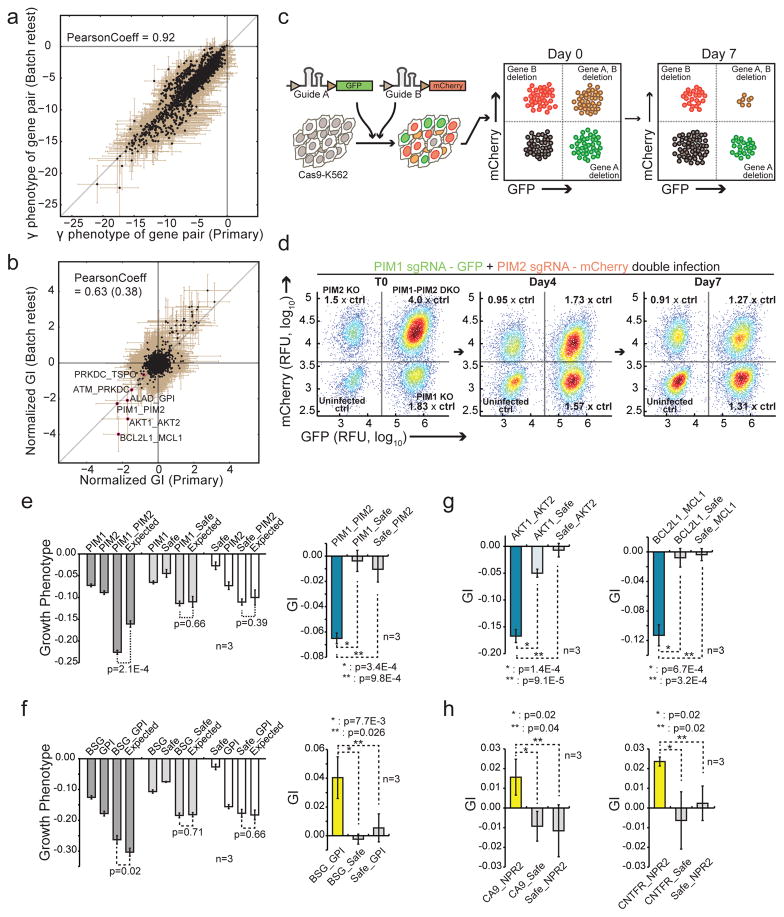
Identification of effective combination therapies is critical to address the emergence of drug-resistant cancers, but direct screening of all possible drug combinations is infeasible. Here we introduce a CRISPR-based double knockout (CDKO) system that improves the efficiency of combinatorial genetic screening using an effective strategy for cloning and sequencing paired single guide RNA (sgRNA) libraries and a robust statistical scoring method for calculating genetic interactions (GIs) from CRISPR-deleted gene pairs. We applied CDKO to generate a large-scale human GI map, comprising 490,000 double-sgRNAs directed against 21,321 pairs of drug targets in K562 leukemia cells and identified synthetic lethal drug target pairs for which corresponding drugs exhibit synergistic killing. These included the BCL2L1 and MCL1 combination, which was also effective in imatinib-resistant cells. We further validated this system by identifying known and previously unidentified GIs between modifiers of ricin toxicity. This work provides an effective strategy to screen synergistic drug combinations in high-throughput and a CRISPR-based tool to dissect functional GI networks.
确定有效的联合疗法对于应对耐药性癌症的出现至关重要,但直接筛选所有可能的药物组合是不可行的。在此,我们引入了一种基于CRISPR的双敲除(CDKO)系统,该系统使用一种有效的克隆和测序配对单导向RNA(sgRNA)文库的策略以及一种强大的统计评分方法,从CRISPR删除的基因对中计算遗传相互作用(GI),从而提高了组合遗传筛选的效率。我们应用CDKO生成了一个大规模的人类GI图谱,该图谱包含针对K562白血病细胞中21,321对药物靶点的490,000个双sgRNA,并鉴定出了相应药物表现出协同杀伤作用的合成致死药物靶点对。其中包括BCL2L1和MCL1组合,该组合在伊马替尼耐药细胞中也有效。我们通过鉴定蓖麻毒素毒性调节剂之间已知和先前未鉴定的GI,进一步验证了该系统。这项工作提供了一种在高通量中筛选协同药物组合的有效策略以及一种基于CRISPR的工具来剖析功能性GI网络。