Kim Byung-Soo, Lee Dong-Woo, Bae Jae-Nam, Kim Ji-Hyun, Kim Shinkyum, Kim Ki Woong, Park Jee-Eun, Cho Maeng Je, Chang Sung Man
Department of Psychiatry, Kyungpook National University School of Medicine, Daegu, Republic of Korea.
Department of Psychiatry, Inje University College of Medicine, Seoul, Republic of Korea.
Psychiatry Investig. 2017 Mar;14(2):126-135. doi: 10.4306/pi.2017.14.2.126. Epub 2017 Mar 6.
Education is expected to have an effect on differential item functioning (DIF) on the 15-item Modified Boston Naming Test in the Korean version of the Consortium to Establish a Registry for Alzheimer's Disease Assessment Packet (BNT-KC). However, no study has examined DIF in the BNT-KC.
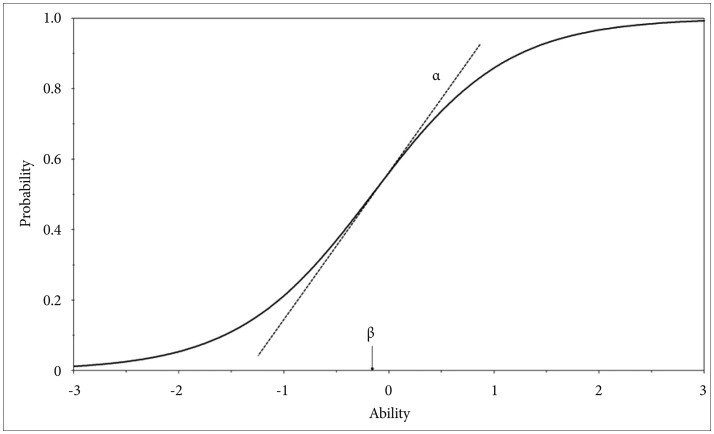
We used the item response theory to investigate the impact of education on the DIF in the BNT-KC among elderly individuals with or without dementia (n=720). A two-parameter item response model was used to determine the difficulty and discrimination parameters of each item. The Benjamini-Hochberg procedure was used to address the risk of Type I errors on multiple testing.
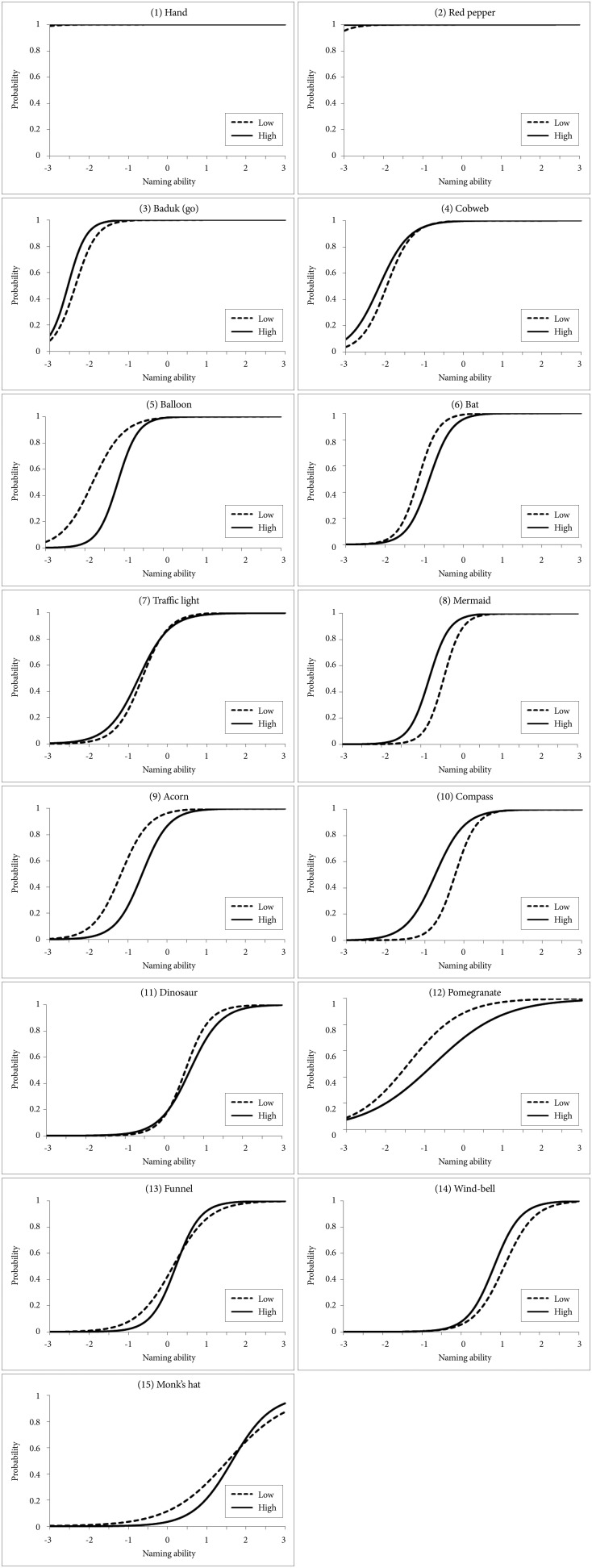
Four items, "mermaid," "acorn," "compass," and "pomegranate" continued to demonstrate DIF after controlling for multiple comparisons. Those with low education levels were more likely to error on "mermaid" and "compass," while those with high education levels were more likely to error on "acorn" and "pomegranate." "Hand" and "red pepper" were too easily identified to be used for detecting dementia patients. "Monk's hat" and "pomegranate" were less discriminating than other items, limiting their usefulness in clinical setting.
These findings may provide useful information for the development of a revised version of the BNT-KC to help clinicians make diagnostic decisions more accurately.
在韩国版阿尔茨海默病评估包注册联盟(BNT-KC)的15项改良波士顿命名测试中,教育预计会对项目功能差异(DIF)产生影响。然而,尚无研究对BNT-KC中的DIF进行考察。
我们运用项目反应理论,研究教育对患有或未患有痴呆症的老年人(n = 720)的BNT-KC中DIF的影响。采用两参数项目反应模型来确定每个项目的难度和区分度参数。使用Benjamini-Hochberg程序来处理多重检验中的I型错误风险。
在控制多重比较后,“美人鱼”“橡子”“指南针”和“石榴”这四个项目仍显示出DIF。教育水平低的人在“美人鱼”和“指南针”上更容易出错,而教育水平高的人在“橡子”和“石榴”上更容易出错。“手”和“红辣椒”太容易识别,无法用于检测痴呆患者。“僧帽”和“石榴”的区分度低于其他项目,限制了它们在临床环境中的实用性。
这些发现可能为BNT-KC修订版的开发提供有用信息,以帮助临床医生更准确地做出诊断决策。