Próspero André G, Quini Caio C, Bakuzis Andris F, Fidelis-de-Oliveira Patrícia, Moretto Gustavo M, Mello Fábio P F, Calabresi Marcos F F, Matos Ronaldo V R, Zandoná Ednaldo A, Zufelato Nícholas, Oliveira Ricardo B, Miranda José R A
Biosciences Institute of Botucatu, São Paulo State University, Botucatu, São Paulo, Brazil.
Physics Institute, Federal University of Goiás, Goiânia, Goiás, Brazil.
J Nanobiotechnology. 2017 Mar 21;15(1):22. doi: 10.1186/s12951-017-0257-6.
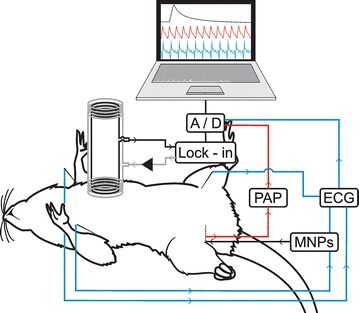
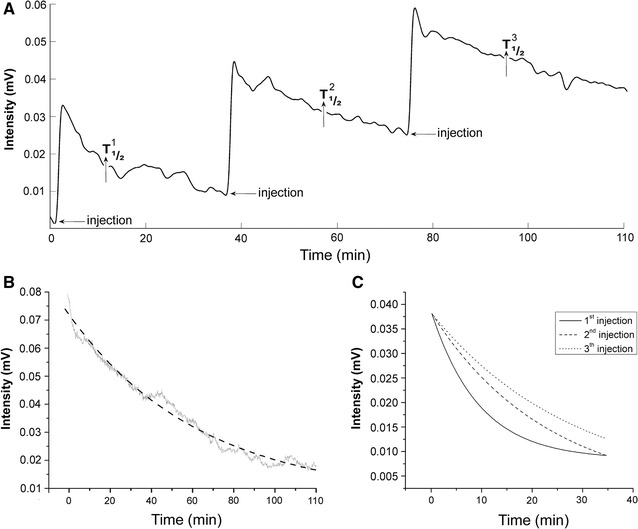
We introduce and demonstrate that the AC biosusceptometry (ACB) technique enables real-time monitoring of magnetic nanoparticles (MNPs) in the bloodstream. We present an ACB system as a simple, portable, versatile, non-invasive, and accessible tool to study pharmacokinetic parameters of MNPs, such as circulation time, in real time. We synthesized and monitored manganese doped iron oxide nanoparticles in the bloodstream of Wistar rats using two different injection protocols. Aiming towards a translational approach, we also simultaneously evaluated cardiovascular parameters, including mean arterial pressure, heart rate, and episodes of arrhythmia in order to secure the well-being of all animals.
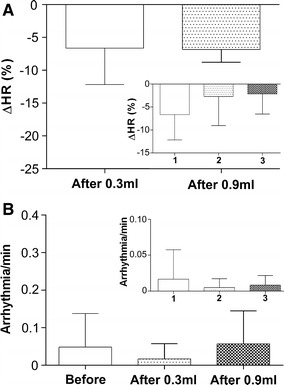
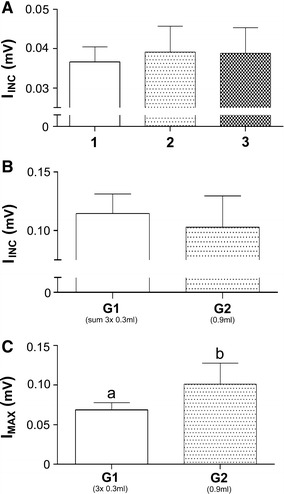
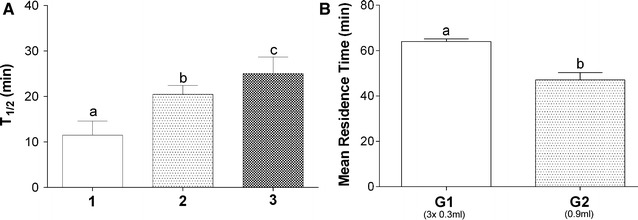
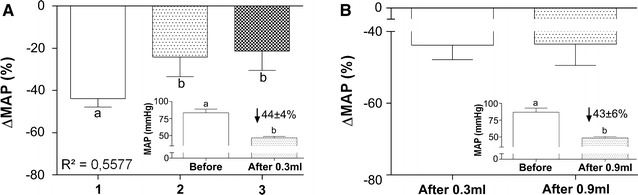
We found that serial injections increased the circulation time compared with single injections. Immediately after each injection, we observed a transitory drop in arterial pressure, a small drop in heart rate, and no episodes of arrhythmia. Although some cardiovascular effects were observed, they were transitory and easily recovered in both protocols.
These results indicate that the ACB system may be a valuable tool for in vivo, real-time MNP monitoring that allows associations with other techniques, such as pulsatile arterial pressure and electrocardiogram recordings, helping ensuring the protocol safety, which is a fundamental step towards clinical applications.
我们介绍并证明了交流生物电阻抗测量法(ACB)技术能够实时监测血流中的磁性纳米颗粒(MNP)。我们展示了一种ACB系统,它是一种简单、便携、多功能、非侵入性且易于使用的工具,可用于实时研究MNP的药代动力学参数,如循环时间。我们使用两种不同的注射方案,在Wistar大鼠的血流中合成并监测了锰掺杂的氧化铁纳米颗粒。为了实现转化应用,我们还同时评估了心血管参数,包括平均动脉压、心率和心律失常发作情况,以确保所有动物的健康。
我们发现与单次注射相比,多次注射增加了循环时间。每次注射后立即观察到动脉压短暂下降、心率小幅下降,且无心律失常发作。尽管观察到了一些心血管效应,但在两种方案中这些效应都是短暂的且易于恢复。
这些结果表明,ACB系统可能是一种用于体内实时监测MNP的有价值工具,它能够与其他技术(如脉动动脉压和心电图记录)相结合,有助于确保方案的安全性,这是迈向临床应用的关键一步。