Babukumar Sukumar, Vinothkumar Veerasamy, Sankaranarayanan Chandrasekaran, Srinivasan Subramani
a Department of Biochemistry and Biotechnology, Faculty of Science , Annamalai University , Annamalainagar , India.
Pharm Biol. 2017 Dec;55(1):1442-1449. doi: 10.1080/13880209.2017.1301494.
Geraniol, an acyclic monoterpene alcohol is found in medicinal plants, is used traditionally for several medical purposes including diabetes.
The present study evaluates the antihyperglycemic potential of geraniol on key enzymes of carbohydrate metabolism in streptozotocin (STZ)-induced diabetic rats.
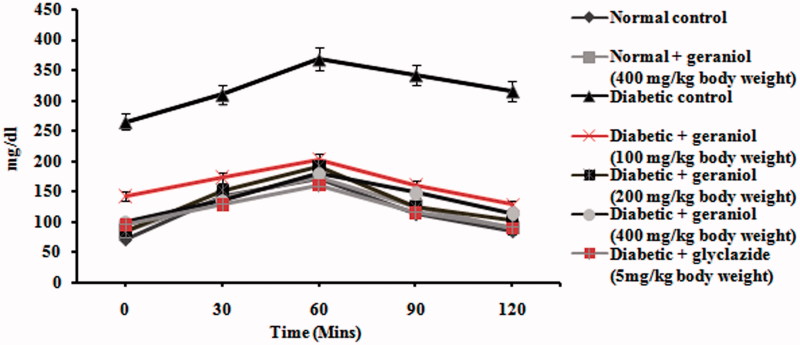
Diabetes was induced in experimental rats, by a single intraperitoneal (i.p) injection of STZ [40 mg/kg body weight (b.w.)]. Different doses of geraniol (100, 200 and 400 mg/kg b.w.) and glyclazide (5 mg/kg b.w.) were administrated orally to diabetic rats for 45 days. Body weight, food intake, plasma glucose, insulin, blood haemoglobin (Hb), glycosylated haemoglobin (HbA), hepatic glucose metabolic enzymes and glycogen were examined.
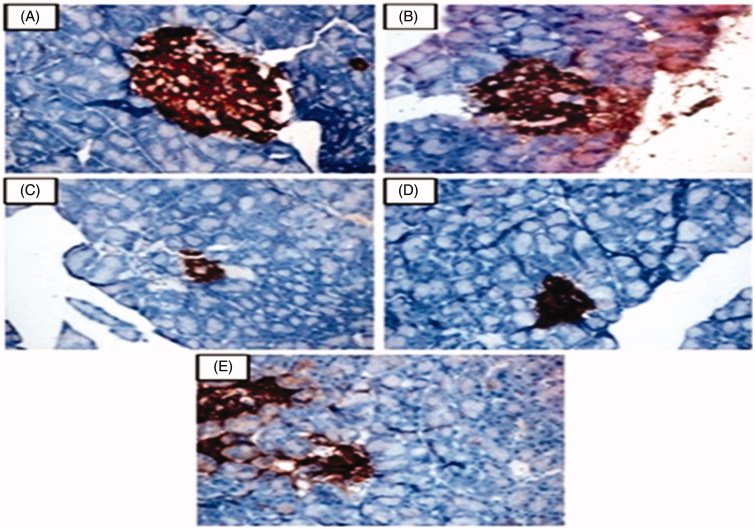
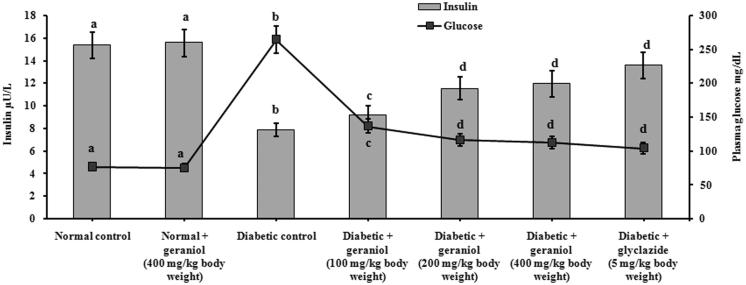
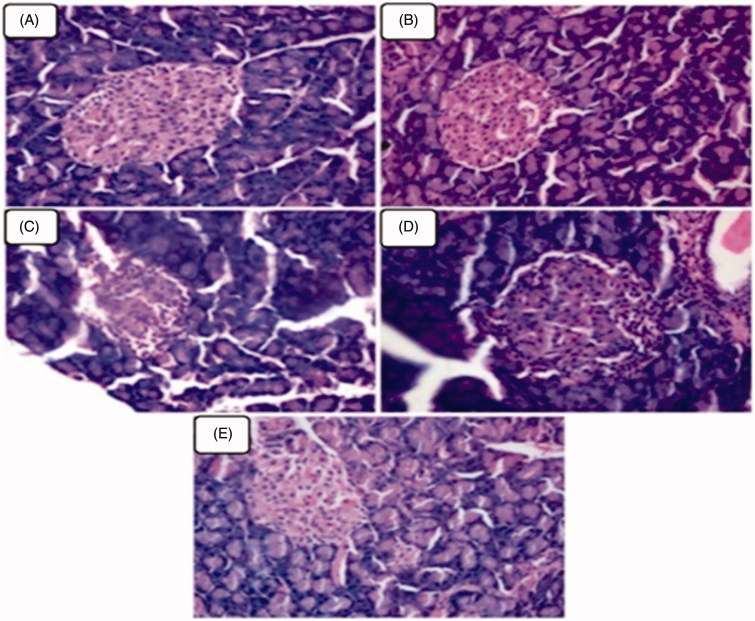
The LD value of geraniol is 3600 mg/kg b.w. at oral administration in rats. Administration of geraniol in a dose-dependent manner (100, 200, 400 mg/kg b.w.) and glyclazide (5 mg/kg b.w.) for 45 days significantly improved the levels of insulin, Hb and decreased plasma glucose, HbA in diabetic-treated rats. Geraniol at its effective dose (200 mg/kg b.w.) ameliorated the altered activities of carbohydrate metabolic enzymes near normal effects compared with two other doses (100 and 400 mg/kg b.w.). Geraniol treatment to diabetic rats improved hepatic glycogen content suggesting its anti-hyperglycemic potential. Geraniol supplement was found to preserve the normal histological appearance of hepatic cells and pancreatic β-cells in diabetic rats.
The present findings suggest that geraniol can potentially ameliorate key enzymes of glucose metabolism in experimental diabetes even though clinical studies used to evaluate this possibility are warranted.
香叶醇是一种无环单萜醇,存在于药用植物中,传统上用于多种医学用途,包括治疗糖尿病。
本研究评估香叶醇对链脲佐菌素(STZ)诱导的糖尿病大鼠碳水化合物代谢关键酶的降血糖潜力。
通过腹腔注射一次STZ(40mg/kg体重)诱导实验大鼠患糖尿病。将不同剂量的香叶醇(100、200和400mg/kg体重)和格列齐特(5mg/kg体重)口服给予糖尿病大鼠,持续45天。检测体重、食物摄入量、血浆葡萄糖、胰岛素、血红蛋白(Hb)、糖化血红蛋白(HbA)、肝脏葡萄糖代谢酶和糖原。
大鼠口服香叶醇的半数致死量为3600mg/kg体重。以剂量依赖方式(100、200、400mg/kg体重)给予香叶醇和格列齐特(5mg/kg体重)45天,显著提高了糖尿病治疗大鼠的胰岛素水平、Hb水平,并降低了血浆葡萄糖、HbA水平。与其他两个剂量(100和400mg/kg体重)相比,香叶醇有效剂量(200mg/kg体重)使碳水化合物代谢酶活性的改变接近正常水平。对糖尿病大鼠进行香叶醇治疗可提高肝脏糖原含量,表明其具有降血糖潜力。发现补充香叶醇可保持糖尿病大鼠肝细胞和胰腺β细胞的正常组织学外观。
目前的研究结果表明,香叶醇可能改善实验性糖尿病中葡萄糖代谢的关键酶,尽管仍需要进行临床研究来评估这种可能性。