Sport and Health Sciences, College of Life and Environmental Sciences, University of Exeter, Heavitree Road, Exeter, EX12LU, UK.
Sports Med. 2017 Mar;47(Suppl 1):65-78. doi: 10.1007/s40279-017-0688-0.
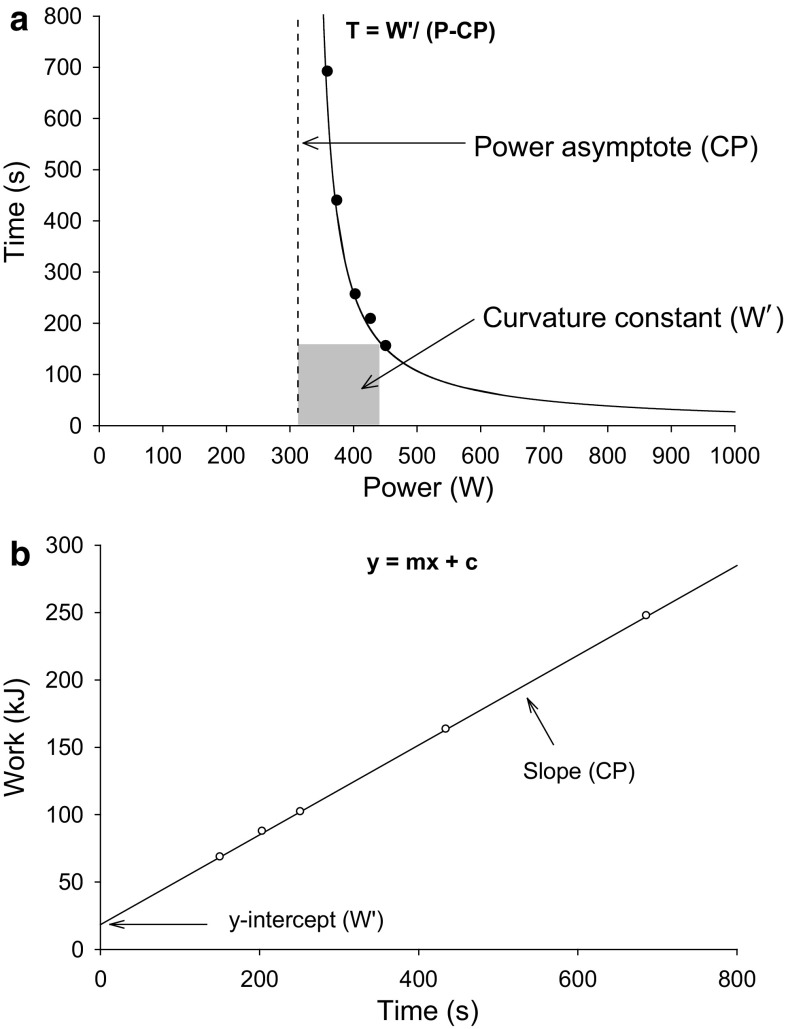
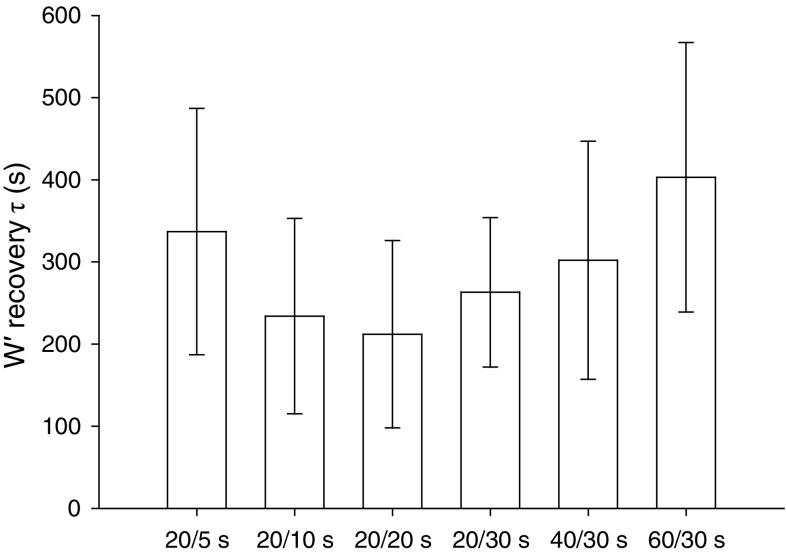
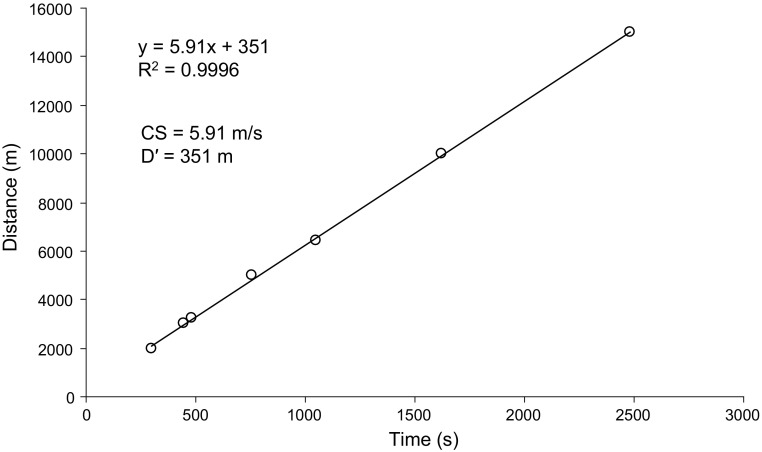
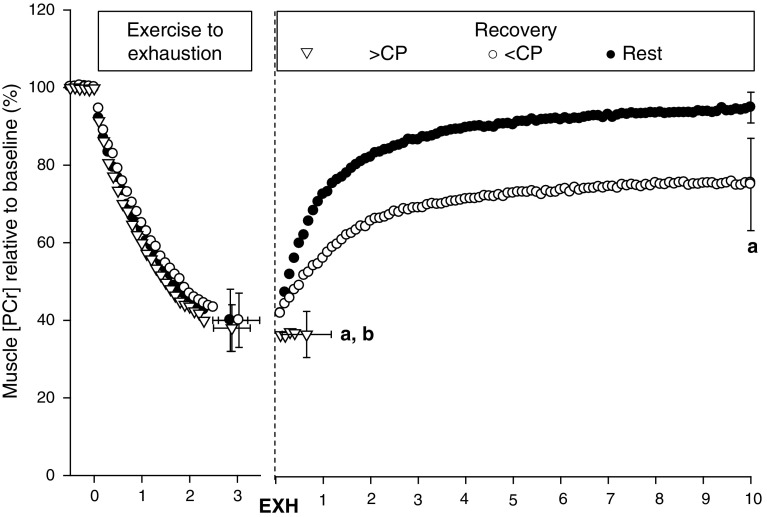
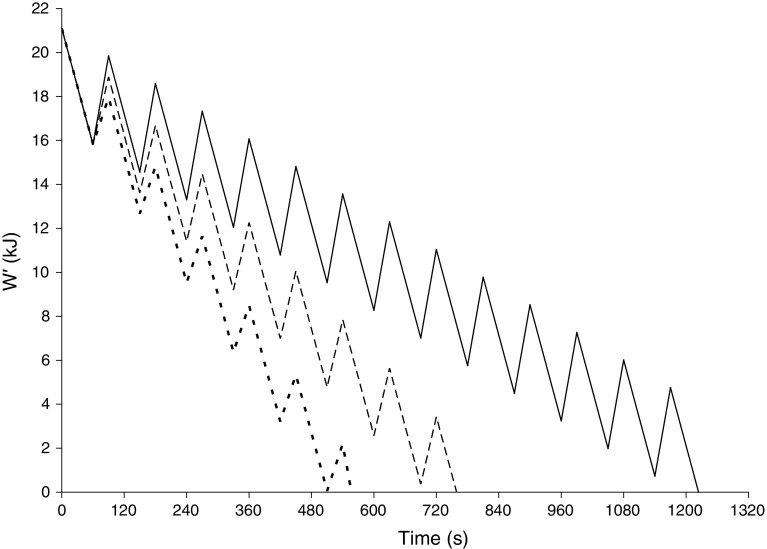
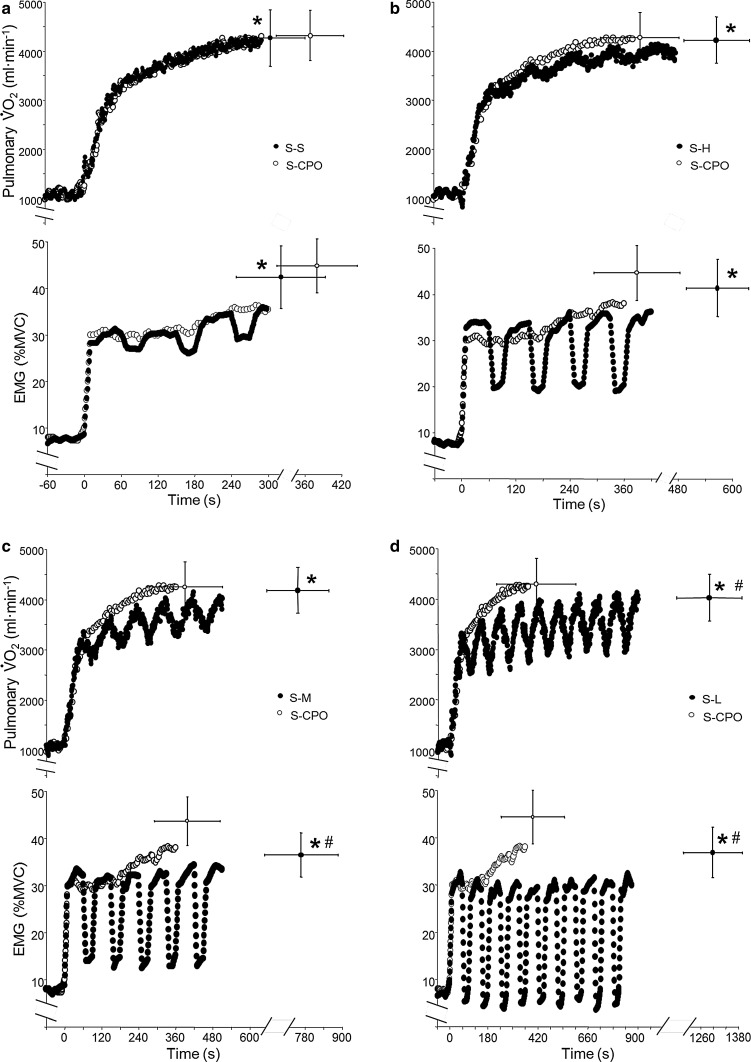
The curvilinear relationship between power output and the time for which it can be sustained is a fundamental and well-known feature of high-intensity exercise performance. This relationship 'levels off' at a 'critical power' (CP) that separates power outputs that can be sustained with stable values of, for example, muscle phosphocreatine, blood lactate, and pulmonary oxygen uptake ([Formula: see text]), from power outputs where these variables change continuously with time until their respective minimum and maximum values are reached and exercise intolerance occurs. The amount of work that can be done during exercise above CP (the so-called W') is constant but may be utilized at different rates depending on the proximity of the exercise power output to CP. Traditionally, this two-parameter CP model has been employed to provide insights into physiological responses, fatigue mechanisms, and performance capacity during continuous constant power output exercise in discrete exercise intensity domains. However, many team sports (e.g., basketball, football, hockey, rugby) involve frequent changes in exercise intensity and, even in endurance sports (e.g., cycling, running), intensity may vary considerably with environmental/course conditions and pacing strategy. In recent years, the appeal of the CP concept has been broadened through its application to intermittent high-intensity exercise. With the assumptions that W' is utilized during work intervals above CP and reconstituted during recovery intervals below CP, it can be shown that performance during intermittent exercise is related to four factors: the intensity and duration of the work intervals and the intensity and duration of the recovery intervals. However, while the utilization of W' may be assumed to be linear, studies indicate that the reconstitution of W' may be curvilinear with kinetics that are highly variable between individuals. This has led to the development of a new CP model for intermittent exercise in which the balance of W' remaining ([Formula: see text]) may be calculated with greater accuracy. Field trials of athletes performing stochastic exercise indicate that this [Formula: see text] model can accurately predict the time at which W' tends to zero and exhaustion is imminent. The [Formula: see text] model potentially has important applications in the real-time monitoring of athlete fatigue progression in endurance and team sports, which may inform tactics and influence pacing strategy.
功率输出与能够维持的时间之间的曲线关系是高强度运动表现的一个基本且众所周知的特征。这种关系在“临界功率”(CP)处“趋于平稳”,CP 将能够以稳定值维持的功率输出与例如肌肉磷酸肌酸、血液乳酸和肺摄氧量等变量随时间连续变化的功率输出区分开来([公式:见正文]),直到达到各自的最小值和最大值,并且出现运动不耐受。在 CP 以上的运动中可以完成的工作量(即所谓的 W')是恒定的,但可能会根据运动功率输出与 CP 的接近程度以不同的速率利用。传统上,这个双参数 CP 模型被用来深入了解在离散运动强度范围内的连续恒功率输出运动中的生理反应、疲劳机制和运动能力。然而,许多团队运动(如篮球、足球、曲棍球、橄榄球)涉及频繁的运动强度变化,即使在耐力运动(如骑自行车、跑步)中,强度也可能因环境/课程条件和节奏策略而有很大差异。近年来,通过将 CP 概念应用于间歇性高强度运动,其吸引力得到了扩大。假设 W' 在 CP 以上的工作间隔期间被利用,并且在 CP 以下的恢复间隔期间被重建,可以证明间歇性运动的表现与四个因素有关:工作间隔的强度和持续时间以及恢复间隔的强度和持续时间。然而,虽然可以假设 W' 的利用是线性的,但研究表明 W' 的重建可能是曲线的,其动力学在个体之间高度变化。这导致了间歇运动的新 CP 模型的发展,其中剩余的 W' 的平衡([公式:见正文])可以更准确地计算。对进行随机运动的运动员的现场试验表明,该[公式:见正文]模型可以准确预测 W' 趋于零和即将耗尽的时间。该[公式:见正文]模型在耐力和团队运动中实时监测运动员疲劳进展方面具有潜在的重要应用,这可能为战术提供信息并影响节奏策略。