Amezcua Rodolfo, Shirolkar Ajay, Fraze Carolyn, Stout David A
Department of Mechanical and Aerospace Engineering, California State University, Long Beach, Long Beach, CA 90840, USA.
Deparment of Mechanical Engineering, Brigham Young University-Idaho, Rexburg, ID 83460, USA.
Nanomaterials (Basel). 2016 Jul 19;6(7):133. doi: 10.3390/nano6070133.
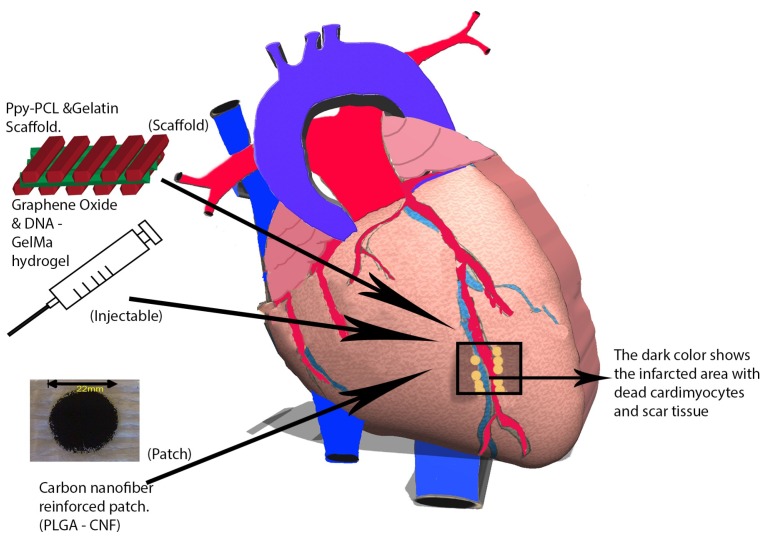
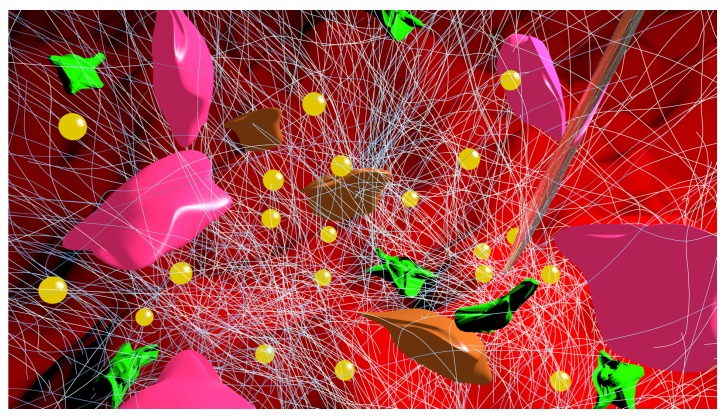
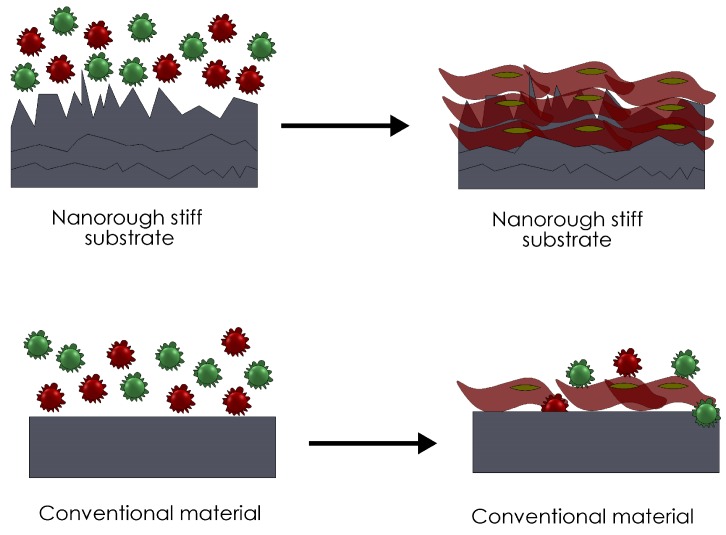
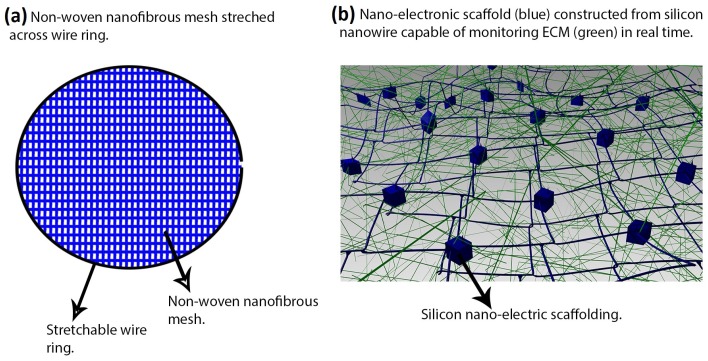
Since their synthesizing introduction to the research community, nanomaterials have infiltrated almost every corner of science and engineering. Over the last decade, one such field has begun to look at using nanomaterials for beneficial applications in tissue engineering, specifically, cardiac tissue engineering. During a myocardial infarction, part of the cardiac muscle, or myocardium, is deprived of blood. Therefore, the lack of oxygen destroys cardiomyocytes, leaving dead tissue and possibly resulting in the development of arrhythmia, ventricular remodeling, and eventual heart failure. Scarred cardiac muscle results in heart failure for millions of heart attack survivors worldwide. Modern cardiac tissue engineering research has developed nanomaterial applications to combat heart failure, preserve normal heart tissue, and grow healthy myocardium around the infarcted area. This review will discuss the recent progress of nanomaterials for cardiovascular tissue engineering applications through three main nanomaterial approaches: scaffold designs, patches, and injectable materials.
自从纳米材料被引入研究领域以来,它们几乎渗透到了科学和工程的各个角落。在过去十年中,有一个领域开始探索将纳米材料用于组织工程中的有益应用,特别是心脏组织工程。在心肌梗死期间,部分心肌(即心肌层)会失去血液供应。因此,缺氧会破坏心肌细胞,导致组织坏死,并可能引发心律失常、心室重构,最终导致心力衰竭。瘢痕化的心肌会导致全球数百万心脏病发作幸存者出现心力衰竭。现代心脏组织工程研究已经开发出纳米材料应用,以对抗心力衰竭、保护正常心脏组织,并在梗死区域周围生长健康的心肌。本综述将通过三种主要的纳米材料方法,即支架设计、贴片和可注射材料,来讨论纳米材料在心血管组织工程应用中的最新进展。