Calderón-Gonzalez Ricardo, Terán-Navarro Héctor, Frande-Cabanes Elisabet, Ferrández-Fernández Eva, Freire Javier, Penadés Soledad, Marradi Marco, García Isabel, Gomez-Román Javier, Yañez-Díaz Sonsoles, Álvarez-Domínguez Carmen
Grupo de Nanovacunas y Vaculas Celulares Basadas en Listeria y Sus Aplicaciones en Biomedicina, Instituto de Investigación Marqués de Valdecilla, Avda. Cardenal Herrera Oria S/N, 39011 Santander, Cantabria, Spain.
Servicio de Anatomía Patológica, Hospital Universitario Marqués de Valdecilla, Avda. Valdecilla 25, 39008 Santander, Cantabria, Spain.
Nanomaterials (Basel). 2016 Aug 19;6(8):151. doi: 10.3390/nano6080151.
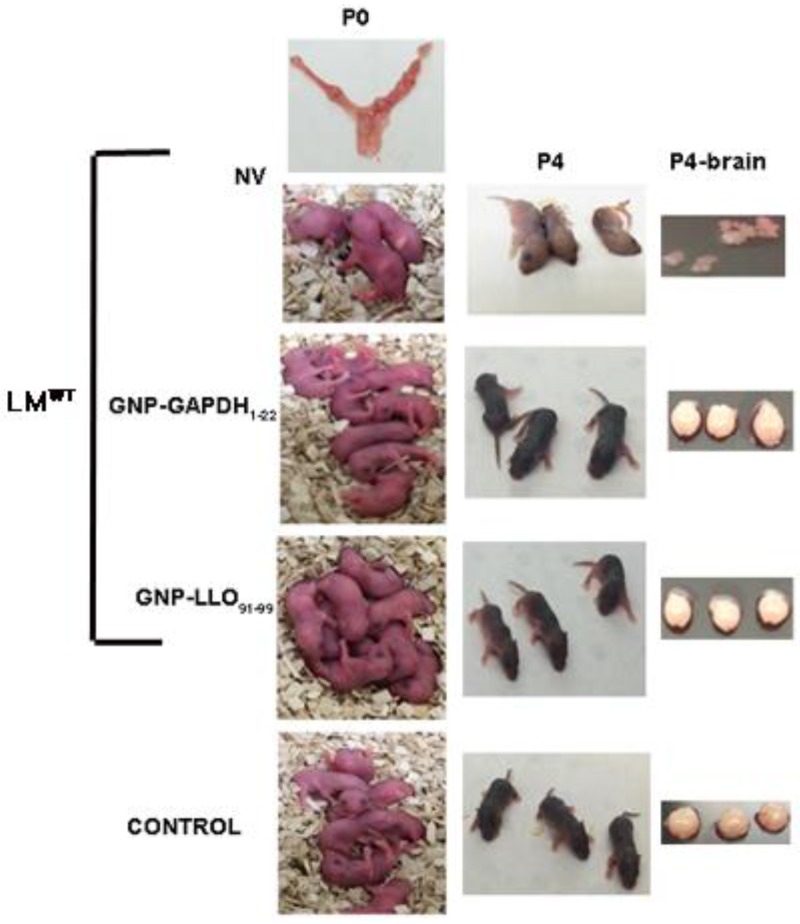
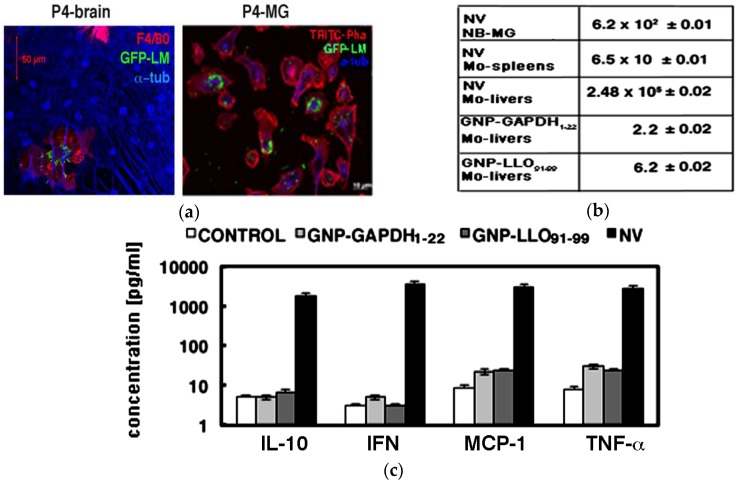
Listeriosis is a fatal infection for fetuses and newborns with two clinical main morbidities in the neonatal period, meningitis and diffused cutaneous lesions. In this study, we vaccinated pregnant females with two gold glyconanoparticles (GNP) loaded with two peptides, listeriolysin peptide 91-99 (LLO) or glyceraldehyde-3-phosphate dehydrogenase 1-22 peptide (GAPDH). Neonates born to vaccinated mothers were free of bacteria and healthy, while non-vaccinated mice presented clear brain affections and cutaneous diminishment of melanocytes. Therefore, these nanoparticle vaccines are effective measures to offer pregnant mothers at high risk of listeriosis interesting therapies that cross the placenta.
李斯特菌病对胎儿和新生儿来说是一种致命感染,在新生儿期有两种主要临床发病情况,即脑膜炎和弥漫性皮肤病变。在本研究中,我们用负载两种肽(李斯特菌溶血素肽91 - 99 (LLO)或甘油醛 - 3 - 磷酸脱氢酶1 - 22肽(GAPDH))的两种金糖纳米颗粒(GNP)对怀孕雌性动物进行免疫接种。接种疫苗的母亲所生的新生儿没有细菌感染且健康,而未接种疫苗的小鼠出现了明显的脑部病变和皮肤黑素细胞减少。因此,这些纳米颗粒疫苗是为患李斯特菌病风险高的孕妇提供能穿过胎盘的有效治疗方法的有效措施。