McAdams Ryan M, McPherson Ronald J, Kapur Raj P, Juul Sandra E
Division of Neonatology, Department of Pediatrics, University of Washington, Seattle, WA, USA.
Dev Neurosci. 2017;39(1-4):107-123. doi: 10.1159/000456658. Epub 2017 Mar 25.
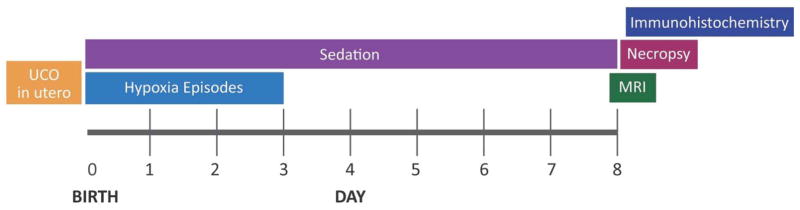
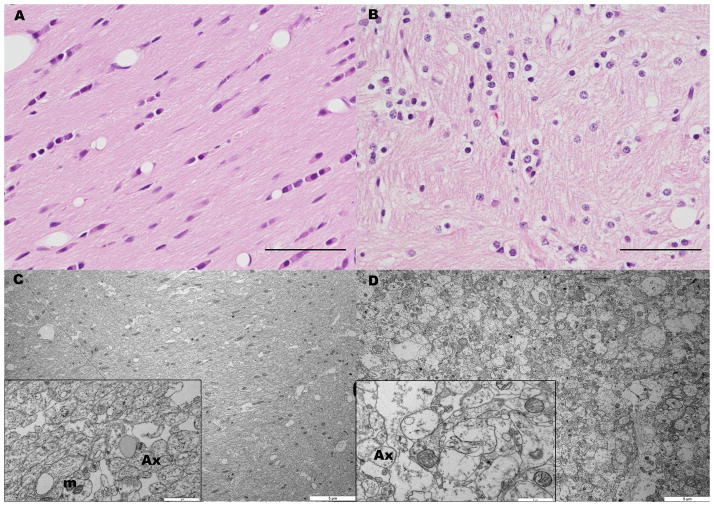
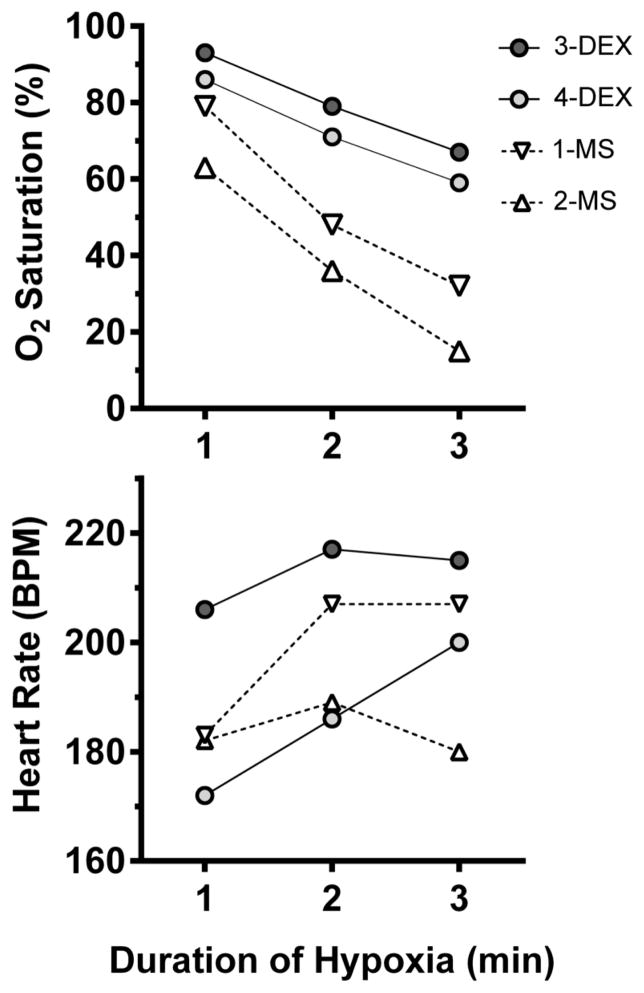
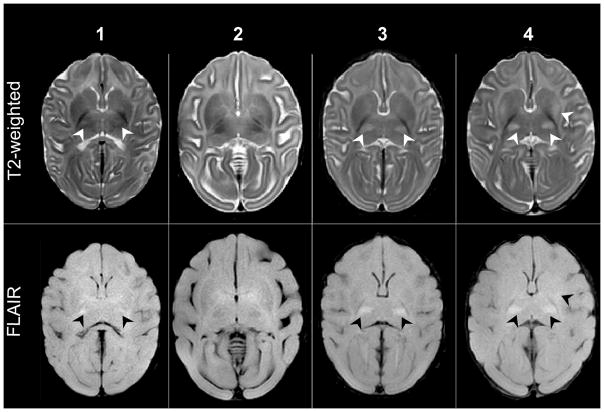
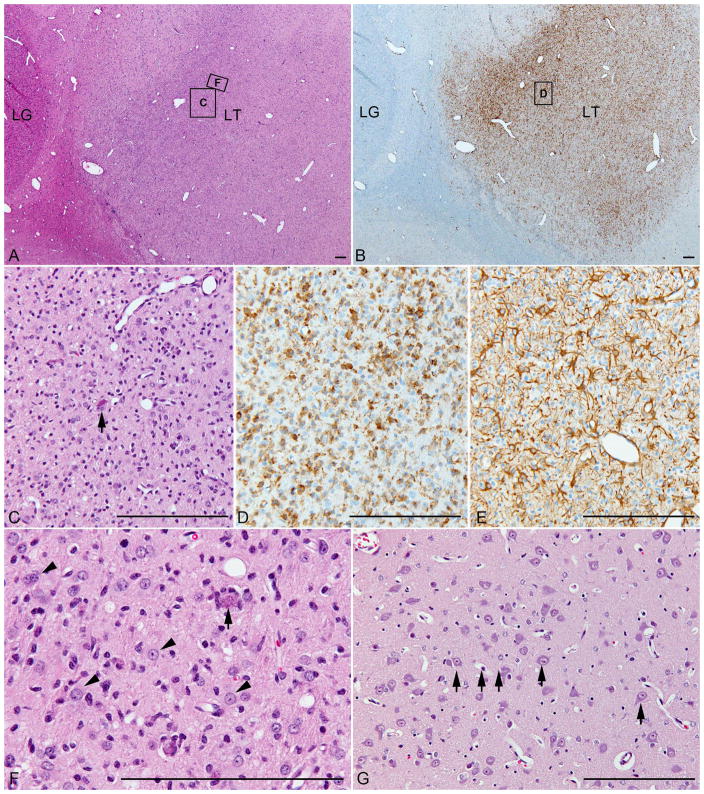
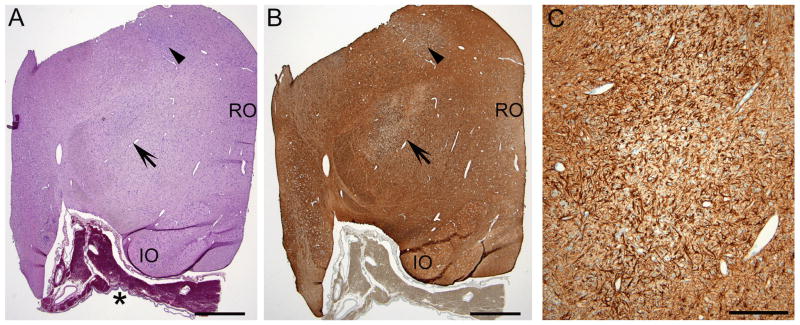
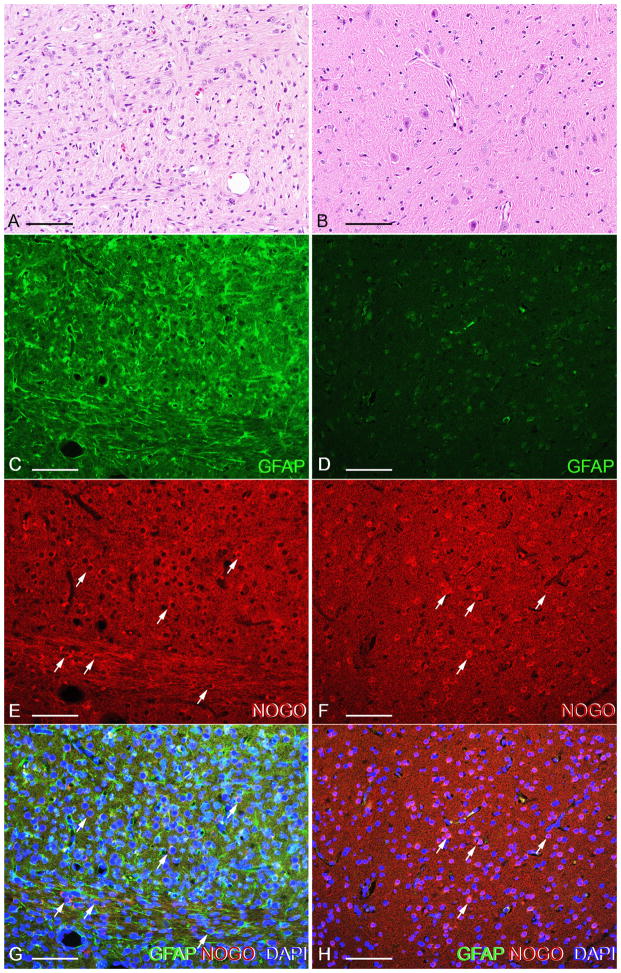
Worldwide, hypoxic-ischemic encephalopathy (HIE) is a major cause of neonatal mortality and morbidity. To better understand the mechanisms contributing to brain injury and improve outcomes in neonates with HIE, better preclinical animal models that mimic the clinical situation following birth asphyxia in term newborns are needed. In an effort to achieve this goal, we modified our nonhuman primate model of HIE induced by in utero umbilical cord occlusion (UCO) to include postnatal hypoxic episodes, in order to simulate apneic events in human neonates with HIE. We describe a cohort of 4 near-term fetal Macaca nemestrina that underwent 18 min of in utero UCO, followed by cesarean section delivery, resuscitation, and subsequent postnatal mechanical ventilation, with exposure to intermittent daily hypoxia (3 min, 8% O2 3-8 times daily for 3 days). After delivery, all animals demonstrated severe metabolic acidosis (pH 7 ± 0.12; mean ± SD) and low APGAR scores (<5 at 10 min of age). Three of 4 animals had both electrographic and clinical seizures. Serial blood samples were collected and plasma metabolites were determined by 2-dimensional gas chromatography coupled with time-of-flight mass spectrometry (GC × GC-TOFMS). The 4 UCO animals and a single nonasphyxiated animal (delivered by cesarean section but without exposure to UCO or prolonged sedation) underwent brain magnetic resonance imaging (MRI) on day 8 of life. Thalamic injury was present on MRI in 3 UCO animals, but not in the control animal. Following necropsy on day 8, brain histopathology revealed neuronal injury/loss and gliosis in portions of the ventrolateral thalamus in all 4 UCO, with 2 animals also demonstrating putamen/globus pallidus involvement. In addition, all 4 UCO animals demonstrated brain stem gliosis, with neuronal loss present in the midbrain, pons, and lateral medulla in 3 of 4 animals. Transmission electron microscopy imaging of the brain tissues was performed, which demonstrated ultrastructural white matter abnormalities, characterized by perinuclear vacuolation and axonal dilation, in 3 of 4 animals. Immunolabeling of Nogo-A, a negative regulator of neuronal growth, was not increased in the injured brains compared to 2 control animals. Using GC × GC-TOFMS, we identified metabolites previously recognized as potential biomarkers of perinatal asphyxia. The basal ganglia-thalamus-brain stem injury produced by UCO is consistent with the deep nuclear/brainstem injury pattern seen in human neonates after severe, abrupt hypoxic-ischemic insults. The UCO model permits timely detection of biomarkers associated with specific patterns of neonatal brain injury, and it may ultimately be useful for validating therapeutic strategies to treat neonatal HIE.
在全球范围内,缺氧缺血性脑病(HIE)是新生儿死亡和发病的主要原因。为了更好地理解导致脑损伤的机制并改善HIE新生儿的预后,需要更好的临床前动物模型来模拟足月儿出生窒息后的临床情况。为了实现这一目标,我们对子宫内脐带闭塞(UCO)诱导的HIE非人灵长类动物模型进行了改良,使其包括出生后的缺氧发作,以模拟患有HIE的人类新生儿的呼吸暂停事件。我们描述了一组4只近足月胎儿猕猴,它们经历了18分钟的子宫内UCO,随后进行剖宫产分娩、复苏,以及随后的出生后机械通气,并暴露于间歇性每日缺氧(3分钟,8%氧气,每天3 - 8次,持续3天)。分娩后,所有动物均表现出严重代谢性酸中毒(pH 7 ± 0.12;平均值±标准差)和低阿氏评分(10分钟龄时<5分)。4只动物中有3只出现脑电图和临床癫痫发作。采集系列血样,并通过二维气相色谱与飞行时间质谱联用(GC×GC - TOFMS)测定血浆代谢物。4只UCO动物和1只未窒息动物(通过剖宫产分娩,但未暴露于UCO或长时间镇静)在出生后第8天进行了脑磁共振成像(MRI)。3只UCO动物的MRI显示丘脑损伤,而对照动物未出现。在出生后第8天尸检后,脑组织病理学显示所有4只UCO动物的腹外侧丘脑部分存在神经元损伤/丢失和胶质细胞增生,2只动物还表现出壳核/苍白球受累。此外,所有4只UCO动物均表现出脑干胶质细胞增生,4只动物中有3只在中脑、脑桥和延髓外侧出现神经元丢失。对脑组织进行了透射电子显微镜成像,4只动物中有3只显示超微结构白质异常,其特征为核周空泡化和轴突扩张。与2只对照动物相比,损伤脑内神经元生长的负调节因子Nogo - A的免疫标记未增加。使用GC×GC - TOFMS,我们鉴定出了先前被认为是围产期窒息潜在生物标志物的代谢物。UCO导致的基底神经节 - 丘脑 - 脑干损伤与人类新生儿在严重、突然缺氧缺血性损伤后所见的深部核团/脑干损伤模式一致。UCO模型能够及时检测与新生儿脑损伤特定模式相关的生物标志物,并且它最终可能有助于验证治疗新生儿HIE的治疗策略。