Department of Cell Biology and Stem Cell Research Center, School of Basic Medical Sciences, Peking University Health Science Center, Beijing 100191, China.
Department of Endocrinology and Metabolism, Peking University People's Hospital, Peking University Diabetes Center, Beijing 100044, China.
Sci Rep. 2017 Mar 27;7:45311. doi: 10.1038/srep45311.
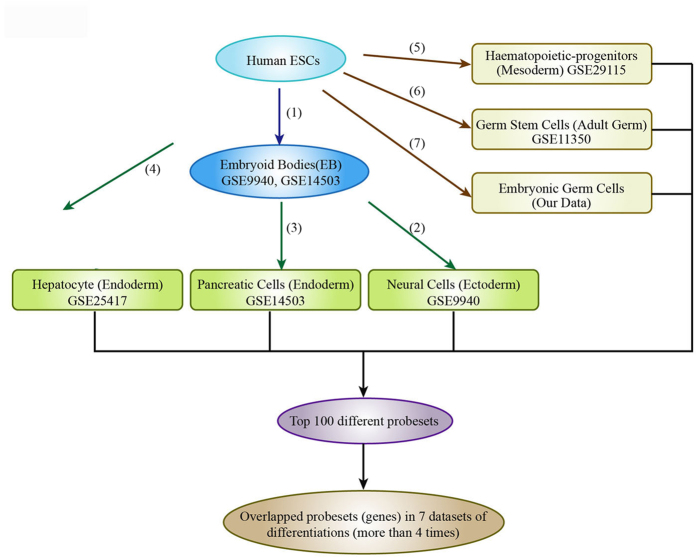
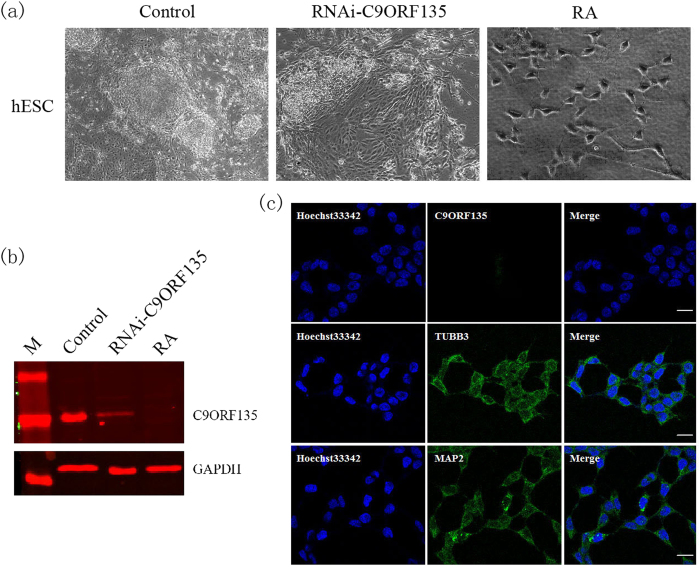
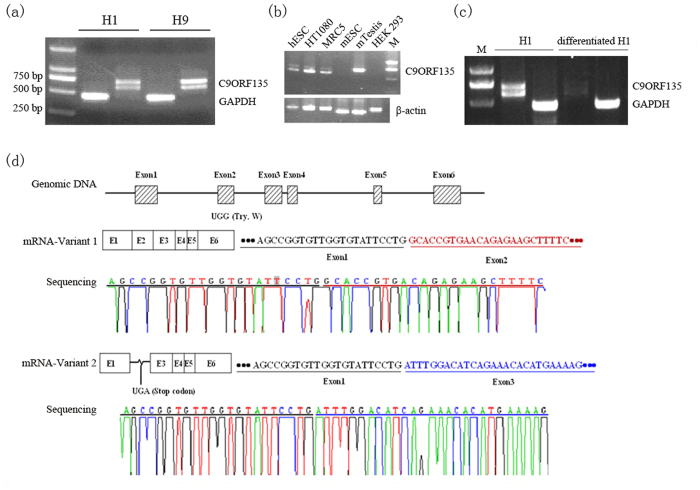
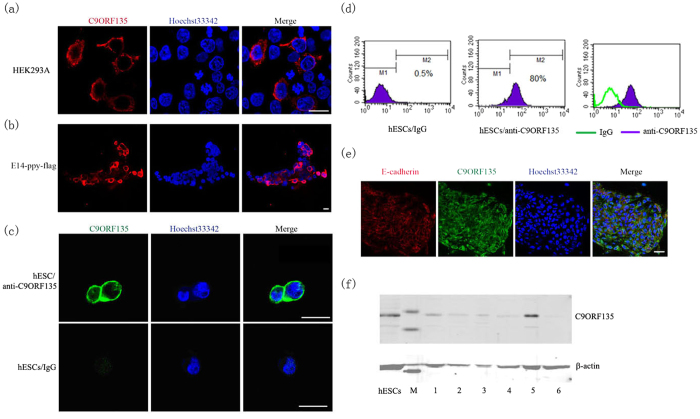
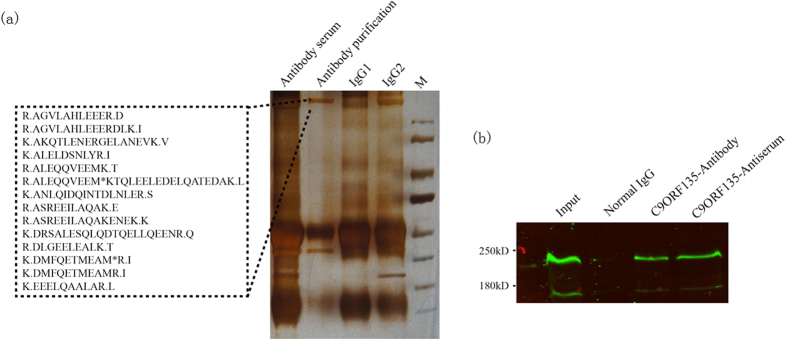
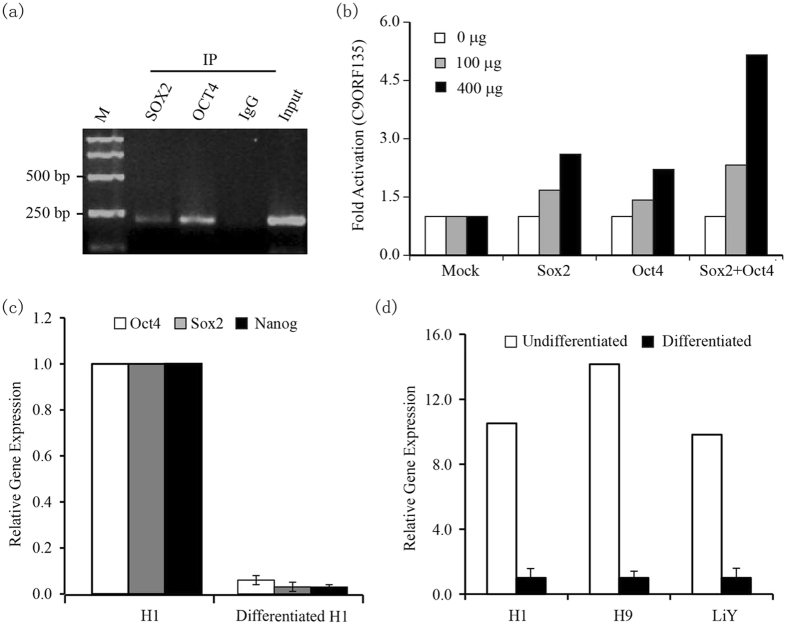
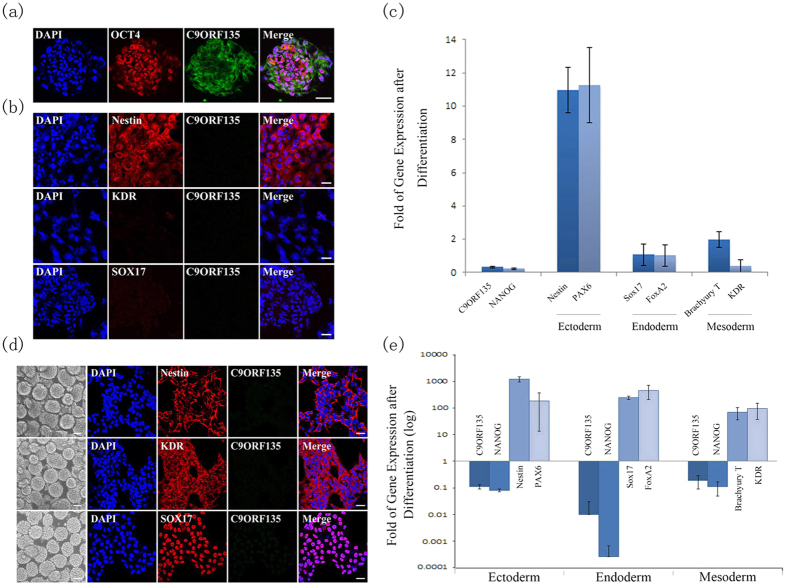
Human embryonic stem cells (hESCs) are a unique population of cells defined by their capacity for self-renewal and pluripotency. Here, we identified a previously uncharacterized gene in hESCs, C9ORF135, which is sharply downregulated during gastrulation and gametogenesis, along with the pluripotency factors OCT4, SOX2, and NANOG. Human ESCs express two C9ORF135 isoforms, the longer of which encodes a membrane-associated protein, as determined by immunostaining and western blotting of fractionated cell lysates. Moreover, the results of chromatin immunoprecipitation (ChIP), mass spectrometry (MS), and co-immunoprecipitation (co-IP) analyses demonstrated that C9ORF135 expression is regulated by OCT4 and SOX2 and that C9ORF135 interacts with non-muscle myosin IIA and myosin IIB. Collectively, these data indicated that C9ORF135 encodes a membrane-associated protein that may serve as a surface marker for undifferentiated hESCs.
人类胚胎干细胞(hESCs)是一类具有自我更新和多能性的独特细胞群体。在这里,我们在 hESCs 中鉴定了一个以前未被描述的基因,C9ORF135,它在原肠胚形成和配子发生过程中急剧下调,同时多能性因子 OCT4、SOX2 和 NANOG 也是如此。人 ESC 表达两种 C9ORF135 异构体,其中较长的一种通过免疫染色和细胞裂解物的分级western blot 来确定,可编码一种膜相关蛋白。此外,染色质免疫沉淀(ChIP)、质谱(MS)和共免疫沉淀(co-IP)分析的结果表明,C9ORF135 的表达受 OCT4 和 SOX2 调控,并且 C9ORF135 与非肌肉肌球蛋白 IIA 和肌球蛋白 IIB 相互作用。总之,这些数据表明,C9ORF135 编码一种膜相关蛋白,它可能作为未分化的 hESCs 的表面标记物。