Bian Rachel R, Piatt Gretchen A, Sen Ananda, Plegue Melissa A, De Michele Mariana L, Hafez Dina, Czuhajewski Christina M, Buis Lorraine R, Kaufman Neal, Richardson Caroline R
University of Michigan Medical School, Ann Arbor, MI, United States.
Department of Learning Health Sciences, University of Michigan, Ann Arbor, MI, United States.
J Med Internet Res. 2017 Mar 27;19(3):e76. doi: 10.2196/jmir.4709.
Lifestyle interventions targeting weight loss, such as those delivered through the Diabetes Prevention Program, reduce the risk of developing type 2 diabetes. Technology-mediated interventions may be an option to help overcome barriers to program delivery, and to disseminate diabetes prevention programs on a larger scale.
We conducted a meta-analysis to evaluate the effect of such technology-mediated interventions on weight loss.
In this meta-analysis, six databases were searched to identify studies reporting weight change that used technology to mediate diet and exercise interventions, and targeted individuals at high risk for developing type 2 diabetes. Studies published between January 1, 2002 and August 4, 2016 were included.
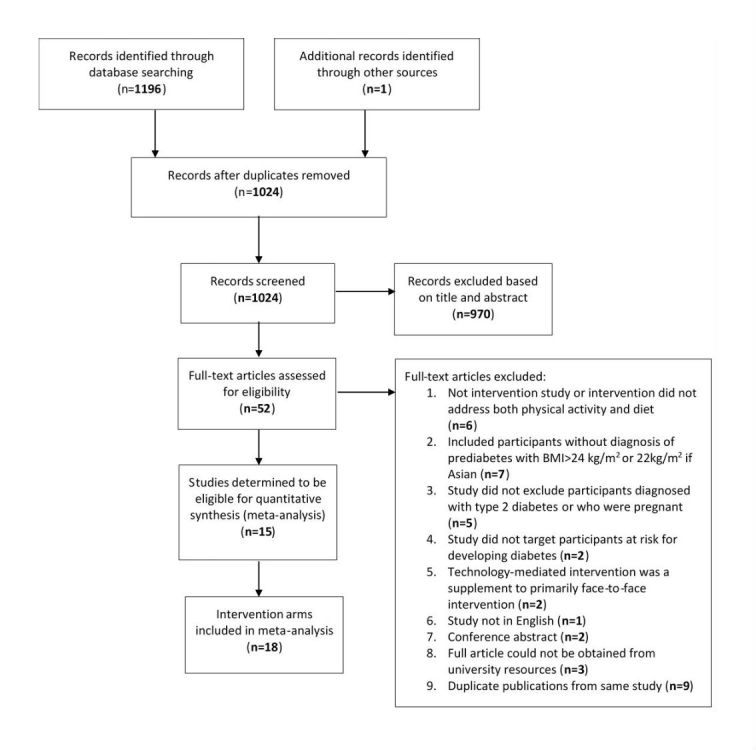
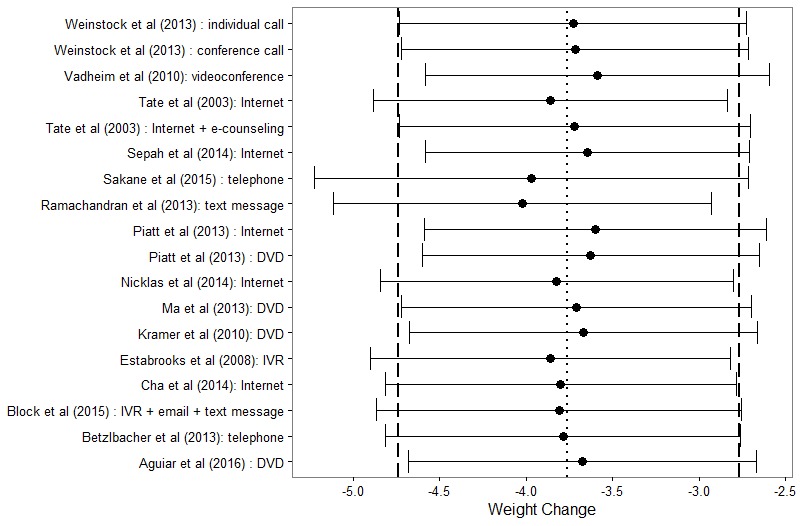
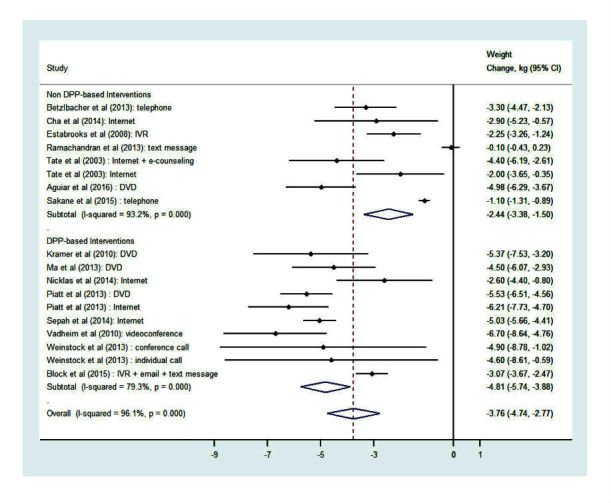
The search identified 1196 citations. Of those, 15 studies met the inclusion criteria and evaluated 18 technology-mediated intervention arms delivered to a total of 2774 participants. Study duration ranged from 12 weeks to 2 years. A random-effects meta-analysis showed a pooled weight loss effect of 3.76 kilograms (95% CI 2.8-4.7; P<.001) for the interventions. Several studies also reported improved glycemic control following the intervention. The small sample sizes and heterogeneity of the trials precluded an evaluation of which technology-mediated intervention method was most efficacious.
Technology-mediated diabetes prevention programs can result in clinically significant amounts of weight loss, as well as improvements in glycaemia in patients with prediabetes. Due to their potential for large-scale implementation, these interventions will play an important role in the dissemination of diabetes prevention programs.
以减肥为目标的生活方式干预措施,如通过糖尿病预防计划实施的干预措施,可降低患2型糖尿病的风险。技术介导的干预措施可能是一种有助于克服项目实施障碍并更广泛传播糖尿病预防计划的选择。
我们进行了一项荟萃分析,以评估此类技术介导的干预措施对减肥的效果。
在这项荟萃分析中,检索了六个数据库,以识别报告使用技术介导饮食和运动干预措施且针对有患2型糖尿病高风险个体的体重变化的研究。纳入了2002年1月1日至2016年8月4日期间发表的研究。
检索共识别出1196条引文。其中,15项研究符合纳入标准,评估了18个技术介导的干预组,共涉及2774名参与者。研究持续时间从12周到2年不等。随机效应荟萃分析显示,这些干预措施的合并体重减轻效果为3.76千克(95%置信区间2.8 - 4.7;P <.001)。几项研究还报告了干预后血糖控制得到改善。试验的小样本量和异质性妨碍了对哪种技术介导的干预方法最有效的评估。
技术介导的糖尿病预防计划可导致临床上显著的体重减轻,以及改善糖尿病前期患者的血糖水平。由于其大规模实施的潜力,这些干预措施将在糖尿病预防计划的传播中发挥重要作用。