Pearl Esther J, Li Jingjing, Green Jeremy B A
Department of Craniofacial Development and Stem Cell Biology, King's College London, London SE1 9RT, UK.
Department of Craniofacial Development and Stem Cell Biology, King's College London, London SE1 9RT, UK
Philos Trans R Soc Lond B Biol Sci. 2017 May 19;372(1720). doi: 10.1098/rstb.2015.0526.
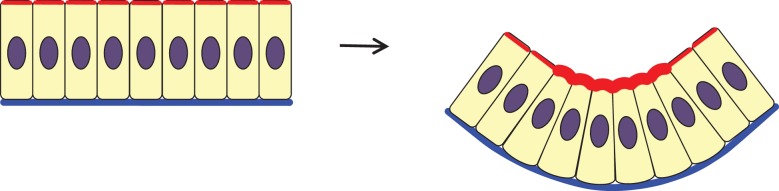
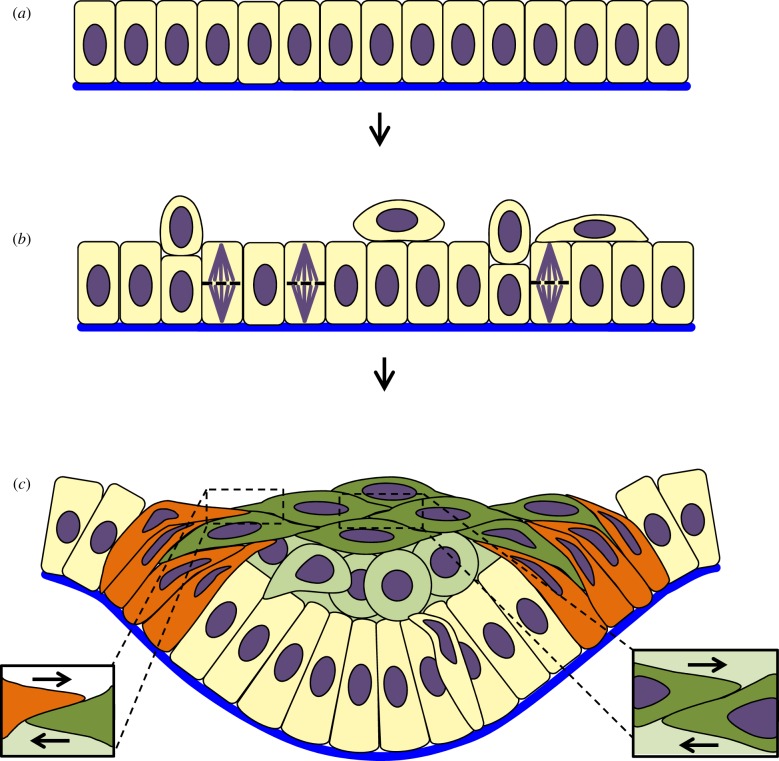
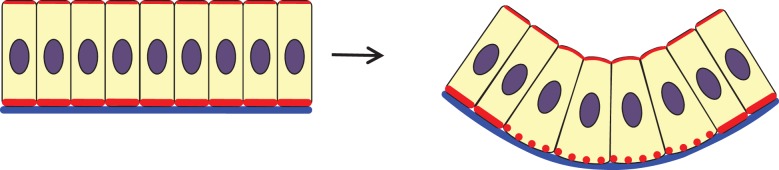
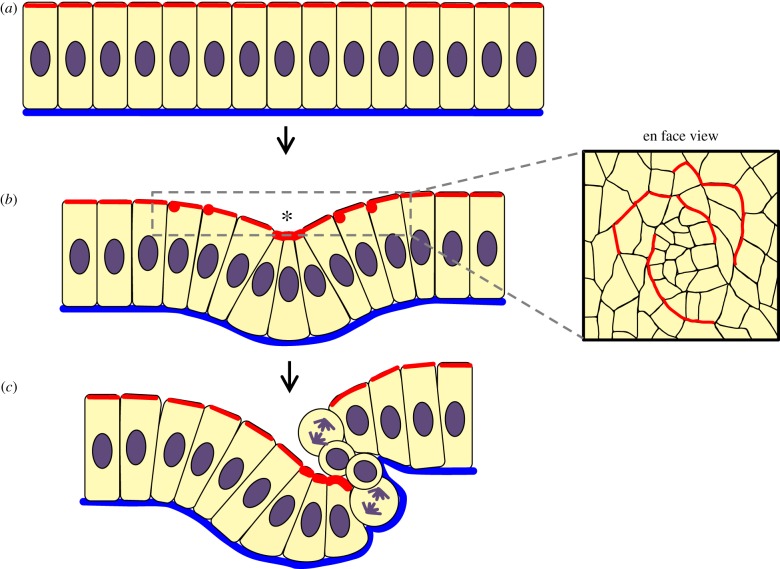
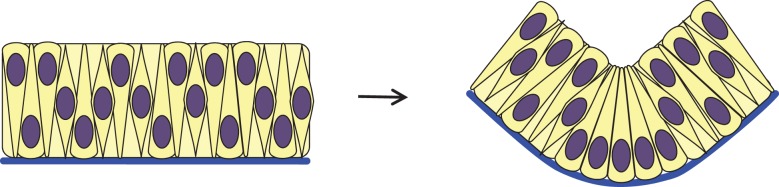
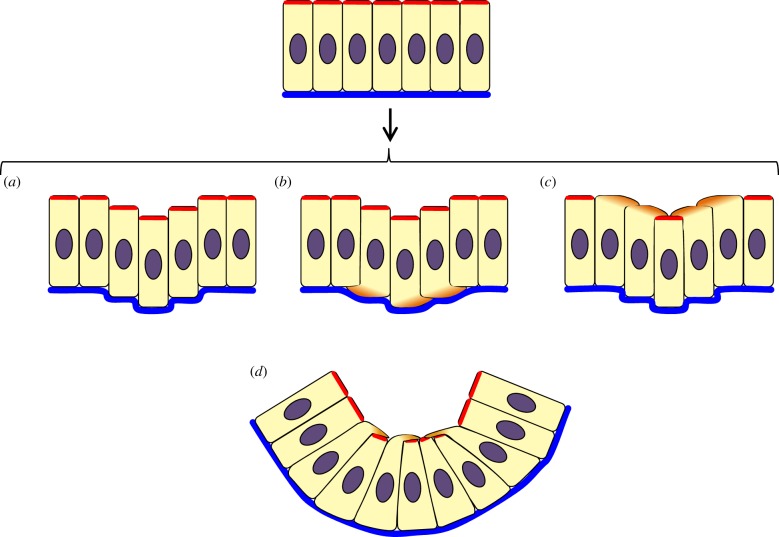
Epithelial invagination is a fundamental module of morphogenesis that iteratively occurs to generate the architecture of many parts of a developing organism. By changing the physical properties such as the shape and/or position of a population of cells, invagination drives processes ranging from reconfiguring the entire body axis during gastrulation, to forming the primordia of the eyes, ears and multiple ducts and glands, during organogenesis. The epithelial bending required for invagination is achieved through a variety of mechanisms involving systems of cells. Here we provide an overview of the different mechanisms, some of which can work in combination, and outline the circumstances in which they apply.This article is part of the themed issue 'Systems morphodynamics: understanding the development of tissue hardware'.
上皮内陷是形态发生的一个基本模块,它反复出现以形成发育中生物体许多部位的结构。通过改变细胞群体的形状和/或位置等物理特性,内陷驱动着从原肠胚形成过程中重新配置整个身体轴,到器官发生过程中形成眼睛、耳朵以及多个导管和腺体原基等一系列过程。内陷所需的上皮弯曲是通过涉及细胞系统的多种机制实现的。在这里,我们概述了不同的机制,其中一些机制可以结合使用,并概述了它们适用的情况。本文是主题为“系统形态动力学:理解组织硬件的发育”的特刊的一部分。