Center for Biosignatures Discovery Automation, The Biodesign Institute, Arizona State University, 1001S. McAllister Ave., Tempe, AZ 85287, USA.
Sci Rep. 2017 Mar 28;7:45399. doi: 10.1038/srep45399.
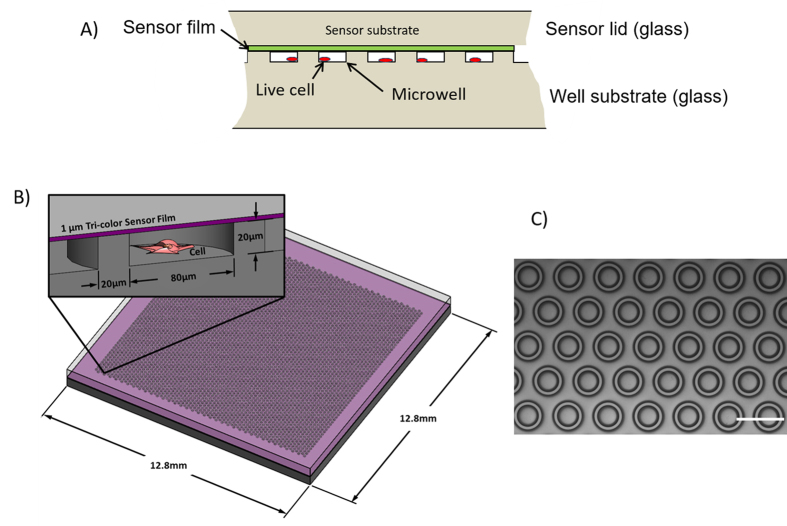
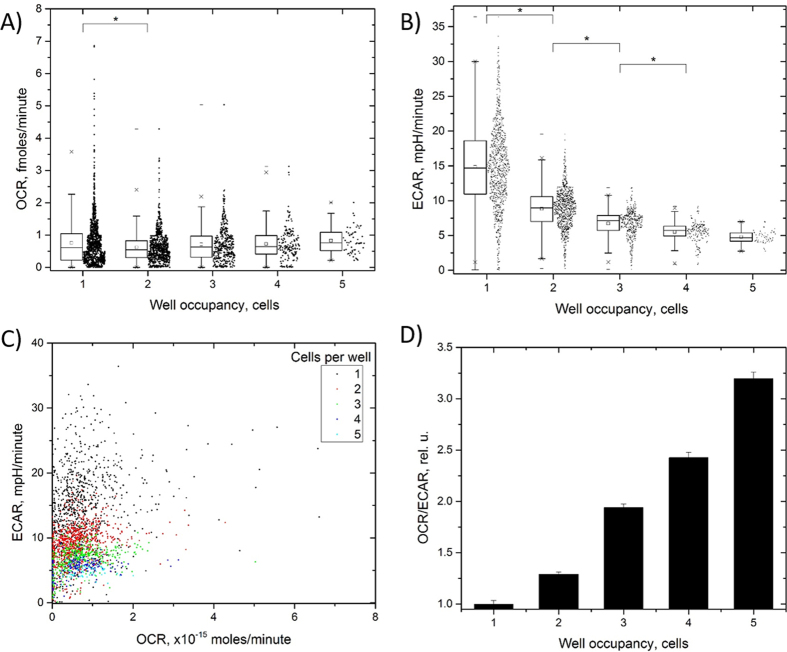
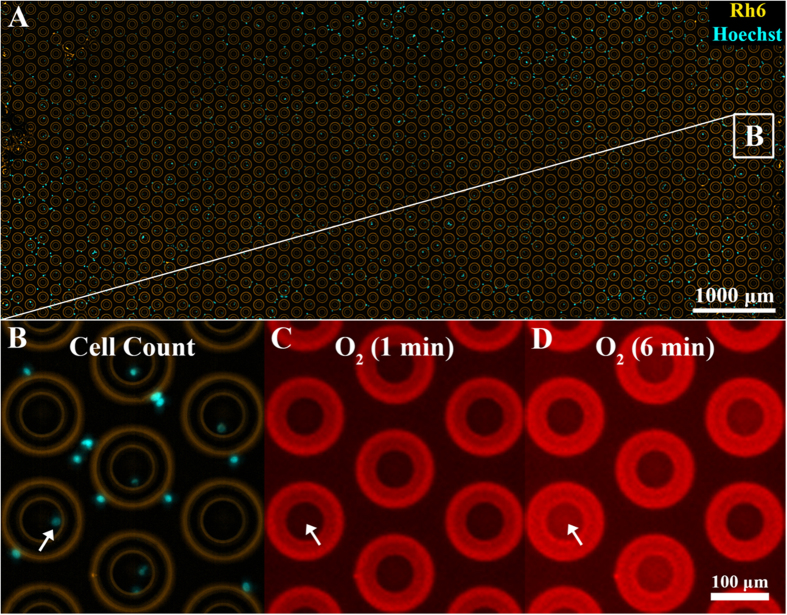
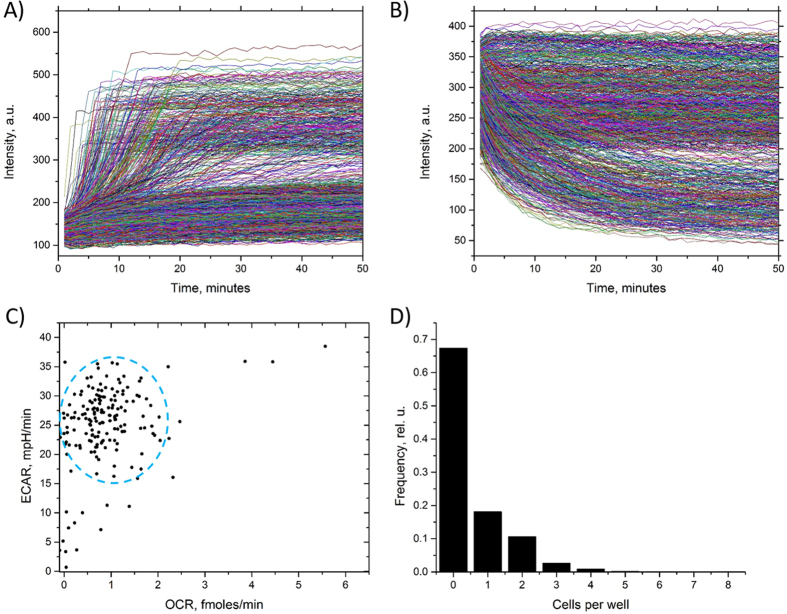
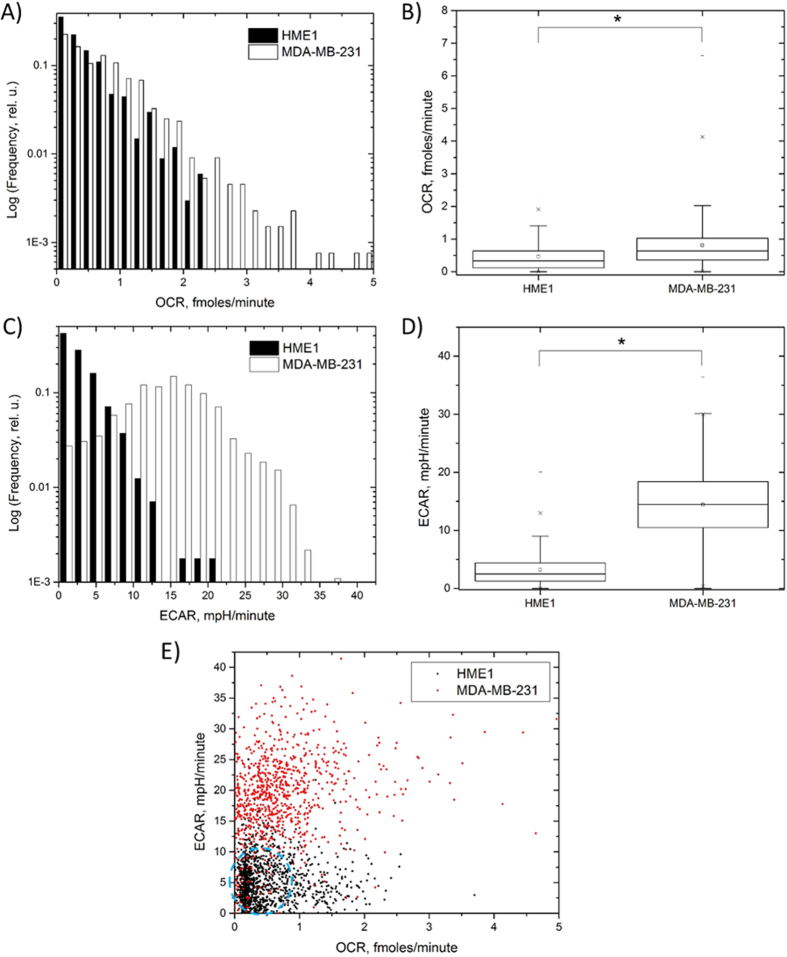
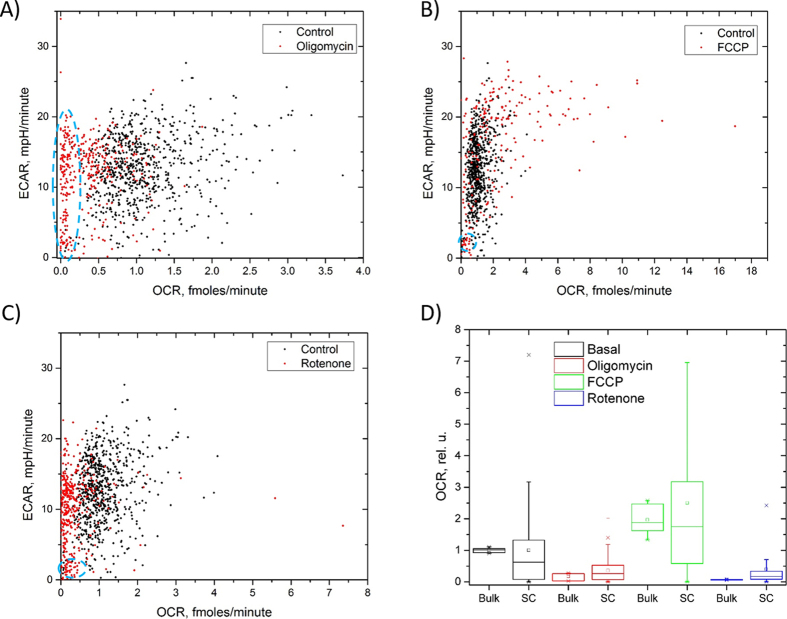
Driven by an increasing number of studies demonstrating its relevance to a broad variety of disease states, the bioenergy production phenotype has been widely characterized at the bulk sample level. Its cell-to-cell variability, a key player associated with cancer cell survival and recurrence, however, remains poorly understood due to ensemble averaging of the current approaches. We present a technology platform for performing oxygen consumption and extracellular acidification measurements of several hundreds to 1,000 individual cells per assay, while offering simultaneous analysis of cellular communication effects on the energy production phenotype. The platform comprises two major components: a tandem optical sensor for combined oxygen and pH detection, and a microwell device for isolation and analysis of single and few cells in hermetically sealed sub-nanoliter chambers. Our approach revealed subpopulations of cells with aberrant energy production profiles and enables determination of cellular response variability to electron transfer chain inhibitors and ion uncouplers.
受越来越多的研究表明其与广泛的疾病状态相关的推动,生物能源生产表型已在整体样本水平上得到广泛研究。然而,由于当前方法的整体平均化,与癌细胞存活和复发相关的关键因素——细胞间的可变性仍然知之甚少。我们提出了一种技术平台,用于对每一次检测中的数百到 1000 个单个细胞进行耗氧和细胞外酸化测量,同时提供对细胞间通讯对能量产生表型影响的同步分析。该平台由两个主要部分组成:用于联合氧和 pH 检测的串联光学传感器,以及用于在密封的亚纳升级微室中隔离和分析单个和少数细胞的微井装置。我们的方法揭示了具有异常能量产生谱的细胞亚群,并能够确定细胞对电子传递链抑制剂和离子解偶联剂的反应变异性。