Marreiro Dilina do Nascimento, Cruz Kyria Jayanne Clímaco, Morais Jennifer Beatriz Silva, Beserra Jéssica Batista, Severo Juliana Soares, de Oliveira Ana Raquel Soares
Department of Nutrition, Federal University of Piauí, Campus Minister Petrônio Portela, Teresina 64049-550, Brazil.
Antioxidants (Basel). 2017 Mar 29;6(2):24. doi: 10.3390/antiox6020024.
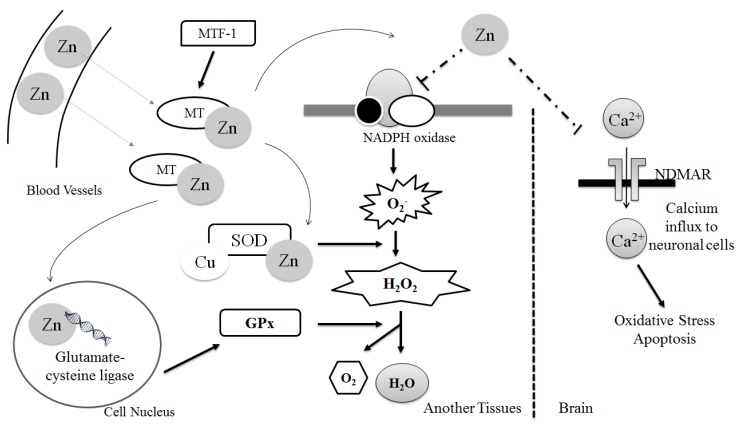
Oxidative stress is a metabolic dysfunction that favors the oxidation of biomolecules, contributing to the oxidative damage of cells and tissues. This consequently contributes to the development of several chronic diseases. In particular, zinc is one of the most relevant minerals to human health, because of its antioxidant properties. This review aims to provide updated information about the mechanisms involved in the protective role of zinc against oxidative stress. Zinc acts as a co-factor for important enzymes involved in the proper functioning of the antioxidant defense system. In addition, zinc protects cells against oxidative damage, acts in the stabilization of membranes and inhibits the enzyme nicotinamide adenine dinucleotide phosphate oxidase (NADPH-Oxidase). Zinc also induces the synthesis of metallothioneins, which are proteins effective in reducing hydroxyl radicals and sequestering reactive oxygen species (ROS) produced in stressful situations, such as in type 2 diabetes, obesity and cancer. Literature provides strong evidence for the role of zinc in the protection against oxidative stress in several diseases.
氧化应激是一种代谢功能障碍,它有利于生物分子的氧化,导致细胞和组织的氧化损伤。这进而促使多种慢性疾病的发展。特别是,锌因其抗氧化特性,是对人类健康最为重要的矿物质之一。本综述旨在提供有关锌对抗氧化应激保护作用所涉及机制的最新信息。锌作为抗氧化防御系统正常运作所涉及的重要酶的辅助因子。此外,锌保护细胞免受氧化损伤,作用于细胞膜的稳定,并抑制烟酰胺腺嘌呤二核苷酸磷酸氧化酶(NADPH-氧化酶)。锌还诱导金属硫蛋白的合成,金属硫蛋白是一种蛋白质,在减少羟基自由基和螯合在诸如2型糖尿病、肥胖症和癌症等应激情况下产生的活性氧(ROS)方面很有效。文献为锌在多种疾病中对抗氧化应激的保护作用提供了有力证据。