Wu Dick, Bacaj Taulant, Morishita Wade, Goswami Debanjan, Arendt Kristin L, Xu Wei, Chen Lu, Malenka Robert C, Südhof Thomas C
Department of Molecular &Cellular Physiology and Howard Hughes Medical Institute, Stanford University Medical School, Stanford, California 94305, USA.
Nancy Pritzker Laboratory, Stanford University Medical School, Stanford, California 94305, USA.
Nature. 2017 Apr 20;544(7650):316-321. doi: 10.1038/nature21720. Epub 2017 Mar 29.
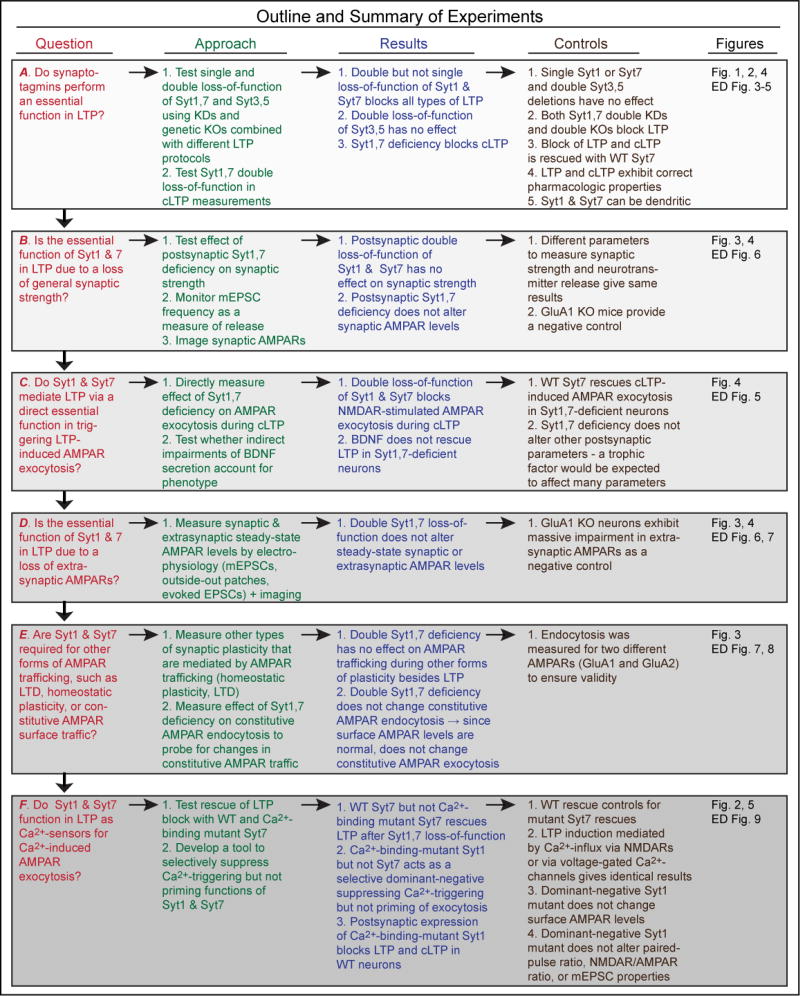
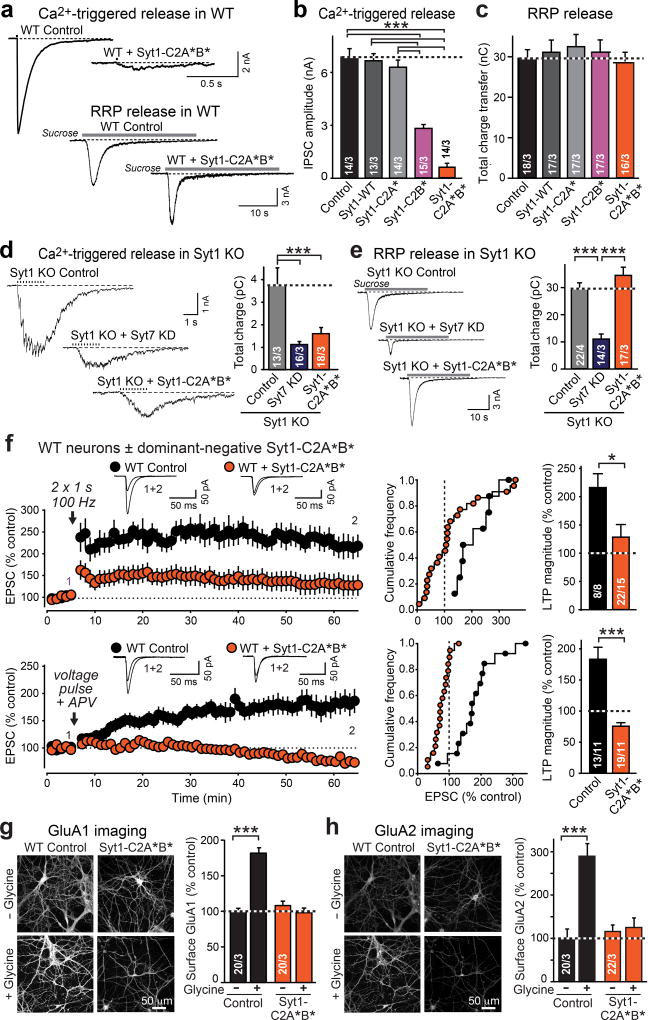
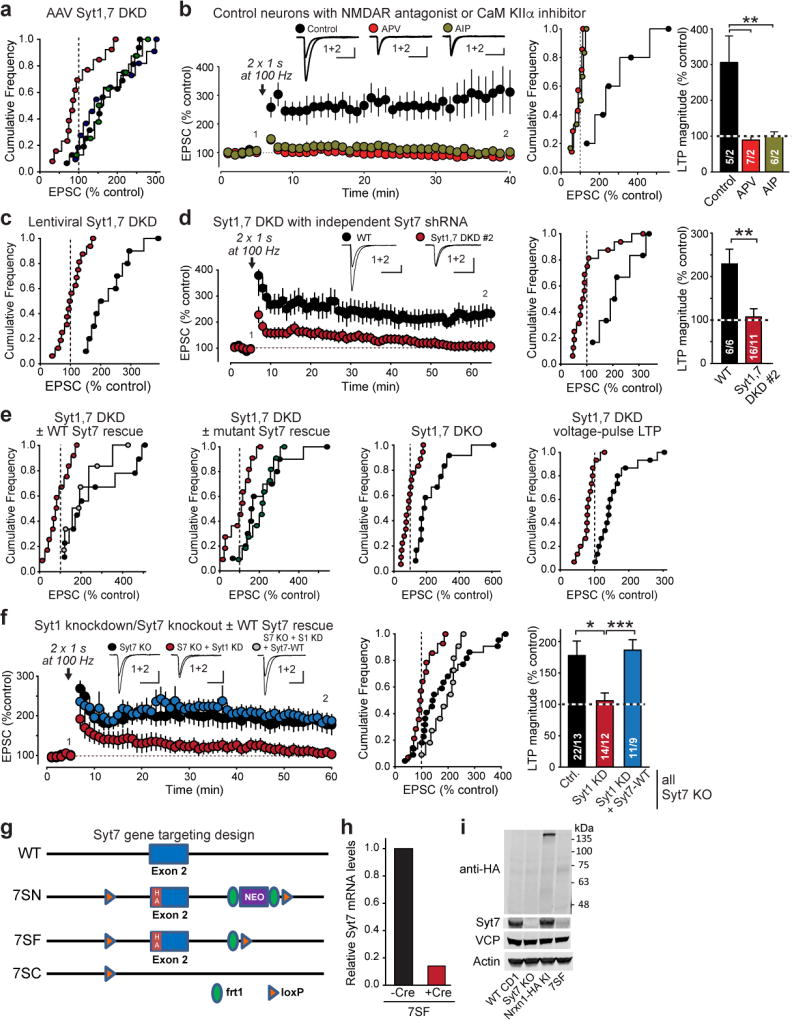
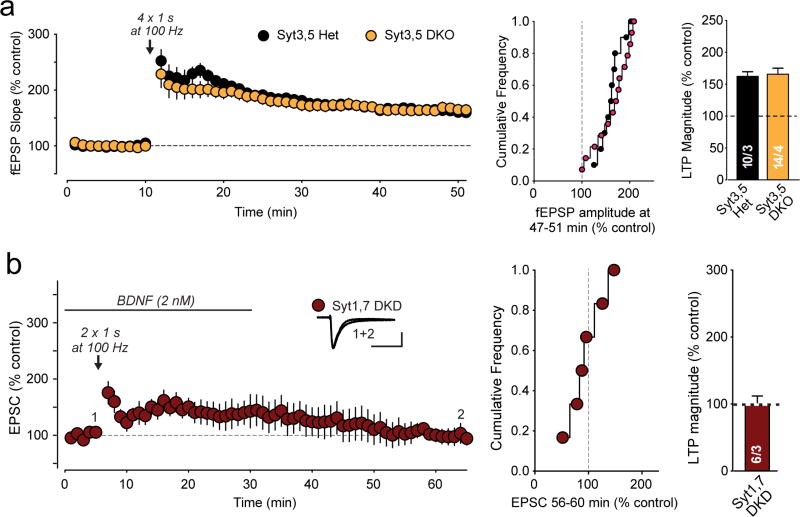
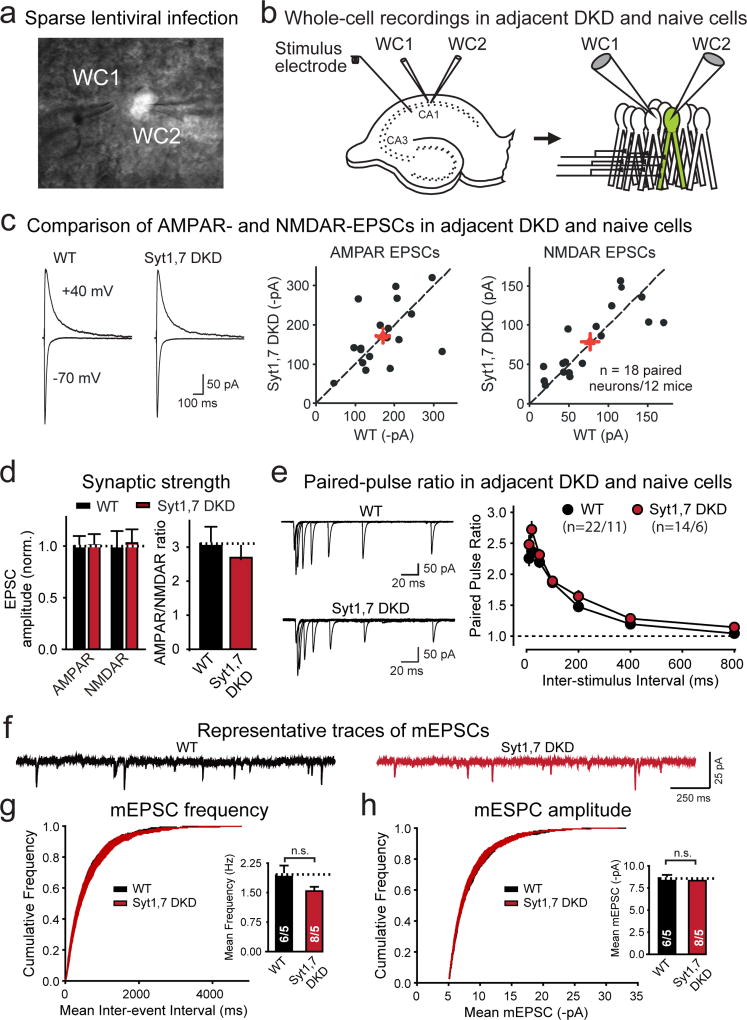
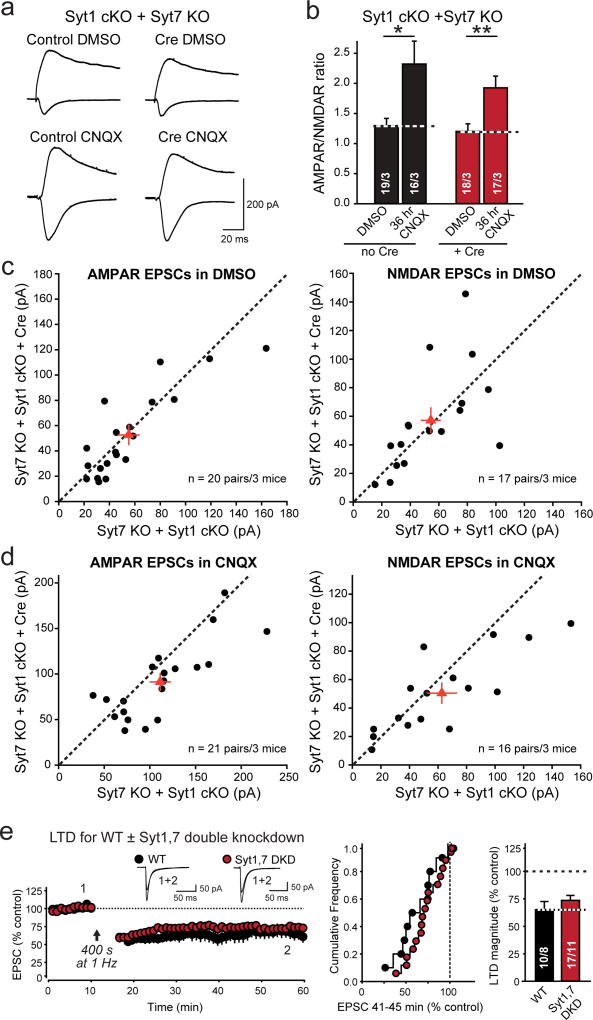
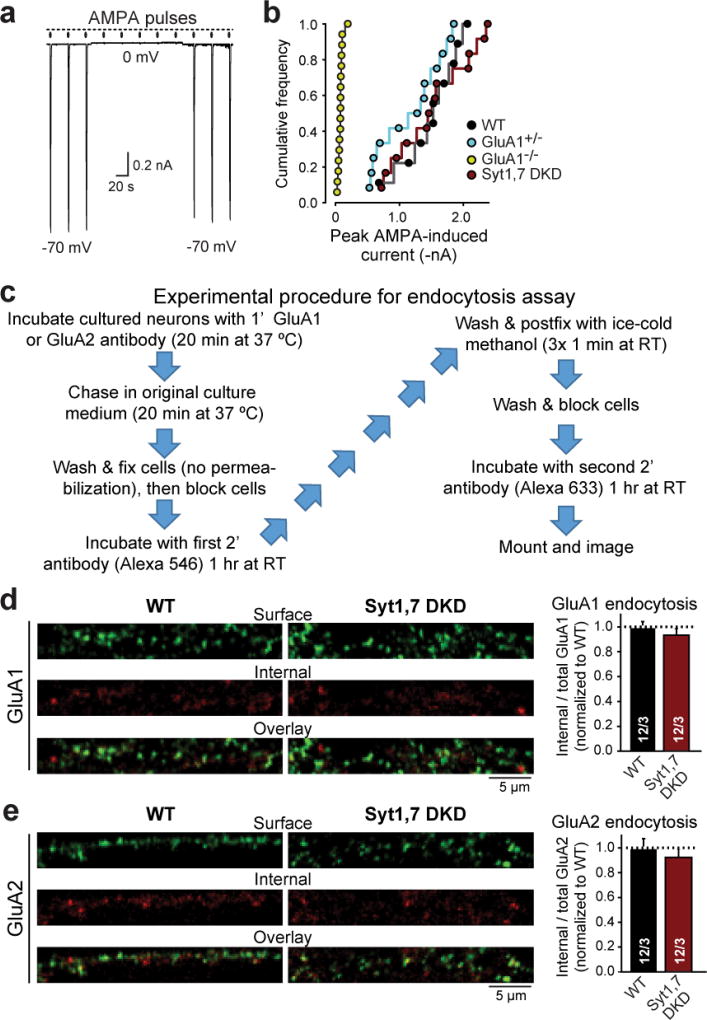
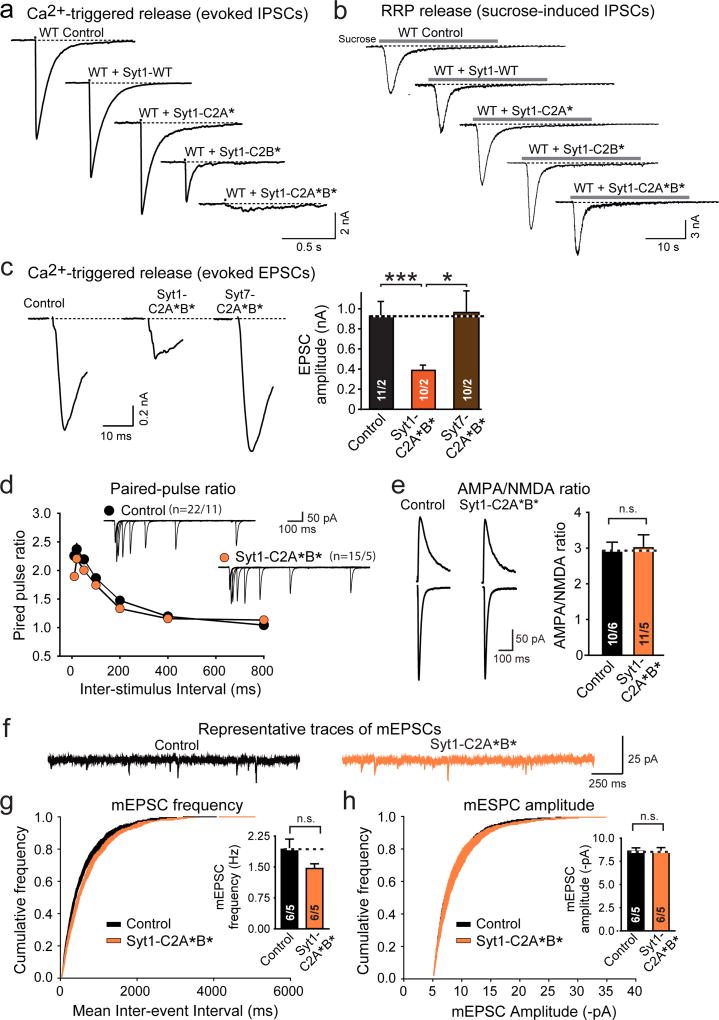
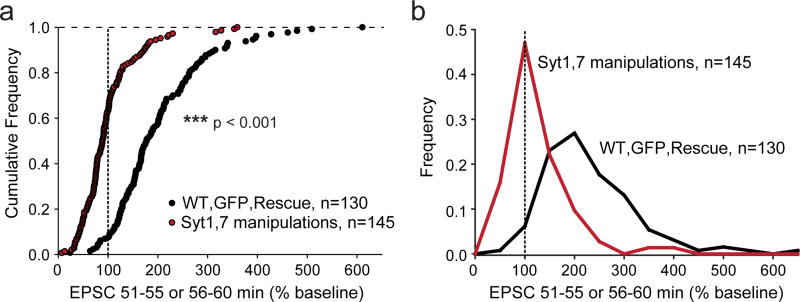
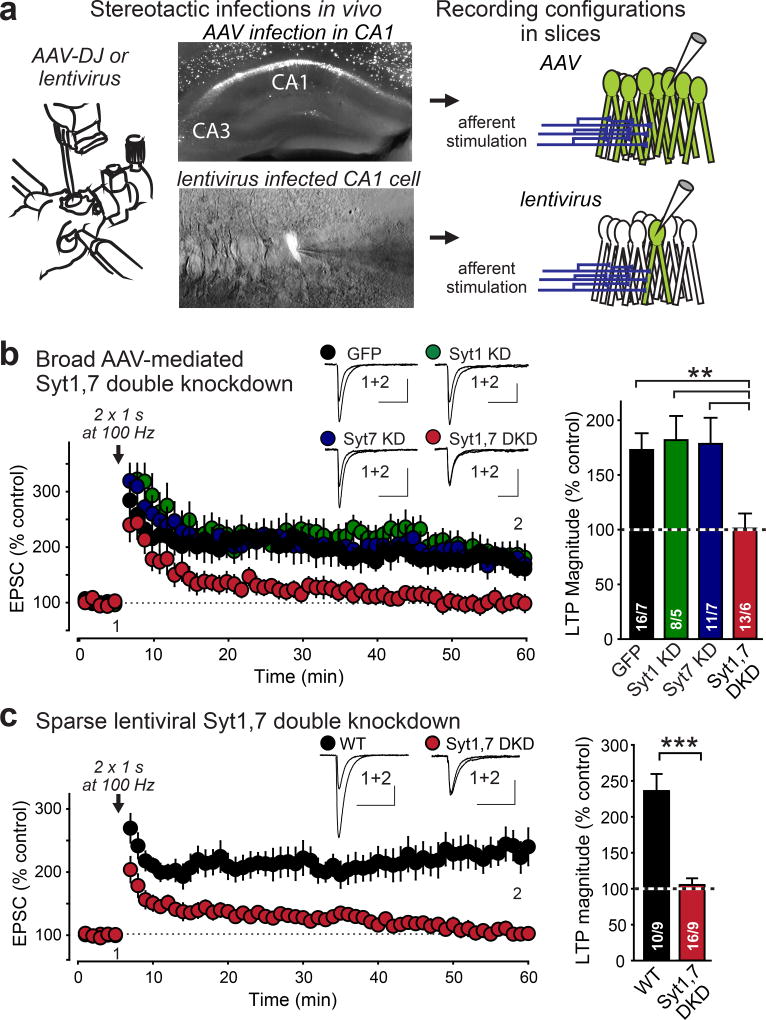
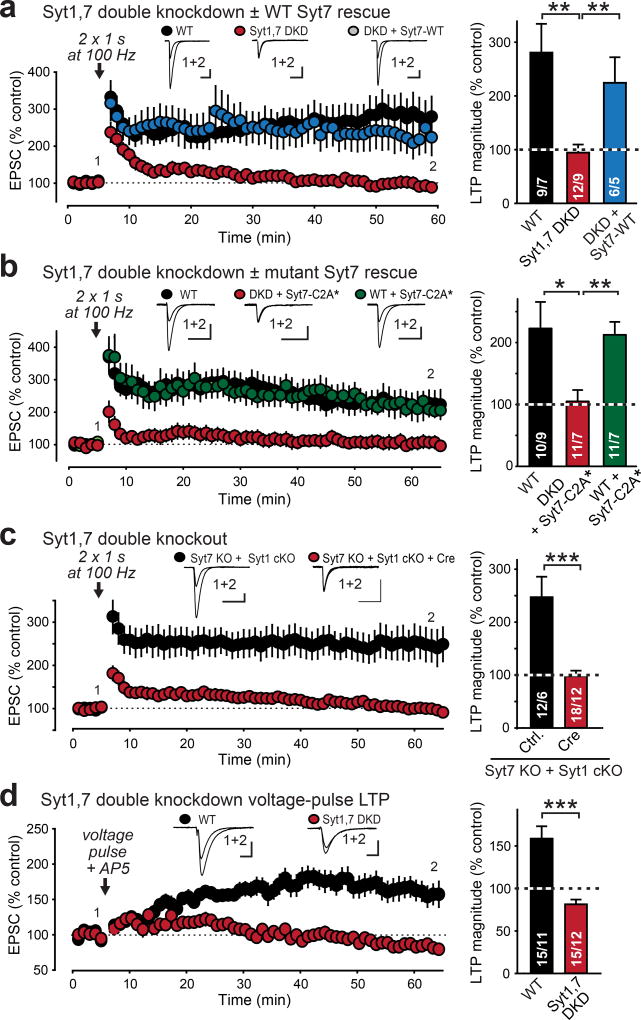
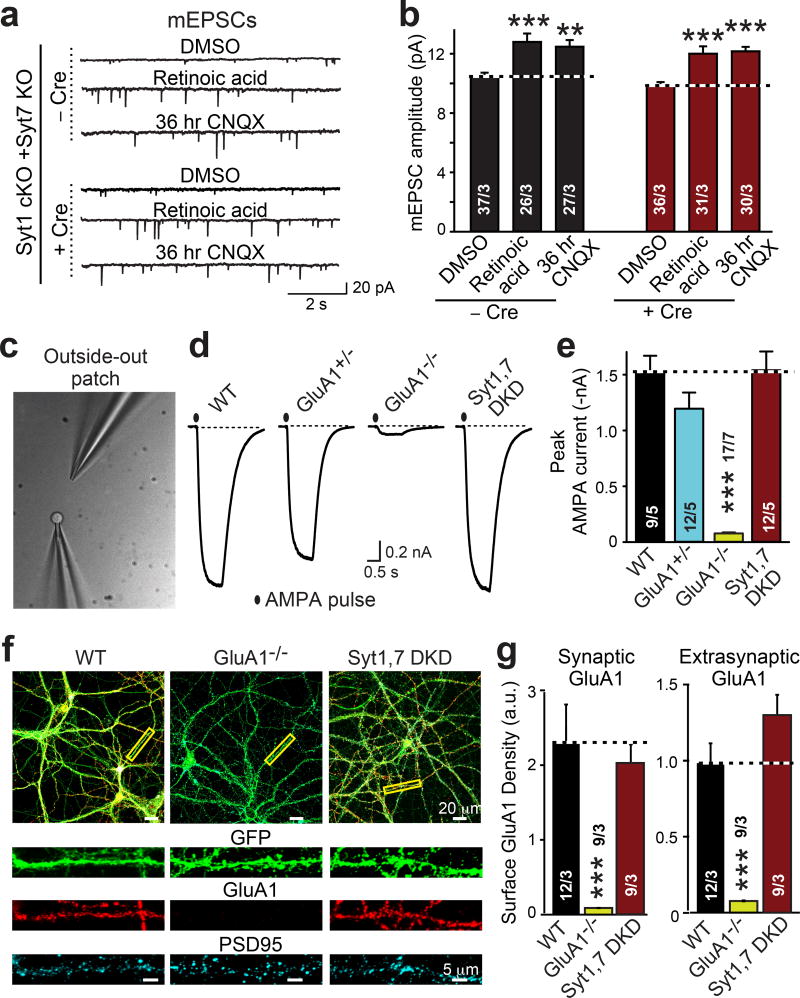
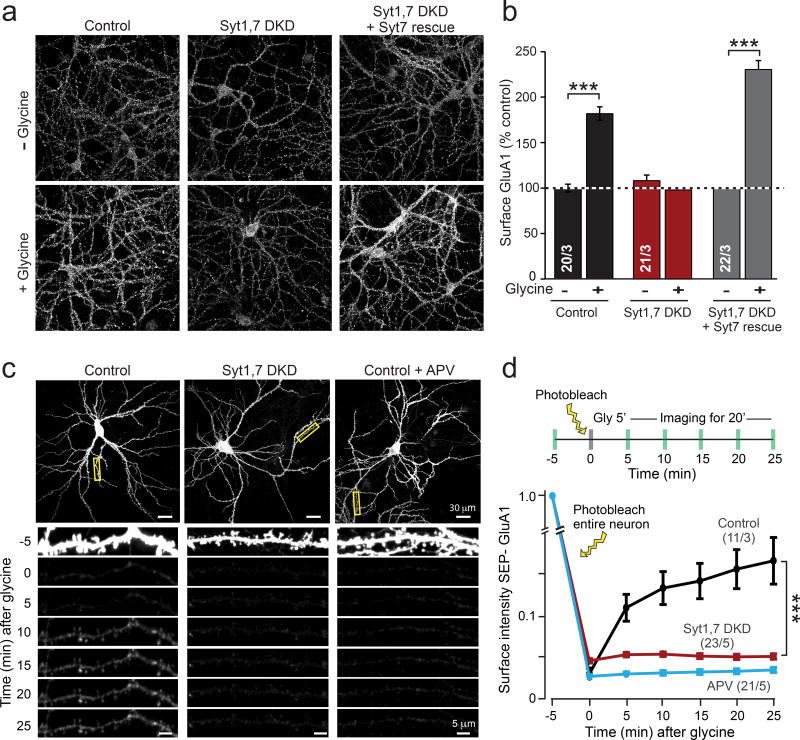
Strengthening of synaptic connections by NMDA (N-methyl-d-aspartate) receptor-dependent long-term potentiation (LTP) shapes neural circuits and mediates learning and memory. During the induction of NMDA-receptor-dependent LTP, Ca influx stimulates recruitment of synaptic AMPA (α-amino-3-hydroxy-5-methyl-4-isoxazole propionic acid) receptors, thereby strengthening synapses. How Ca induces the recruitment of AMPA receptors remains unclear. Here we show that, in the pyramidal neurons of the hippocampal CA1 region in mice, blocking postsynaptic expression of both synaptotagmin-1 (Syt1) and synaptotagmin-7 (Syt7), but not of either alone, abolished LTP. LTP was restored by expression of wild-type Syt7 but not of a Ca-binding-deficient mutant Syt7. Blocking postsynaptic expression of Syt1 and Syt7 did not impair basal synaptic transmission, reduce levels of synaptic or extrasynaptic AMPA receptors, or alter other AMPA receptor trafficking events. Moreover, expression of dominant-negative mutant Syt1 which inhibits Ca-dependent presynaptic vesicle exocytosis, also blocked Ca-dependent postsynaptic AMPA receptor exocytosis, thereby abolishing LTP. Our results suggest that postsynaptic Syt1 and Syt7 act as redundant Ca-sensors for Ca-dependent exocytosis of AMPA receptors during LTP, and thereby delineate a simple mechanism for the recruitment of AMPA receptors that mediates LTP.
通过NMDA(N-甲基-D-天冬氨酸)受体依赖性长时程增强(LTP)强化突触连接,塑造神经回路并介导学习与记忆。在NMDA受体依赖性LTP的诱导过程中,钙离子内流刺激突触AMPA(α-氨基-3-羟基-5-甲基-4-异恶唑丙酸)受体的募集,从而增强突触。钙离子如何诱导AMPA受体的募集仍不清楚。在此我们表明,在小鼠海马CA1区的锥体神经元中,阻断突触结合蛋白-1(Syt1)和突触结合蛋白-7(Syt7)的突触后表达,但不是单独阻断其中任何一个的表达,会消除LTP。野生型Syt7的表达可恢复LTP,但钙离子结合缺陷型突变体Syt7的表达则不能。阻断Syt1和Syt7的突触后表达不会损害基础突触传递,不会降低突触或突触外AMPA受体的水平,也不会改变其他AMPA受体转运事件。此外,抑制钙离子依赖性突触前囊泡胞吐作用的显性负性突变体Syt1的表达,也会阻断钙离子依赖性突触后AMPA受体胞吐作用,从而消除LTP。我们的结果表明,突触后Syt1和Syt7在LTP期间作为AMPA受体钙离子依赖性胞吐作用的冗余钙离子传感器,从而描绘出一种介导LTP的AMPA受体募集的简单机制。