Poppe Michael, Wittig Sascha, Jurida Liane, Bartkuhn Marek, Wilhelm Jochen, Müller Helmut, Beuerlein Knut, Karl Nadja, Bhuju Sabin, Ziebuhr John, Schmitz M Lienhard, Kracht Michael
Rudolf Buchheim Institute of Pharmacology, Justus Liebig University Giessen, Giessen, Germany.
Institute for Genetics, Justus Liebig University Giessen, Giessen, Germany.
PLoS Pathog. 2017 Mar 29;13(3):e1006286. doi: 10.1371/journal.ppat.1006286. eCollection 2017 Mar.
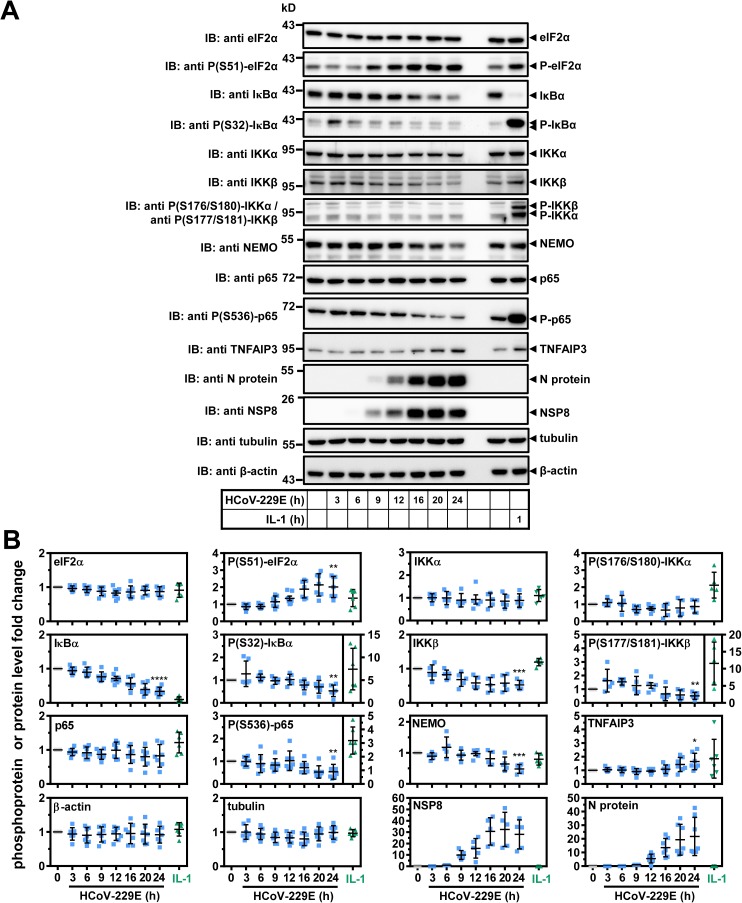
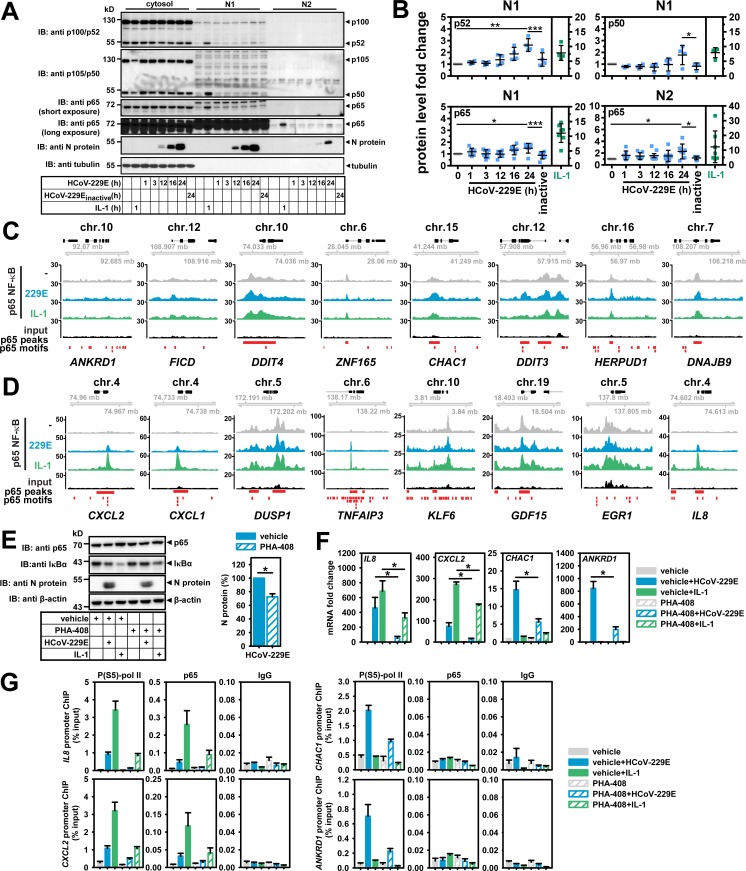
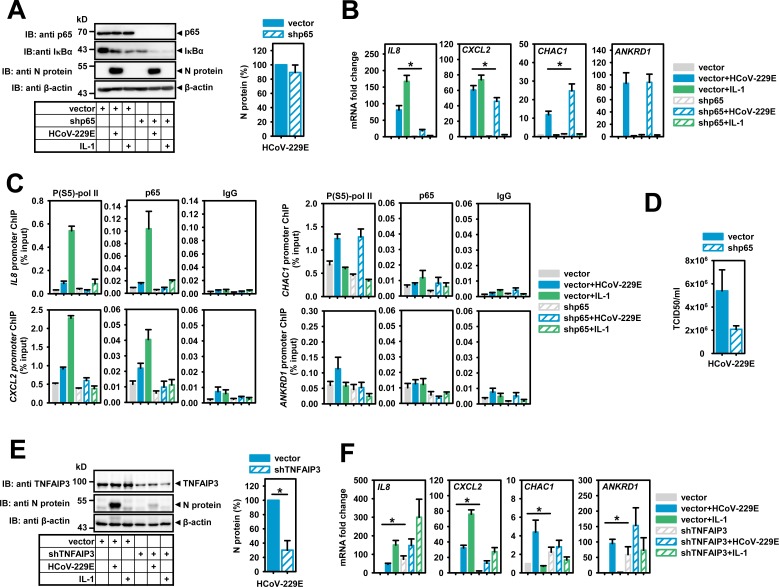
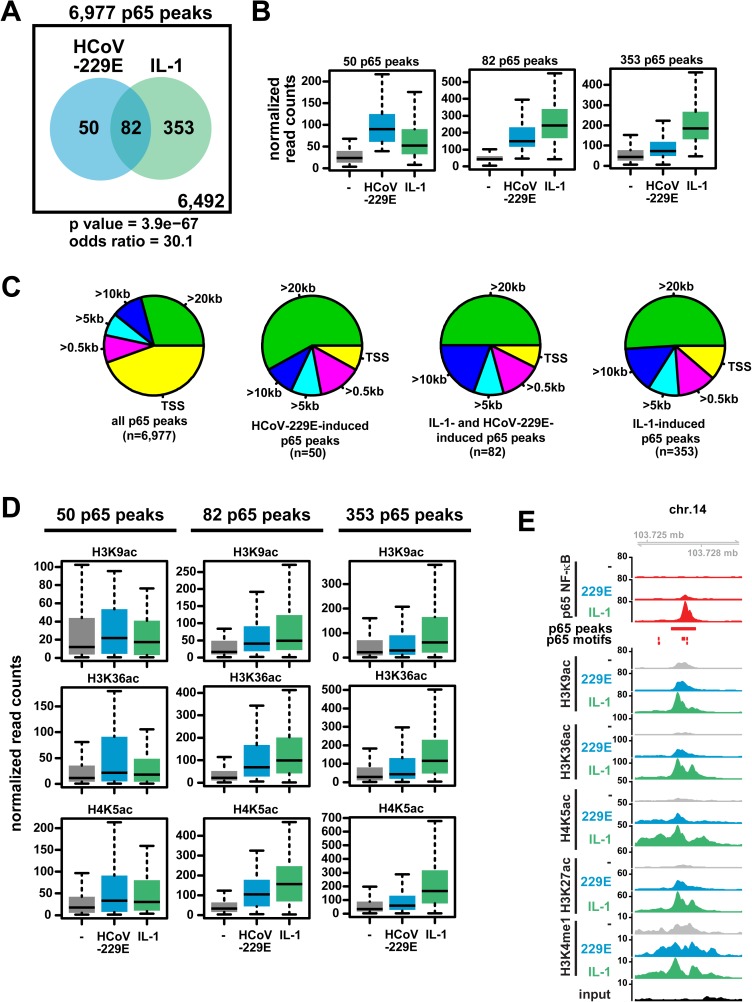
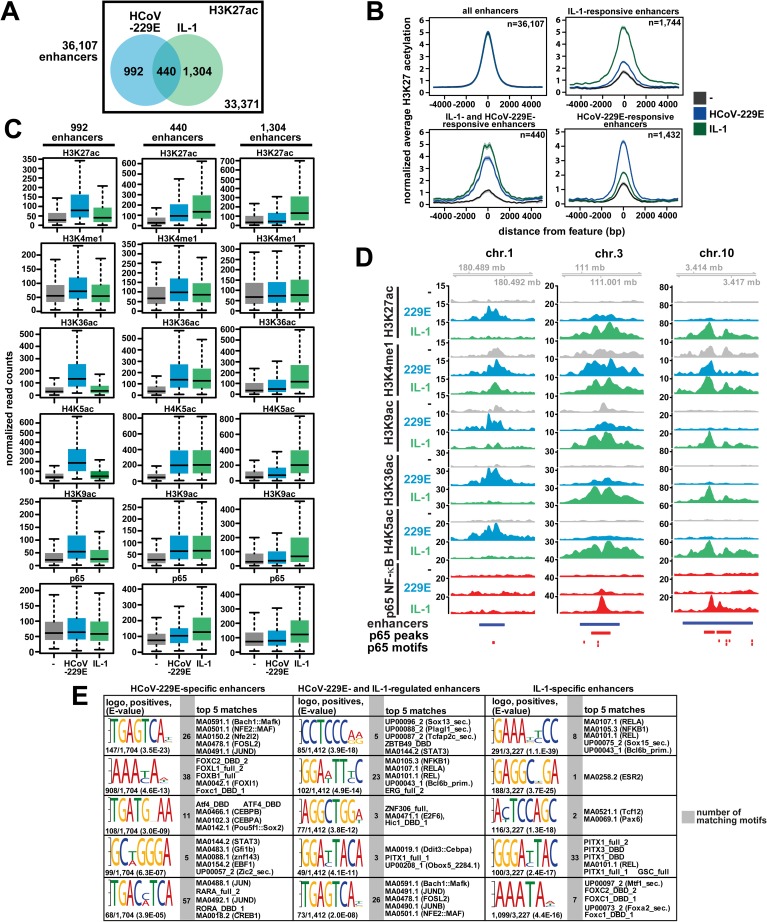
Coronavirus replication takes place in the host cell cytoplasm and triggers inflammatory gene expression by poorly characterized mechanisms. To obtain more insight into the signals and molecular events that coordinate global host responses in the nucleus of coronavirus-infected cells, first, transcriptome dynamics was studied in human coronavirus 229E (HCoV-229E)-infected A549 and HuH7 cells, respectively, revealing a core signature of upregulated genes in these cells. Compared to treatment with the prototypical inflammatory cytokine interleukin(IL)-1, HCoV-229E replication was found to attenuate the inducible activity of the transcription factor (TF) NF-κB and to restrict the nuclear concentration of NF-κB subunits by (i) an unusual mechanism involving partial degradation of IKKβ, NEMO and IκBα and (ii) upregulation of TNFAIP3 (A20), although constitutive IKK activity and basal TNFAIP3 expression levels were shown to be required for efficient virus replication. Second, we characterized actively transcribed genomic regions and enhancers in HCoV-229E-infected cells and systematically correlated the genome-wide gene expression changes with the recruitment of Ser5-phosphorylated RNA polymerase II and prototypical histone modifications (H3K9ac, H3K36ac, H4K5ac, H3K27ac, H3K4me1). The data revealed that, in HCoV-infected (but not IL-1-treated) cells, an extensive set of genes was activated without inducible p65 NF-κB being recruited. Furthermore, both HCoV-229E replication and IL-1 were shown to upregulate a small set of genes encoding immunomodulatory factors that bind p65 at promoters and require IKKβ activity and p65 for expression. Also, HCoV-229E and IL-1 activated a common set of 440 p65-bound enhancers that differed from another 992 HCoV-229E-specific enhancer regions by distinct TF-binding motif combinations. Taken together, the study shows that cytoplasmic RNA viruses fine-tune NF-κB signaling at multiple levels and profoundly reprogram the host cellular chromatin landscape, thereby orchestrating the timely coordinated expression of genes involved in multiple signaling, immunoregulatory and metabolic processes.
冠状病毒在宿主细胞质中进行复制,并通过特征不明的机制触发炎症基因表达。为了更深入了解在冠状病毒感染细胞的细胞核中协调整体宿主反应的信号和分子事件,首先,分别在人冠状病毒229E(HCoV-229E)感染的A549和HuH7细胞中研究了转录组动态,揭示了这些细胞中上调基因的核心特征。与用典型炎症细胞因子白细胞介素(IL)-1处理相比,发现HCoV-229E复制减弱了转录因子(TF)NF-κB的诱导活性,并通过(i)一种涉及IKKβ、NEMO和IκBα部分降解的异常机制以及(ii)TNFAIP3(A20)的上调来限制NF-κB亚基的核浓度,尽管高效病毒复制需要组成型IKK活性和基础TNFAIP3表达水平。其次,我们对HCoV-229E感染细胞中的活跃转录基因组区域和增强子进行了表征,并系统地将全基因组基因表达变化与Ser5磷酸化的RNA聚合酶II和典型组蛋白修饰(H3K9ac、H3K36ac、H4K5ac、H3K27ac、H3K4me1)的募集相关联。数据显示,在HCoV感染(而非IL-1处理)的细胞中,大量基因被激活,而未募集到可诱导的p65 NF-κB。此外,HCoV-229E复制和IL-1均显示上调了一小部分编码免疫调节因子的基因,这些因子在启动子处结合p65,且表达需要IKKβ活性和p65。同样,HCoV-229E和IL-1激活了一组共440个与p65结合的增强子,这些增强子通过不同的TF结合基序组合与另外992个HCoV-229E特异性增强子区域不同。综上所述,该研究表明细胞质RNA病毒在多个水平上微调NF-κB信号,并深刻地重新编程宿主细胞染色质景观,从而协调参与多种信号、免疫调节和代谢过程的基因的及时协调表达。