Villanueva-Millán María J, Pérez-Matute Patricia, Recio-Fernández Emma, Lezana Rosales José M, Oteo José A
HIV and Associated Metabolic Alterations Unit, Infectious Diseases Department, Center for Biomedical Research of La Rioja (CIBIR), Logroño, La Rioja, Spain.
Infectious Diseases Department, Hospital San Pedro, Logroño, La Rioja, Spain.
J Int AIDS Soc. 2017 Mar 9;20(1):21526. doi: 10.7448/IAS.20.1.21526.
Increased bacterial translocation and alterations to gut microbiota composition have been described in HIV infection and contribute to immune activation and inflammation. These effects persist despite combined antiretroviral therapy (cART). However, the contribution of different cART combinations has not yet been investigated. The aim of this study was to analyse the long-term effects of different combinations of cART on bacterial translocation and gut microbiota composition in HIV-infected patients.
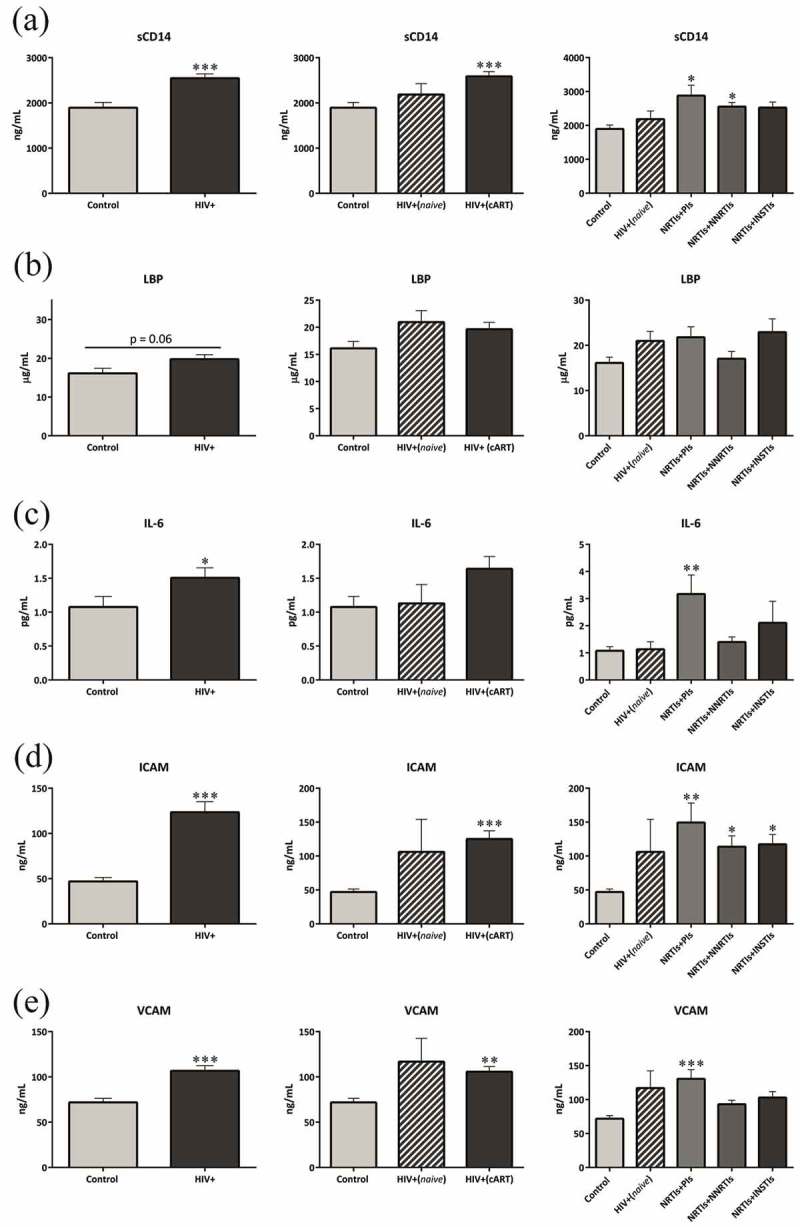
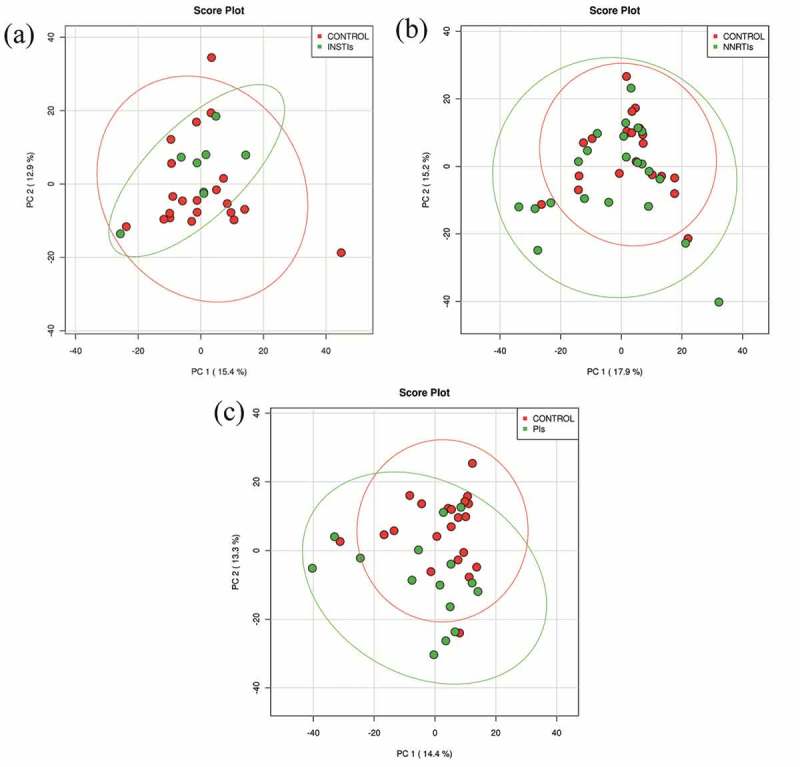
We carried out a cross-sectional study of 45 HIV-infected patients on cART, classified as nucleoside reverse transcriptase inhibitors (NRTIs)+ protease inhibitors (PIs) (n = 15), NRTIs+ non-nucleoside reverse transcriptase inhibitors (NNRTIs) (n = 22), and NRTIs+ integrase strand transfer inhibitors (INSTIs) (n = 8). Untreated HIV-infected patients (n = 5) and non-infected volunteers (n = 21) were also included. Soluble markers of bacterial translocation and inflammation were measured and gut microbiota composition was analysed using 16S rDNA pyrosequencing (Illumina MiSeq).
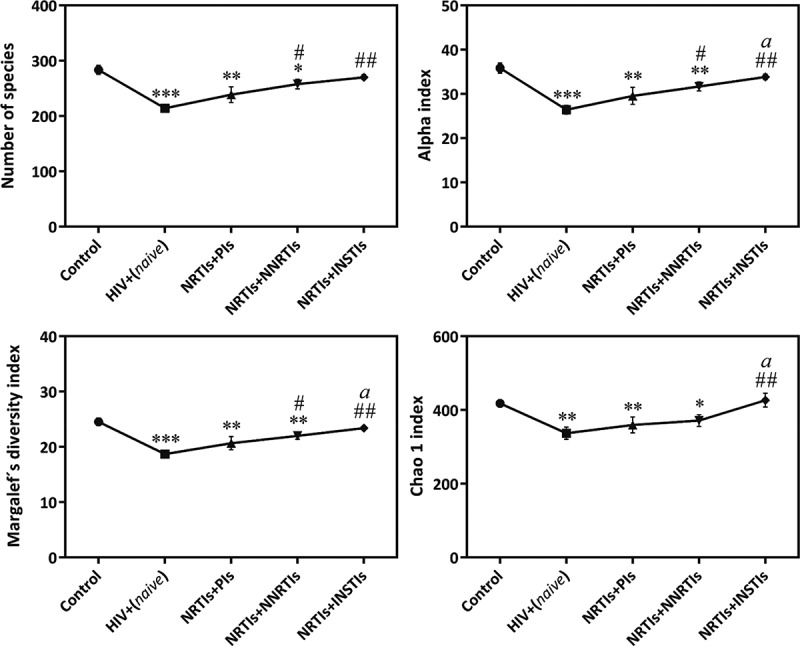
The NRTIs+INSTIs regimen was associated with levels of systemic inflammation that were similar to uninfected controls. The reduction in faecal bacterial diversity induced by HIV infection was also restored by this regimen. HIV infection was more closely related to changes in lower taxonomic units and diversity rather than at the phylum level. The NRTIs+PIs regimen showed the highest reduction in bacterial species, whereas NRTIs+INSTIs induced a minor loss of bacterial species and a significant increase in others.
Our study demonstrated that INSTI-based ART was associated with levels of systemic inflammation and microbial diversity similar to that of uninfected controls. The role of INSTIs other than raltegravir needs to be further investigated. Patients on the NRTIs+PIs regimen presented the highest reduction in bacterial species compared with other antiretrovirals and naive patients. Thus, different cART regimens are associated with diverse profiles in gut microbiota composition. Longitudinal and functional studies are needed to better understand these findings.
在HIV感染中,细菌易位增加和肠道微生物群组成改变已被描述,这有助于免疫激活和炎症反应。尽管采用了联合抗逆转录病毒疗法(cART),这些影响仍然存在。然而,不同cART组合的作用尚未得到研究。本研究的目的是分析不同cART组合对HIV感染患者细菌易位和肠道微生物群组成的长期影响。
我们对45名接受cART治疗的HIV感染患者进行了横断面研究,这些患者被分为核苷类逆转录酶抑制剂(NRTIs)+蛋白酶抑制剂(PIs)组(n = 15)、NRTIs+非核苷类逆转录酶抑制剂(NNRTIs)组(n = 22)和NRTIs+整合酶链转移抑制剂(INSTIs)组(n = 8)。还纳入了未接受治疗的HIV感染患者(n = 5)和未感染的志愿者(n = 21)。测量细菌易位和炎症的可溶性标志物,并使用16S rDNA焦磷酸测序(Illumina MiSeq)分析肠道微生物群组成。
NRTIs+INSTIs方案与全身炎症水平相关,与未感染对照组相似。该方案还恢复了HIV感染引起的粪便细菌多样性降低。HIV感染与较低分类单元和多样性的变化关系更为密切,而非门水平的变化。NRTIs+PIs方案显示细菌种类减少最多,而NRTIs+INSTIs导致细菌种类减少较少,其他细菌种类显著增加。
我们的研究表明,基于INSTI的抗逆转录病毒疗法与全身炎症水平和微生物多样性相关,与未感染对照组相似。除拉替拉韦外,INSTIs的作用需要进一步研究。与其他抗逆转录病毒药物和未治疗患者相比,接受NRTIs+PIs方案的患者细菌种类减少最多。因此,不同的cART方案与肠道微生物群组成的不同特征相关。需要进行纵向和功能研究以更好地理解这些发现。