Inhalation Consultancy Ltd, Yeadon, Leeds and Faculty of Human and Health Sciences, Plymouth University, Plymouth, UK.
Department of Research Methodology, Measurement, and Data Analysis, Faculty of Behavioural, Management and Social Sciences, University of Twente, Enschede, The Netherlands.
NPJ Prim Care Respir Med. 2017 Apr 3;27(1):22. doi: 10.1038/s41533-017-0016-z.
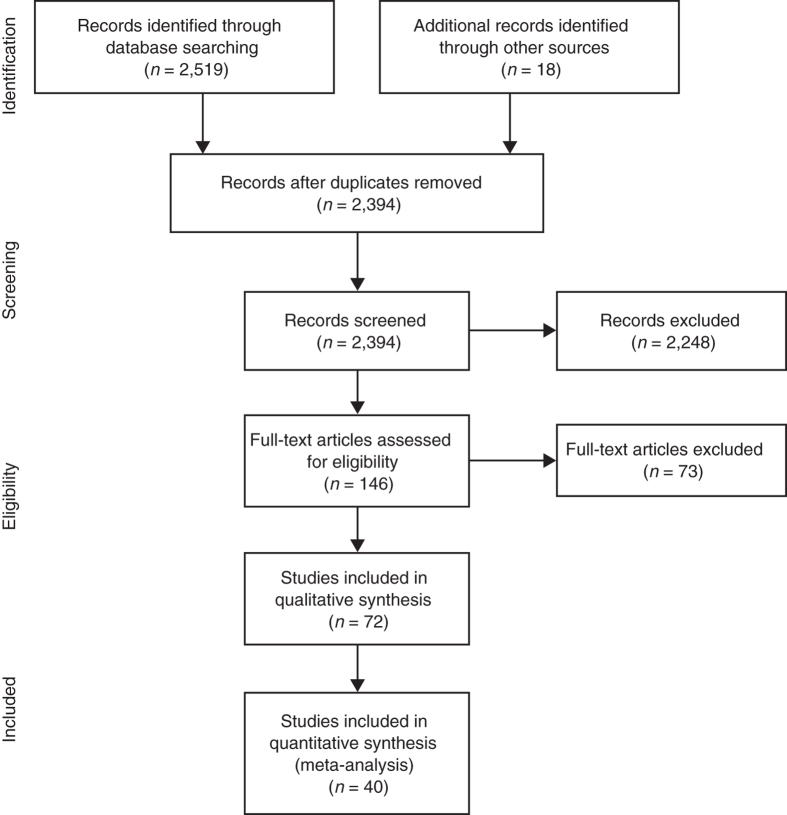
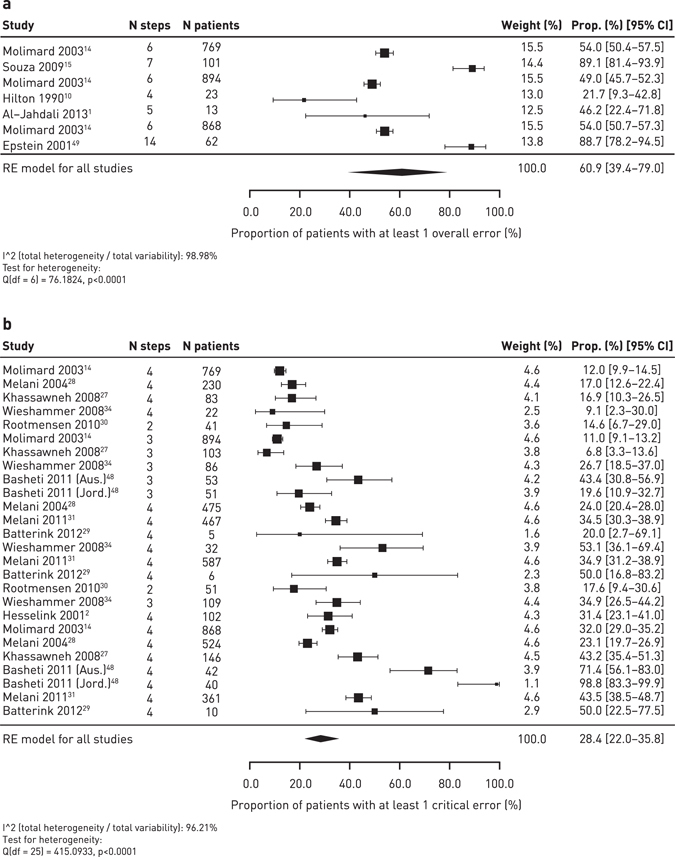
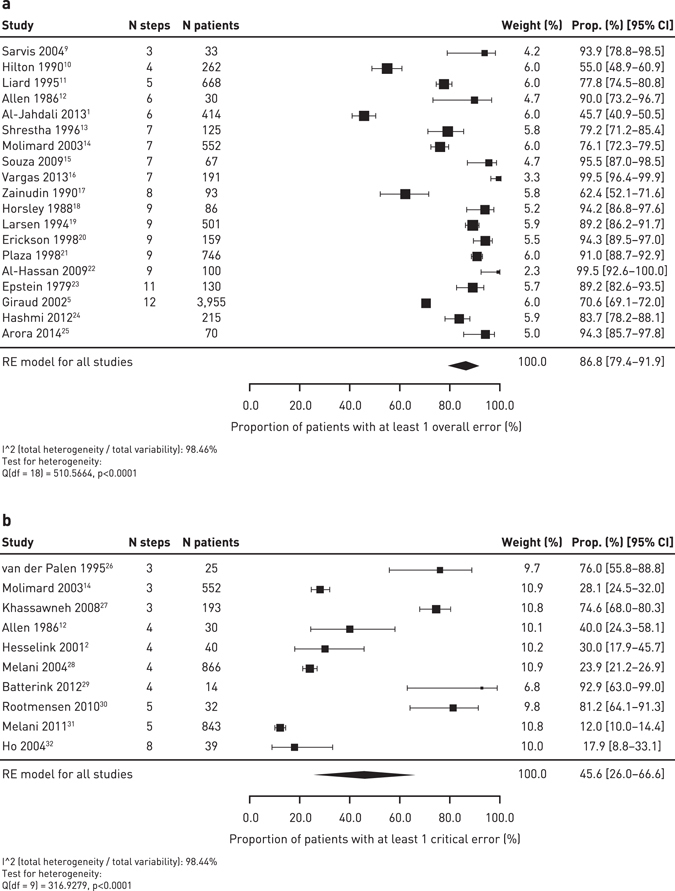
Inhaler device errors are common and may impact the effectiveness of the delivered drug. There is a paucity of up-to-date systematic reviews (SRs) or meta-analyses (MAs) of device errors in asthma and chronic obstructive pulmonary disease (COPD) patients. This SR and MA provides an estimate of overall error rates (both critical and non-critical) by device type and evaluates factors associated with inhaler misuse. The following databases from inception to July 23, 2014 (Embase®, MEDLINE®, MEDLINE® In-Process and CENTRAL) were searched, using predefined search terms. Studies in adult males and females with asthma or COPD, reporting at least one overall or critical error, using metered dose inhalers and dry powder inhalers were included. Random-effect MAs were performed to estimate device error rates and to compare pairs of devices. Overall and critical error rates were high across all devices, ranging from 50-100% and 14-92%, respectively. However, between-study heterogeneity was also generally >90% (I-squared statistic), indicating large variability between studies. A trend towards higher error rates with assessments comprising a larger number of steps was observed; however no consistent pattern was identified. This SR and MA highlights the relatively limited body of evidence assessing device errors and the lack of standardised checklists. There is currently insufficient evidence to determine differences in error rates between different inhaler devices and their impact on clinical outcomes. A key step in improving our knowledge on this topic would be the development of standardised checklists for each device.
CALL TO STANDARDISE RESEARCH INTO INHALER DEVICE ERRORS: Researchers should adopt a standardised approach to investigate the incorrect use of inhalers and its associated clinical implications. Henry Chrystyn at Plymouth University, together with scientists across the UK and the Netherlands, conducted a review of research related to inhaled medication errors made by patients with asthma or chronic obstructive pulmonary disease. It is widely acknowledged that many patients with lung conditions don't use their inhaler devices correctly, which affects drug effectiveness and disease control. While Chrystyn's team found high critical error rates reported across all devices, their meta-analysis and systematic review highlighted significant gaps in knowledge regarding different inhalers and associated error rates, and how these affect clinical outcomes. The researchers call for in-depth studies into device use, alongside standardised checklists and definitions for such studies to use to ensure consistency.
吸入器装置错误很常见,可能会影响所输送药物的效果。目前,关于哮喘和慢性阻塞性肺疾病(COPD)患者的装置错误,缺乏最新的系统评价(SR)或荟萃分析(MA)。本项 SR 和 MA 旨在通过装置类型来评估总体错误率(包括关键和非关键错误),并评估与吸入器使用不当相关的因素。从建库至 2014 年 7 月 23 日,我们使用预定义的检索词对以下数据库进行了检索:Embase®、MEDLINE®、MEDLINE®在处理中和 CENTRAL。纳入了报告至少一种整体或关键错误的、使用计量吸入器和干粉吸入器的成年男性和女性哮喘或 COPD 患者的研究。使用随机效应 MA 来估计装置错误率,并比较成对装置。所有装置的整体和关键错误率均较高,分别为 50-100%和 14-92%。然而,各研究间的异质性也普遍>90%(I-平方统计量),表明研究间存在较大差异。观察到评估步骤较多的装置错误率较高的趋势;然而,没有确定一致的模式。本项 SR 和 MA 强调了评估装置错误的相对有限的证据基础,以及缺乏标准化清单的问题。目前尚无足够证据来确定不同吸入器装置之间的错误率差异及其对临床结局的影响。在提高我们对这一主题的认识方面,一个关键步骤是为每个装置制定标准化清单。
呼吁标准化研究吸入器装置错误:研究人员应采用标准化方法来研究吸入器使用不当及其相关的临床意义。普利茅斯大学的 Henry Chrystyn 与英国和荷兰的科学家合作,对与哮喘或慢性阻塞性肺疾病患者吸入药物错误相关的研究进行了综述。众所周知,许多肺病患者不能正确使用他们的吸入器装置,这会影响药物效果和疾病控制。尽管 Chrystyn 的团队发现所有装置报告的关键错误率都很高,但他们的荟萃分析和系统评价强调了关于不同吸入器及其相关错误率以及这些因素如何影响临床结局的知识存在显著差距。研究人员呼吁对装置使用进行深入研究,并制定标准化清单和定义,以确保一致性。