Tarazona Jose V, Court-Marques Daniele, Tiramani Manuela, Reich Hermine, Pfeil Rudolf, Istace Frederique, Crivellente Federica
Pesticides Unit, European Food Safety Authority, Via Carlo Magno 1/A, 43126, Parma, Italy.
Federal Institute for Risk Assessment (BfR), Berlin, Germany.
Arch Toxicol. 2017 Aug;91(8):2723-2743. doi: 10.1007/s00204-017-1962-5. Epub 2017 Apr 3.
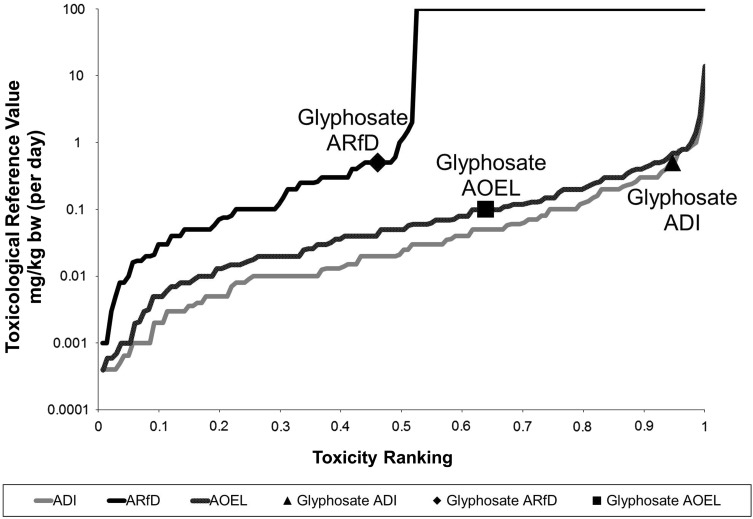
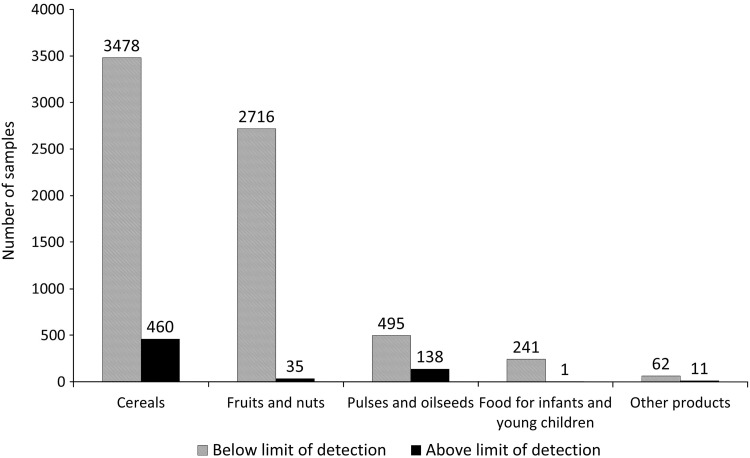
Glyphosate is the most widely used herbicide worldwide. It is a broad spectrum herbicide and its agricultural uses increased considerably after the development of glyphosate-resistant genetically modified (GM) varieties. Since glyphosate was introduced in 1974, all regulatory assessments have established that glyphosate has low hazard potential to mammals, however, the International Agency for Research on Cancer (IARC) concluded in March 2015 that it is probably carcinogenic. The IARC conclusion was not confirmed by the EU assessment or the recent joint WHO/FAO evaluation, both using additional evidence. Glyphosate is not the first topic of disagreement between IARC and regulatory evaluations, but has received greater attention. This review presents the scientific basis of the glyphosate health assessment conducted within the European Union (EU) renewal process, and explains the differences in the carcinogenicity assessment with IARC. Use of different data sets, particularly on long-term toxicity/carcinogenicity in rodents, could partially explain the divergent views; but methodological differences in the evaluation of the available evidence have been identified. The EU assessment did not identify a carcinogenicity hazard, revised the toxicological profile proposing new toxicological reference values, and conducted a risk assessment for some representatives uses. Two complementary exposure assessments, human-biomonitoring and food-residues-monitoring, suggests that actual exposure levels are below these reference values and do not represent a public concern.
草甘膦是全球使用最广泛的除草剂。它是一种广谱除草剂,自从抗草甘膦转基因品种出现后,其在农业上的使用量大幅增加。自1974年草甘膦问世以来,所有监管评估均认定草甘膦对哺乳动物的潜在危害较低,然而,国际癌症研究机构(IARC)在2015年3月得出结论,认为草甘膦可能具有致癌性。欧盟的评估以及世界卫生组织/联合国粮农组织最近的联合评估(均采用了更多证据)均未证实IARC的这一结论。草甘膦并非IARC与监管评估之间产生分歧的首个议题,但却受到了更多关注。本综述介绍了在欧盟草甘膦重新评估过程中对其健康评估的科学依据,并解释了与IARC在致癌性评估方面存在的差异。使用不同的数据集,尤其是关于啮齿动物长期毒性/致癌性的数据集,可能部分解释了双方观点的分歧;但已发现对现有证据进行评估时存在方法上的差异。欧盟的评估未发现草甘膦具有致癌危害,修订了毒理学档案,提出了新的毒理学参考值,并对一些典型用途进行了风险评估。两项互补的暴露评估,即人体生物监测和食品残留监测,表明实际暴露水平低于这些参考值,不构成公众担忧。