Zheng Honglei, Fan Liqiang, Milne Richard I, Zhang Lei, Wang Yaling, Mao Kangshan
MOE Key Laboratory of Bio-Resources and Eco-Environment, College of Life Science, Sichuan University Chengdu, China.
Institute of Molecular Plant Sciences, School of Biological Sciences, University of Edinburgh Edinburgh, UK.
Front Plant Sci. 2017 Mar 21;8:375. doi: 10.3389/fpls.2017.00375. eCollection 2017.
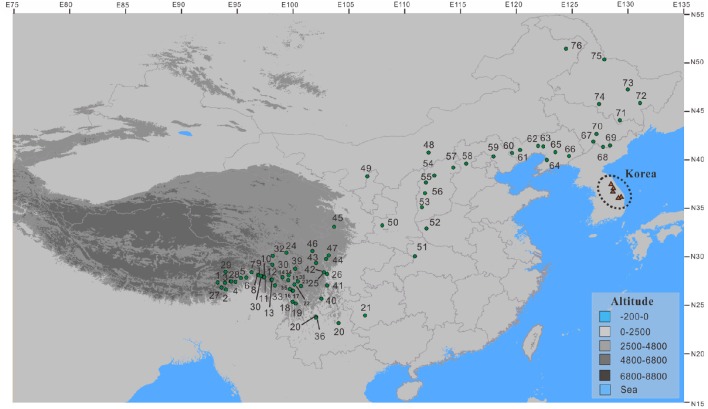
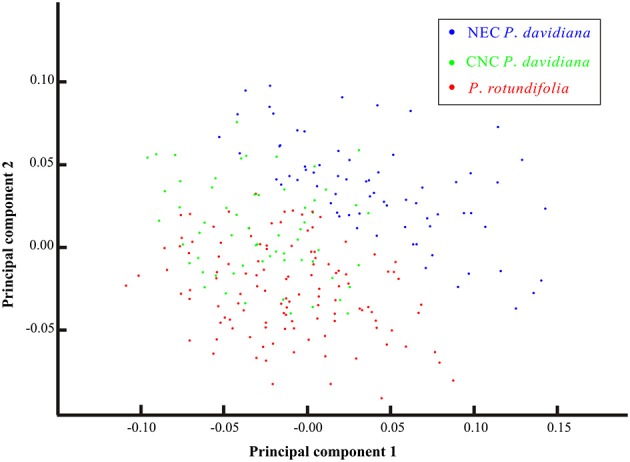
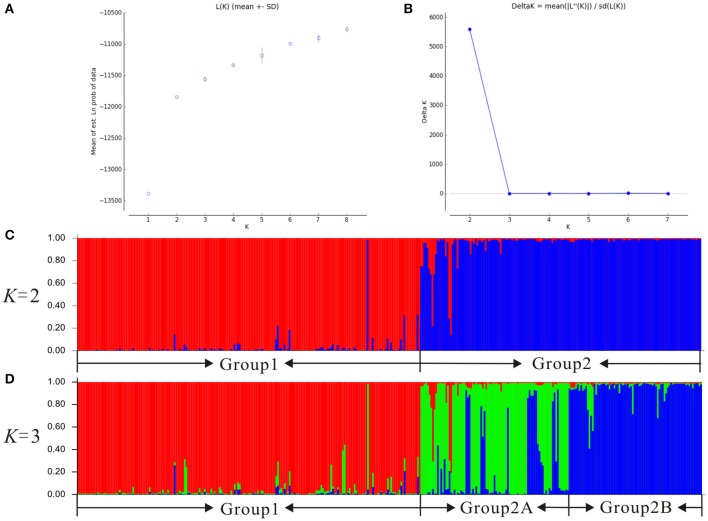
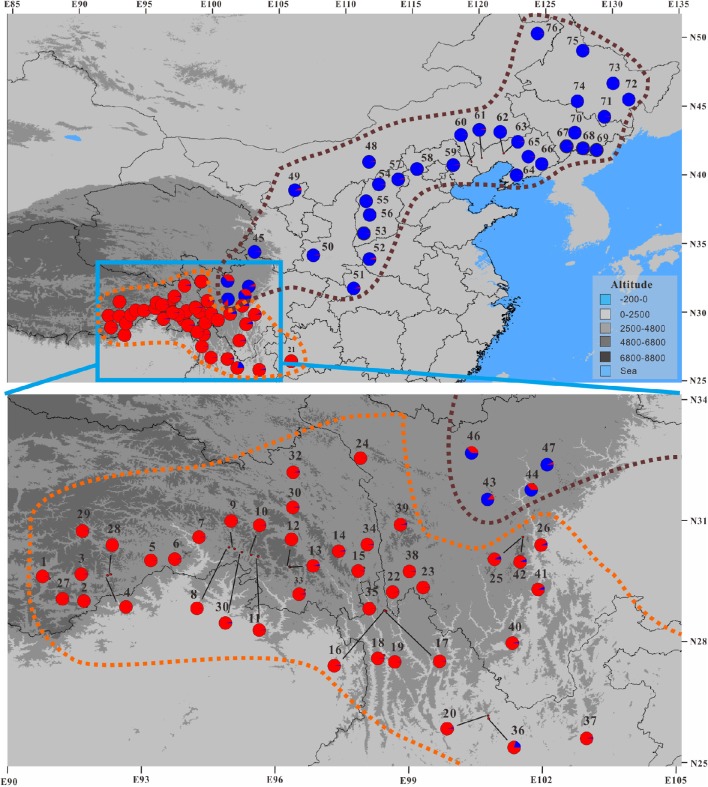
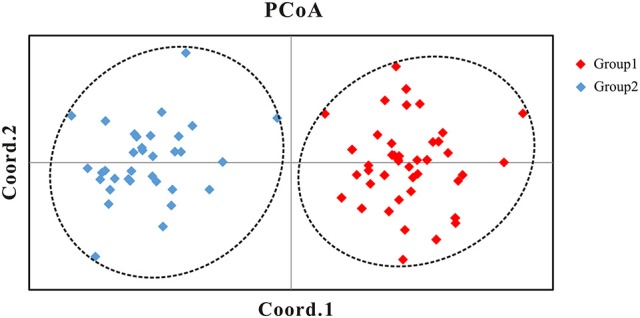
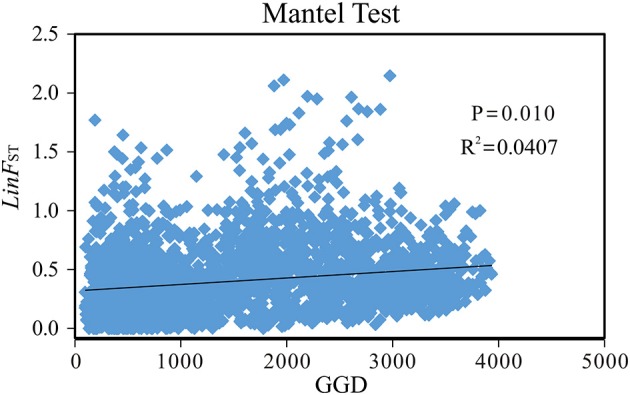
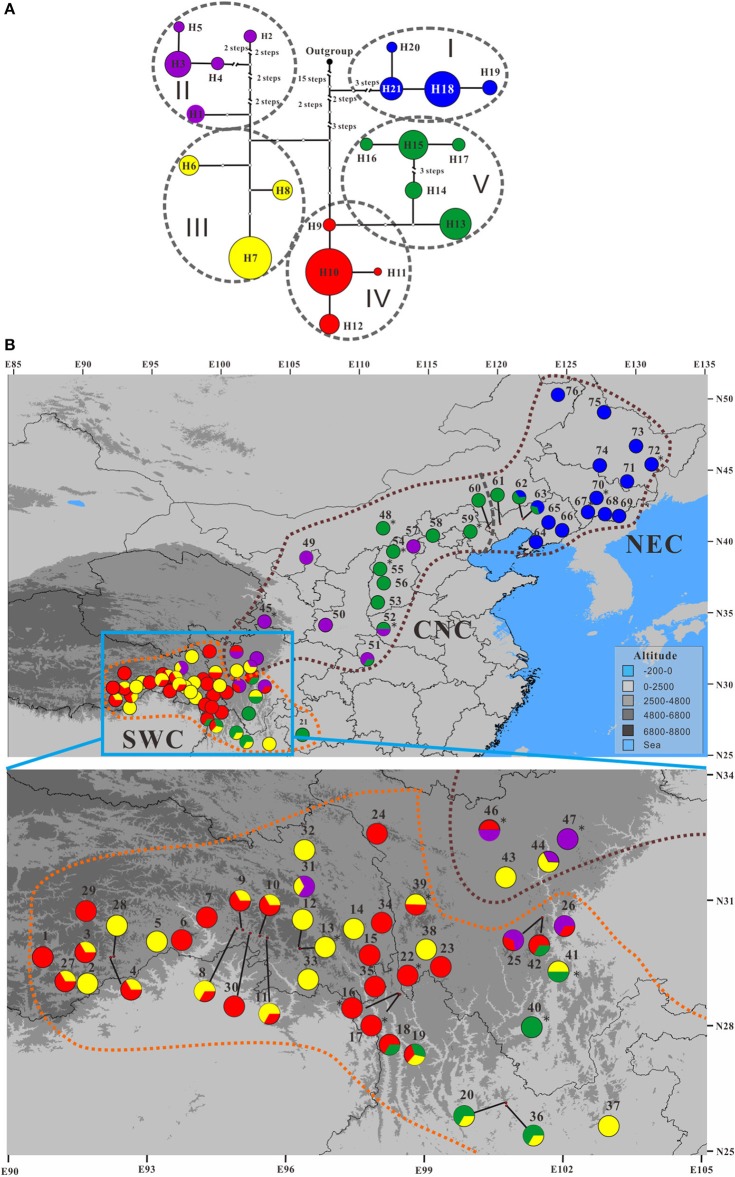
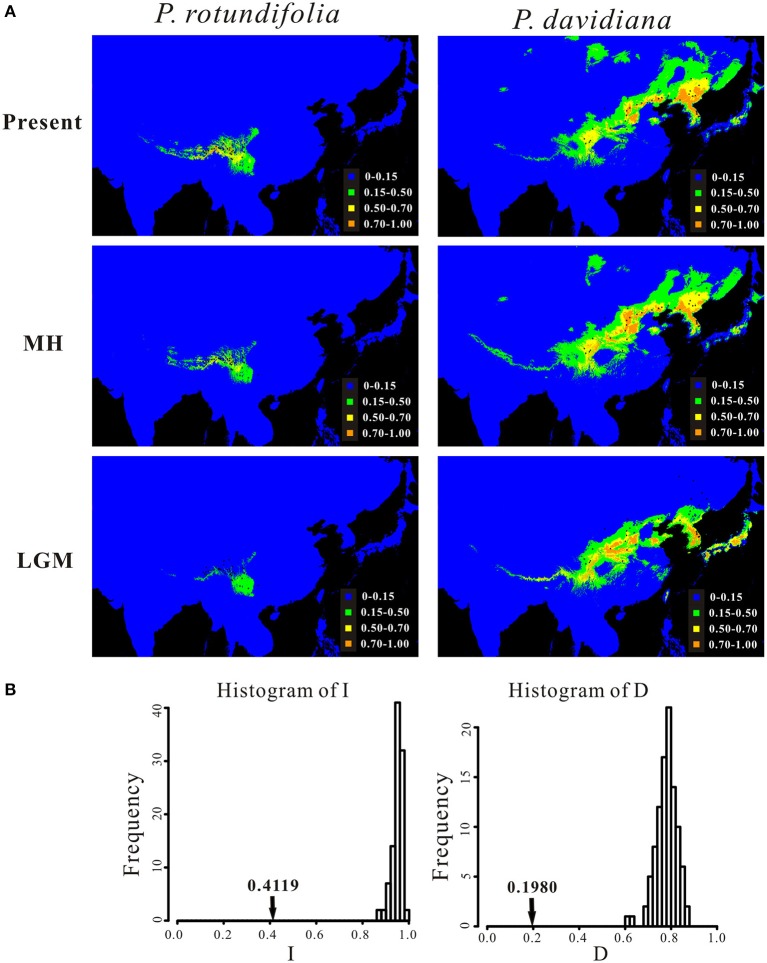
Species delimitation in tree species is notoriously challenging due to shared polymorphisms among species. An integrative survey that considers multiple operational criteria is a possible solution, and we aimed to test it in a species complex of aspens in China. Genetic [four chloroplast DNA (cpDNA) fragments and 14 nuclear microsatellite loci (nSSR)] and morphological variations were collected for 76 populations and 53 populations, respectively, covering the major geographic distribution of the - complex. Bayesian clustering, analysis of molecular variance (AMOVA), Principle Coordinate Analysis (PCoA), ecological niche modeling (ENM), and gene flow (migrants per generation), were employed to detect and test genetic clustering, morphological and habitat differentiation, and gene flow between/among putative species. The nSSR data and ENM suggested that there are two separately evolving meta-population lineages that correspond to (pd) and (pr). Furthermore, several lines of evidence supported a subdivision of into Northeastern (NEC) and Central-North (CNC) groups, yet they are still functioning as one species. CpDNA data revealed that five haplotype clades formed a pattern of [pdNEC, ((pdCNC, pr), (pdCNC, pr))], but most haplotypes are species-specific. Meanwhile, PCA based on morphology suggested a closer relationship between the CNC group () and . Discrepancy of nSSR and ENM vs. cpDNA and morphology could have reflected a complex lineage divergence and convergence history. and can be regarded as a recently diverged species pair that experienced parapatric speciation due to ecological differentiation in the face of gene flow. Our findings highlight the importance of integrative surveys at population level, as we have undertaken, is an important approach to detect the boundary of a group of species that have experienced complex evolutionary history.
由于物种间存在共享多态性,树木物种的物种界定极具挑战性。考虑多种操作标准的综合调查可能是一种解决方案,我们旨在在中国的一个白杨树种复合体中对此进行测试。分别收集了76个种群和53个种群的遗传数据(四个叶绿体DNA(cpDNA)片段和14个核微卫星位点(nSSR))和形态变异数据,涵盖了该复合体的主要地理分布范围。采用贝叶斯聚类、分子方差分析(AMOVA)、主坐标分析(PCoA)、生态位建模(ENM)和基因流分析(每代迁移个体数)来检测和测试假定物种之间的遗传聚类、形态和栖息地分化以及基因流。nSSR数据和ENM表明存在两个独立进化的复合种群谱系,分别对应于(pd)和(pr)。此外,多条证据支持将(pd)细分为东北(NEC)和中北部(CNC)组,但它们仍作为一个物种发挥作用。CpDNA数据显示五个单倍型分支形成了一种[pdNEC,((pdCNC,pr),(pdCNC,pr))]的模式,但大多数单倍型是物种特异性的。同时,基于形态学的主成分分析表明CNC组()和()之间关系更密切。nSSR和ENM与cpDNA和形态学之间的差异可能反映了复杂的谱系分歧和趋同历史。(pd)和(pr)可被视为一对最近分化的物种,它们在基因流存在的情况下由于生态分化而经历了邻域物种形成。我们的研究结果强调了如我们所进行的在种群水平上进行综合调查的重要性,这是检测经历了复杂进化历史的一组物种边界的重要方法。