Monje Francisco J, Cicvaric Ana, Acevedo Aguilar Juan Pablo, Elbau Immanuel, Horvath Orsolya, Diao Weifei, Glat Micaela, Pollak Daniela D
Department of Neurophysiology and Neuropharmacology, Center for Physiology and Pharmacology, Medical University of Vienna , Vienna , Austria.
Department of Neurophysiology and Neuropharmacology, Center for Physiology and Pharmacology, Medical University of Vienna, Vienna, Austria; Max Planck Institute of Psychiatry, Munich, Germany.
Front Neurol. 2017 Mar 22;8:99. doi: 10.3389/fneur.2017.00099. eCollection 2017.
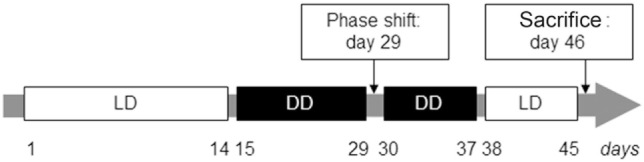
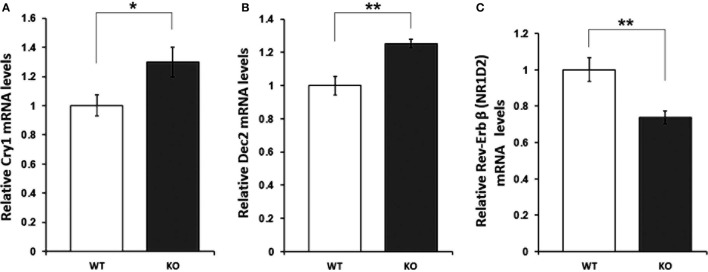
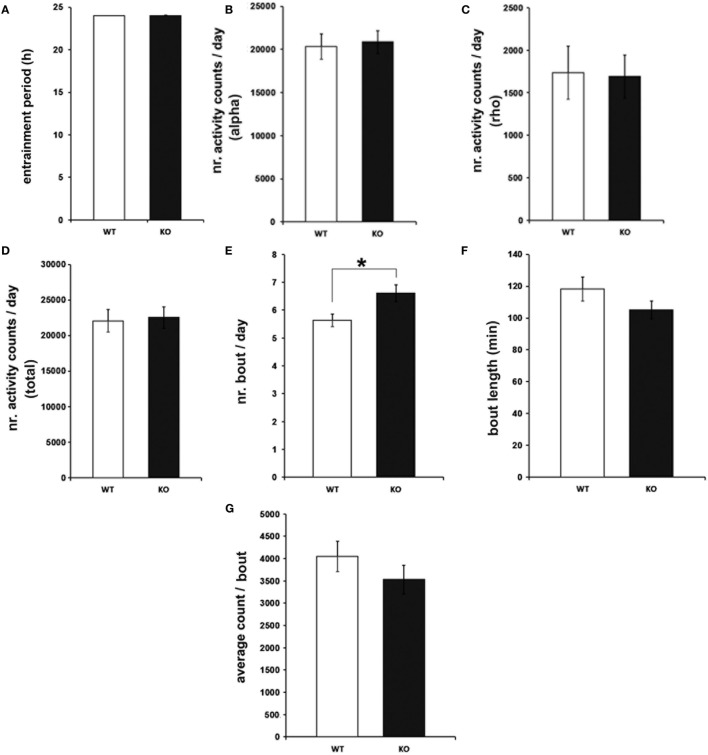
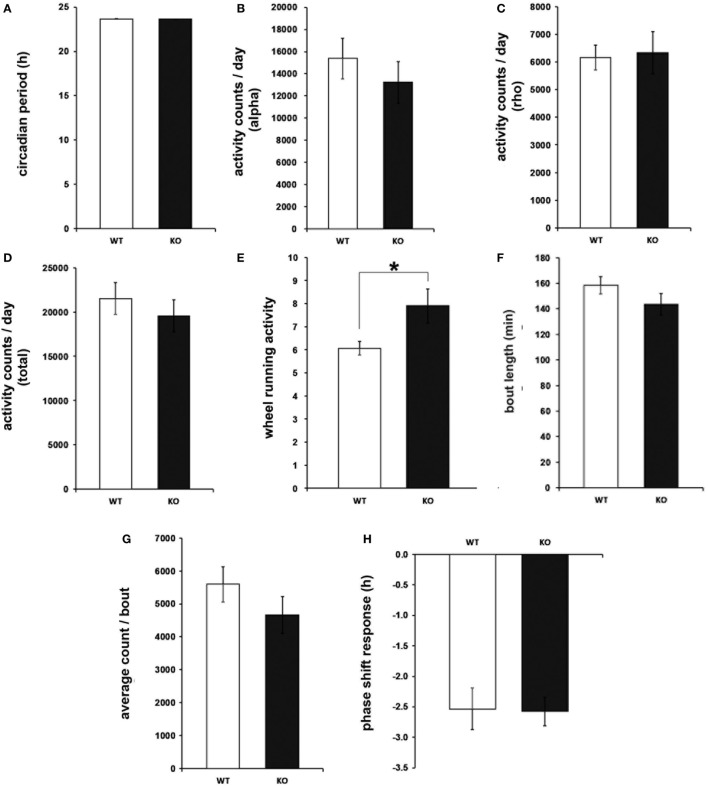
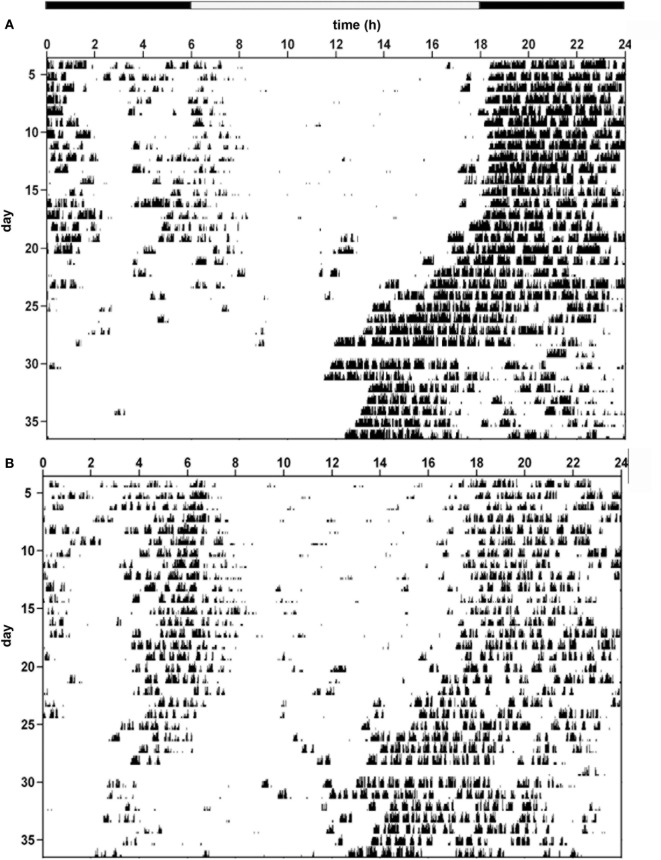
The characteristics of the cycles of activity and rest stand out among the most intensively investigated aspects of circadian rhythmicity in humans and experimental animals. Alterations in the circadian patterns of activity and rest are strongly linked to cognitive and emotional dysfunctions in severe mental illnesses such as Alzheimer's disease (AD) and major depression (MDD). The proinflammatory cytokine interleukin 6 (IL-6) has been prominently associated with the pathogenesis of AD and MDD. However, the potential involvement of IL-6 in the modulation of the diurnal rhythms of activity and rest has not been investigated. Here, we set out to study the role of IL-6 in circadian rhythmicity through the characterization of patterns of behavioral locomotor activity in IL-6 knockout (IL-6 KO) mice and wild-type littermate controls. Deletion of IL-6 did not alter the length of the circadian period or the amount of locomotor activity under either light-entrained or free-running conditions. IL-6 KO mice also presented a normal phase shift in response to light exposure at night. However, the temporal architecture of the behavioral rhythmicity throughout the day, as characterized by the quantity of ultradian activity bouts, was significantly impaired under light-entrained and free-running conditions in IL-6 KO. Moreover, the assessment of clock gene expression in the hippocampus, a brain region involved in AD and depression, revealed altered levels of , and in IL-6 KO mice. These data propose that IL-6 participates in the regulation of ultradian activity/rest rhythmicity and clock gene expression in the mammalian brain. Furthermore, we propose IL-6-dependent circadian misalignment as a common pathogenetic principle in some neurodegenerative and neuropsychiatric disorders.
活动与休息周期的特征在人类和实验动物昼夜节律性研究最深入的方面中较为突出。活动与休息的昼夜模式改变与严重精神疾病(如阿尔茨海默病(AD)和重度抑郁症(MDD))中的认知和情绪功能障碍密切相关。促炎细胞因子白细胞介素6(IL-6)与AD和MDD的发病机制显著相关。然而,IL-6在调节活动与休息昼夜节律方面的潜在作用尚未得到研究。在此,我们通过对IL-6基因敲除(IL-6 KO)小鼠和野生型同窝对照小鼠的行为运动活动模式进行表征,来研究IL-6在昼夜节律性中的作用。在光照同步或自由运行条件下,IL-6的缺失并未改变昼夜周期的长度或运动活动量。IL-6 KO小鼠在夜间对光照暴露也呈现出正常的相位偏移。然而,在光照同步和自由运行条件下,IL-6 KO小鼠全天行为节律性的时间结构(以超日活动发作次数为特征)明显受损。此外,对海马体(一个与AD和抑郁症相关的脑区)中时钟基因表达的评估显示,IL-6 KO小鼠中 、 和 的水平发生了改变。这些数据表明,IL-6参与了哺乳动物大脑中超日活动/休息节律性和时钟基因表达的调节。此外,我们提出IL-6依赖性昼夜节律失调是一些神经退行性和神经精神疾病的共同发病机制。