Kalal Bhuvanesh Sukhlal, Upadhya Dinesh, Pai Vinitha Ramanath
Department of Biochemistry, Yenepoya Medical College, Mangaluru, India; Yenepoya Research Centre, Yenepoya University, Mangaluru, India.
Yenepoya Research Centre, Yenepoya University , Mangaluru, India.
Oncol Rev. 2017 Mar 24;11(1):326. doi: 10.4081/oncol.2017.326. eCollection 2017 Mar 3.
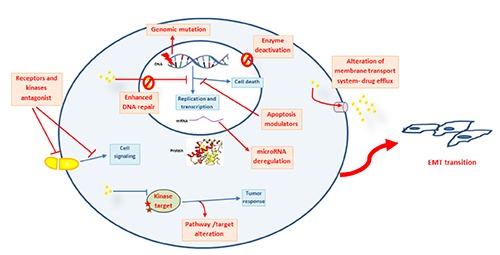
Melanoma is a most dangerous and deadly type of skin cancer, and considered intrinsically resistant to both radiotherapy and chemotherapy. It has become a major public health concern as the incidence of melanoma has been rising steadily over recent decades with a 5-year survival remaining less than 5%. Detection of the disease in early stage may be curable, but late stage metastatic disease that has spread to other organs has an extremely poor prognosis with a median survival of less than 10 months. Since metastatic melanoma is unresponsive to therapy that is currently available, research is now focused on different treatment strategies such as combinations of surgery, chemotherapy and radiotherapy. The molecular basis of resistance to chemotherapy seen in melanoma is multifactorial; defective drug transport system, altered apoptotic pathway, deregulation of apoptosis and/or changes in enzymatic systems that mediate cellular metabolic machinery. Understanding of alterations in molecular processes involved in drug resistance may help in developing new therapeutic approaches to treatment of malignant melanoma.
黑色素瘤是一种极其危险且致命的皮肤癌类型,被认为对放疗和化疗具有内在抗性。随着黑色素瘤的发病率在近几十年来稳步上升,其5年生存率仍低于5%,它已成为一个主要的公共卫生问题。在疾病早期进行检测可能可治愈,但已扩散至其他器官的晚期转移性疾病预后极差,中位生存期不到10个月。由于转移性黑色素瘤对目前可用的治疗无反应,现在的研究集中在不同的治疗策略上,如手术、化疗和放疗的联合应用。黑色素瘤中所见的化疗抗性的分子基础是多因素的;药物转运系统缺陷、凋亡途径改变、凋亡失调和/或介导细胞代谢机制的酶系统变化。了解与耐药性相关的分子过程改变可能有助于开发治疗恶性黑色素瘤的新治疗方法。