Botchlett Rachel, Woo Shih-Lung, Liu Mengyang, Pei Ya, Guo Xin, Li Honggui, Wu Chaodong
Department of Nutrition and Food ScienceTexas A&M University, College Station, USA.
Pinnacle Clinical ResearchLive Oak, USA.
J Endocrinol. 2017 Jun;233(3):R145-R171. doi: 10.1530/JOE-16-0580. Epub 2017 Apr 11.
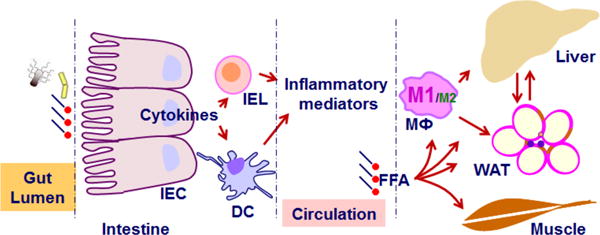
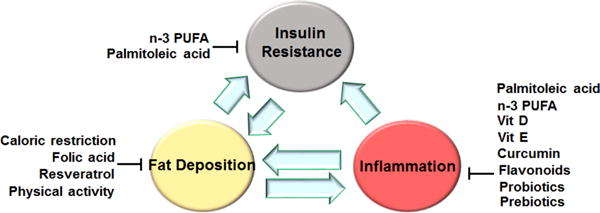
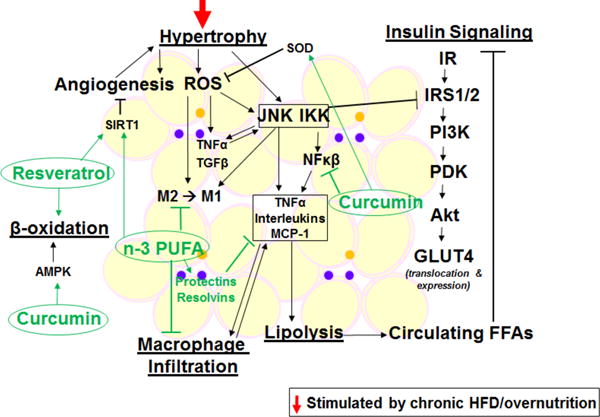
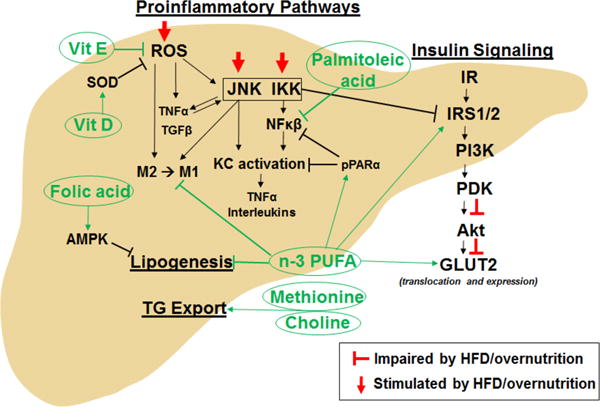
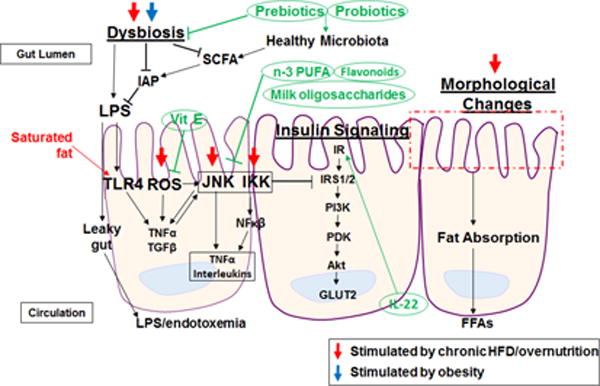
Obesity is an ongoing pandemic and serves as a causal factor of a wide spectrum of metabolic diseases including diabetes, fatty liver disease, and cardiovascular disease. Much evidence has demonstrated that nutrient overload/overnutrition initiates or exacerbates inflammatory responses in tissues/organs involved in the regulation of systemic metabolic homeostasis. This obesity-associated inflammation is usually at a low-grade and viewed as metabolic inflammation. When it exists continuously, inflammation inappropriately alters metabolic pathways and impairs insulin signaling cascades in peripheral tissues/organs such as adipose tissue, the liver and skeletal muscles, resulting in local fat deposition and insulin resistance and systemic metabolic dysregulation. In addition, inflammatory mediators, e.g., proinflammatory cytokines, and excessive nutrients, e.g., glucose and fatty acids, act together to aggravate local insulin resistance and form a vicious cycle to further disturb the local metabolic pathways and exacerbate systemic metabolic dysregulation. Owing to the critical role of nutrient metabolism in controlling the initiation and progression of inflammation and insulin resistance, nutritional approaches have been implicated as effective tools for managing obesity and obesity-associated metabolic diseases. Based on the mounting evidence generated from both basic and clinical research, nutritional approaches are commonly used for suppressing inflammation, improving insulin sensitivity, and/or decreasing fat deposition. Consequently, the combined effects are responsible for improvement of systemic insulin sensitivity and metabolic homeostasis.
肥胖是一种持续蔓延的流行病,是包括糖尿病、脂肪肝疾病和心血管疾病在内的多种代谢性疾病的致病因素。大量证据表明,营养过剩/营养过度会引发或加剧参与全身代谢稳态调节的组织/器官中的炎症反应。这种与肥胖相关的炎症通常程度较低,被视为代谢性炎症。当这种炎症持续存在时,会不适当地改变代谢途径,并损害外周组织/器官(如脂肪组织、肝脏和骨骼肌)中的胰岛素信号级联反应,导致局部脂肪堆积和胰岛素抵抗以及全身代谢失调。此外,炎症介质(如促炎细胞因子)和过量营养物质(如葡萄糖和脂肪酸)共同作用,加剧局部胰岛素抵抗,形成恶性循环,进一步扰乱局部代谢途径并加剧全身代谢失调。由于营养代谢在控制炎症和胰岛素抵抗的发生与发展中起关键作用,营养干预已被视为管理肥胖及肥胖相关代谢性疾病的有效手段。基于基础研究和临床研究产生的越来越多的证据,营养干预通常用于抑制炎症、提高胰岛素敏感性和/或减少脂肪堆积。因此,这些综合作用有助于改善全身胰岛素敏感性和代谢稳态。