Physical Sciences, Sunnybrook Research Institute, Sunnybrook Health Sciences Centre, Toronto, ON, Canada.
Department of Medical Biophysics, Faculty of Medicine, University of Toronto, Toronto, ON, Canada.
Sci Rep. 2017 Apr 12;7:45733. doi: 10.1038/srep45733.
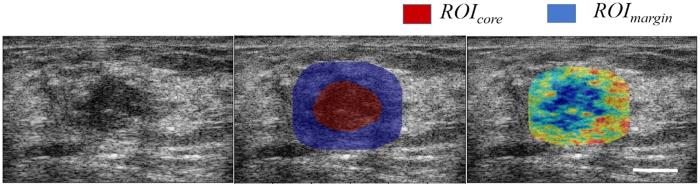
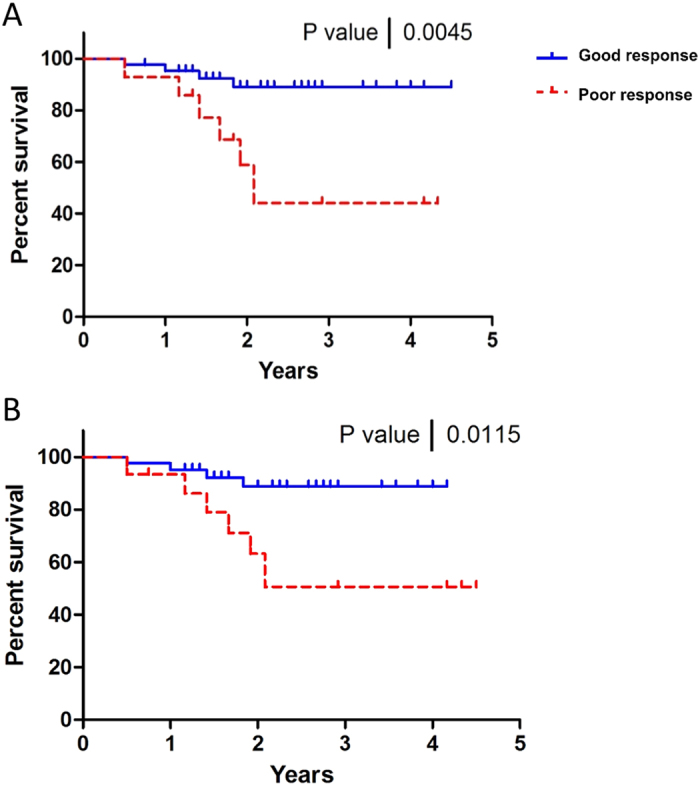
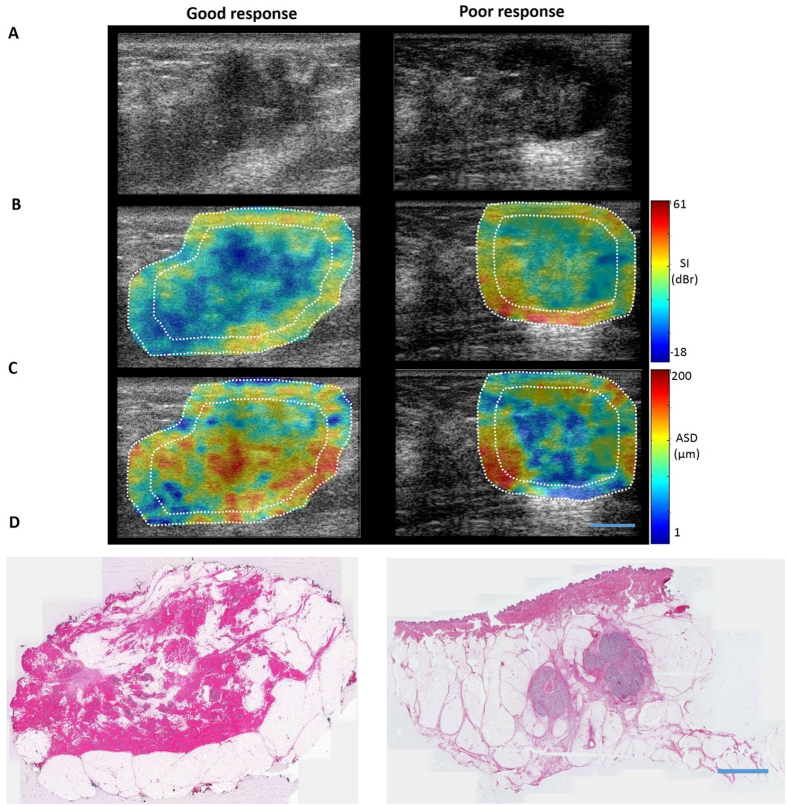
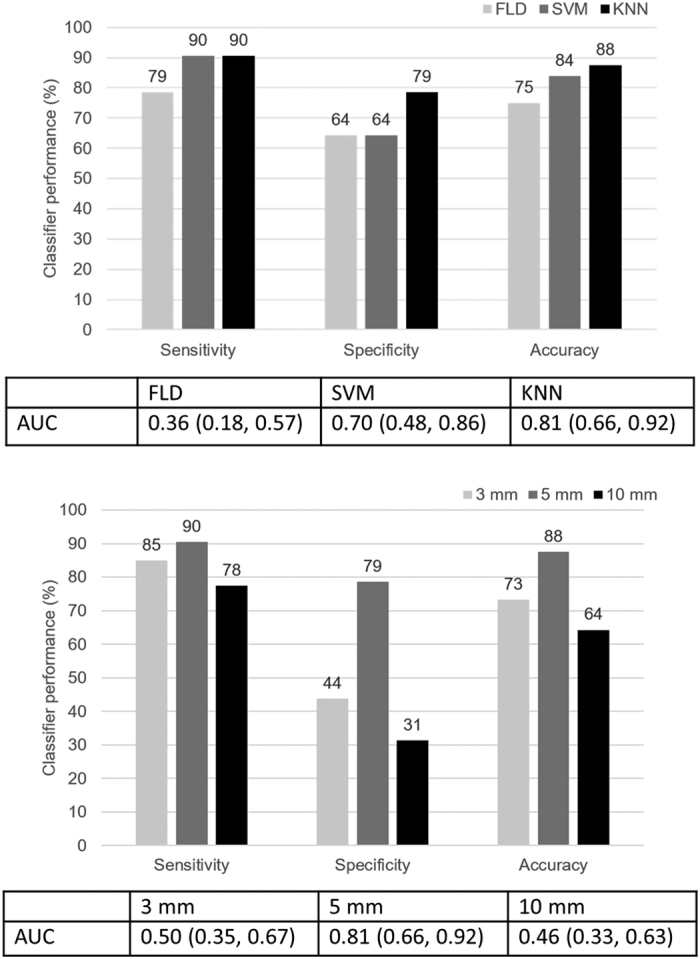
Quantitative ultrasound (QUS) can probe tissue structure and analyze tumour characteristics. Using a 6-MHz ultrasound system, radiofrequency data were acquired from 56 locally advanced breast cancer patients prior to their neoadjuvant chemotherapy (NAC) and QUS texture features were computed from regions of interest in tumour cores and their margins as potential predictive and prognostic indicators. Breast tumour molecular features were also collected and used for analysis. A multiparametric QUS model was constructed, which demonstrated a response prediction accuracy of 88% and ability to predict patient 5-year survival rates (p = 0.01). QUS features demonstrated superior performance in comparison to molecular markers and the combination of QUS and molecular markers did not improve response prediction. This study demonstrates, for the first time, that non-invasive QUS features in the core and margin of breast tumours can indicate breast cancer response to neoadjuvant chemotherapy (NAC) and predict five-year recurrence-free survival.
定量超声(QUS)可探测组织结构并分析肿瘤特征。使用 6MHz 超声系统,在新辅助化疗(NAC)前从 56 名局部晚期乳腺癌患者中获取射频数据,并从肿瘤核心及其边缘的感兴趣区域计算 QUS 纹理特征,作为潜在的预测和预后指标。还收集了乳腺肿瘤分子特征并进行了分析。构建了一个多参数 QUS 模型,该模型显示出 88%的响应预测准确性,并能够预测患者 5 年生存率(p=0.01)。与分子标志物相比,QUS 特征的性能更优,而 QUS 和分子标志物的组合并不能提高反应预测。这项研究首次证明,乳腺肿瘤核心和边缘的无创 QUS 特征可以指示乳腺癌对新辅助化疗(NAC)的反应,并预测五年无复发生存率。