Tang Lanlan, Chai Wenwen, Ye Fanghua, Yu Yan, Cao Lizhi, Yang Minghua, Xie Min, Yang Liangchun
Department of Pediatrics, Xiangya Hospital, Central South University, Changsha, Hunan 410008, People's Republic of China.
Department of Nuclear Medicine, Hunan Cancer Hospital and The Affiliated Cancer Hospital of Xiangya School of Medicine, Central South University, Changsha, Hunan 410008, People's Republic of China.
Oncotarget. 2017 Apr 18;8(16):27314-27327. doi: 10.18632/oncotarget.15432.
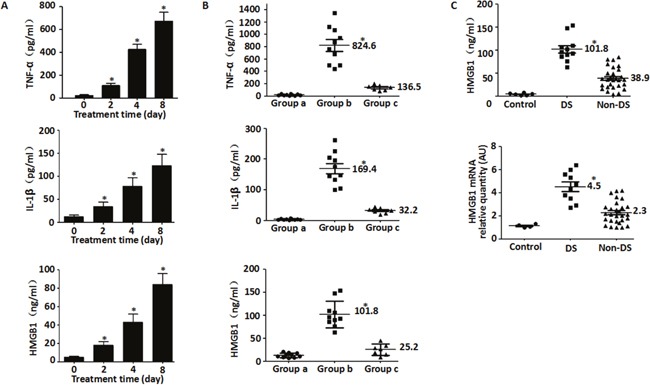
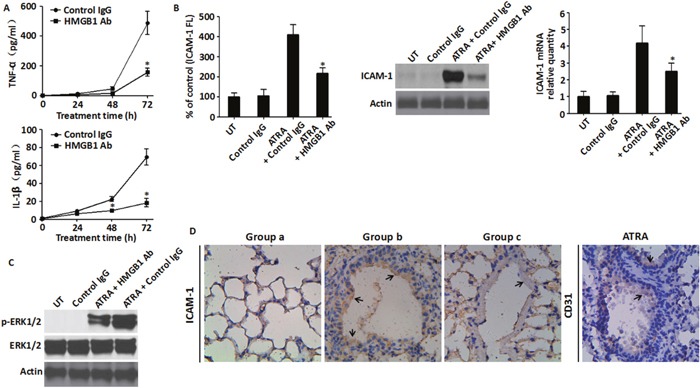
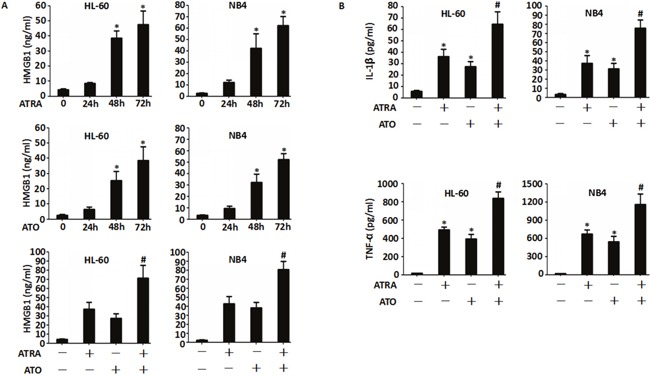
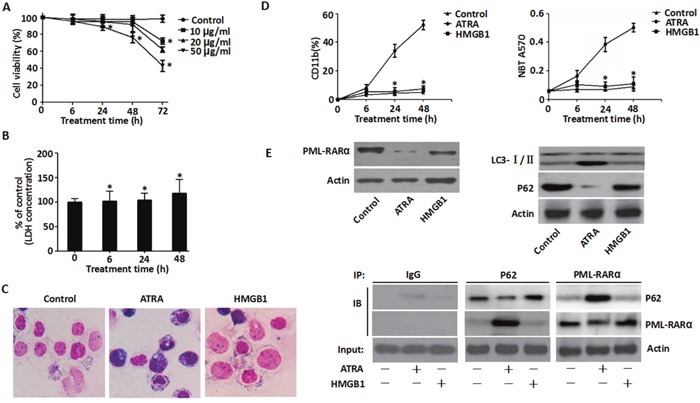
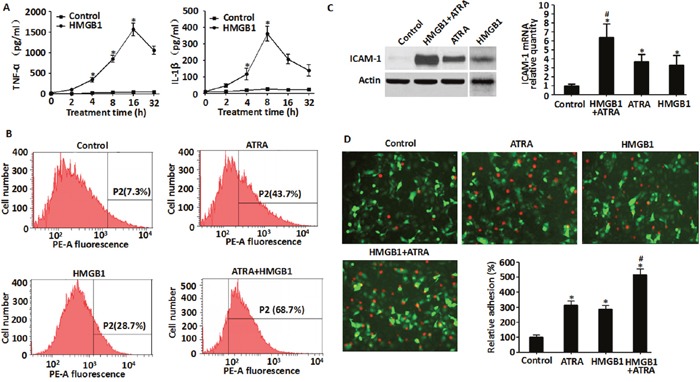
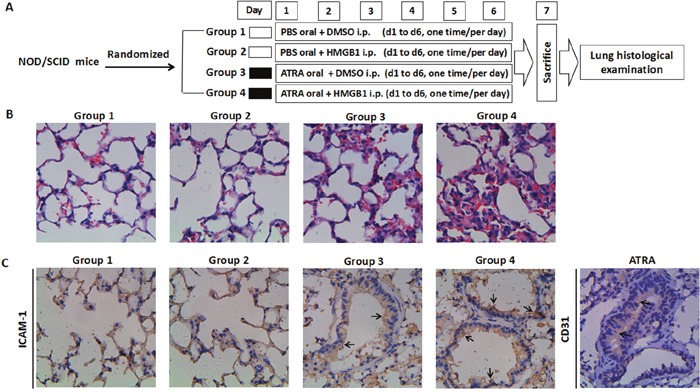
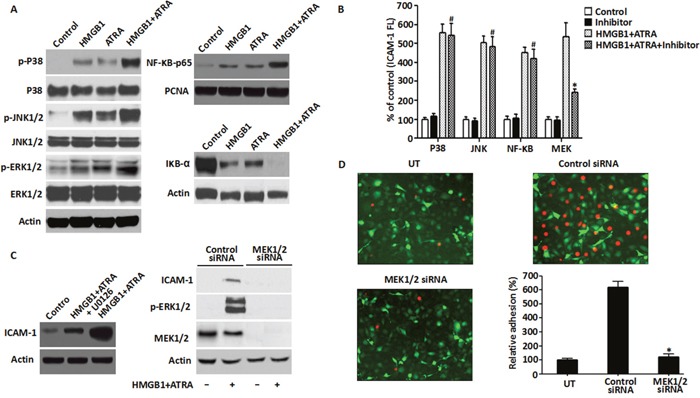
Differentiation therapy based on all-trans-retinoic acid (ATRA) and arsenic trioxide (ATO) for the treatment of acute promyelocytic leukemia (APL) is complicated by the development of differentiation syndrome (DS), which can be fatal. We examined the role of HMGB1 (high-mobility group box 1) in DS using both in vitro and in vivo models. HMGB1 and the pro-inflammatory cytokines IL-1β and TNF-α were gradually released from NB4 and HL-60 cells treated with ATRA and/or ATO. Similarly, higher serum HMGB1 levels positively correlated with the clinical status of DS patients. Exogenous HMGB1 promoted rapid release of IL-1β and TNF-α as well as elevated expression of ICAM-1, without altering cell differentiation. Exogenous HMGB1 also enhanced pulmonary infiltration and up-regulated ICAM-1 expression in the ATRA-treated DS mouse. Pharmacological inhibition or depletion of MEK1/2 reduced the cytokine levels and suppressed expression of ICAM-1 and the adhesion of HMGB1-treated NB4 cells to endothelial cells, implicating MEK/ERK signaling in the response to HMGB1 during DS. Treatment with a HMGB1-neutralizing antibody reduced secretion of TNF-α and IL-1β, arrested the elevation of ICAM-1 and blunted the activation of ERK1/2 in ATRA-induced NB4 cells. The HMGB1-neutralizing antibody also decreased ICAM-1 expression and reduced mortality in ATRA-treated DS model mice. These findings demonstrate that released HMGB1 is central to DS, and that targeting HMGB1 may be of therapeutic value in the treatment of DS.
基于全反式维甲酸(ATRA)和三氧化二砷(ATO)的分化疗法用于治疗急性早幼粒细胞白血病(APL)时,会因分化综合征(DS)的发生而变得复杂,DS可能是致命的。我们使用体外和体内模型研究了高迁移率族蛋白B1(HMGB1)在DS中的作用。HMGB1以及促炎细胞因子白细胞介素-1β(IL-1β)和肿瘤坏死因子-α(TNF-α)从用ATRA和/或ATO处理的NB4和HL-60细胞中逐渐释放出来。同样,较高的血清HMGB1水平与DS患者的临床状况呈正相关。外源性HMGB1促进IL-1β和TNF-α的快速释放以及细胞间黏附分子-1(ICAM-1)的表达升高,而不改变细胞分化。外源性HMGB1还增强了ATRA处理的DS小鼠的肺部浸润并上调了ICAM-1的表达。MEK1/2的药理学抑制或缺失降低了细胞因子水平,并抑制了ICAM-1的表达以及HMGB1处理的NB4细胞与内皮细胞的黏附,这表明在DS期间MEK/细胞外信号调节激酶(ERK)信号传导参与了对HMGB1的反应。用HMGB1中和抗体处理可减少TNF-α和IL-1β的分泌,阻止ICAM-1的升高,并减弱ATRA诱导的NB4细胞中ERK1/2的激活。HMGB1中和抗体还降低了ICAM-1的表达,并降低了ATRA处理的DS模型小鼠的死亡率。这些发现表明,释放的HMGB1是DS的核心,靶向HMGB1可能对DS的治疗具有治疗价值。