Singh Gopal K, Jemal Ahmedin
US Department of Health and Human Services, Office of Health Equity, Health Resources and Services Administration, 5600 Fishers Lane, Room 13N42, Rockville, MD 20857, USA.
American Cancer Society, Inc., Surveillance & Health Services Research, 250 Williams Street NW, Corporate Center, Atlanta, GA 30303, USA.
J Environ Public Health. 2017;2017:2819372. doi: 10.1155/2017/2819372. Epub 2017 Mar 20.
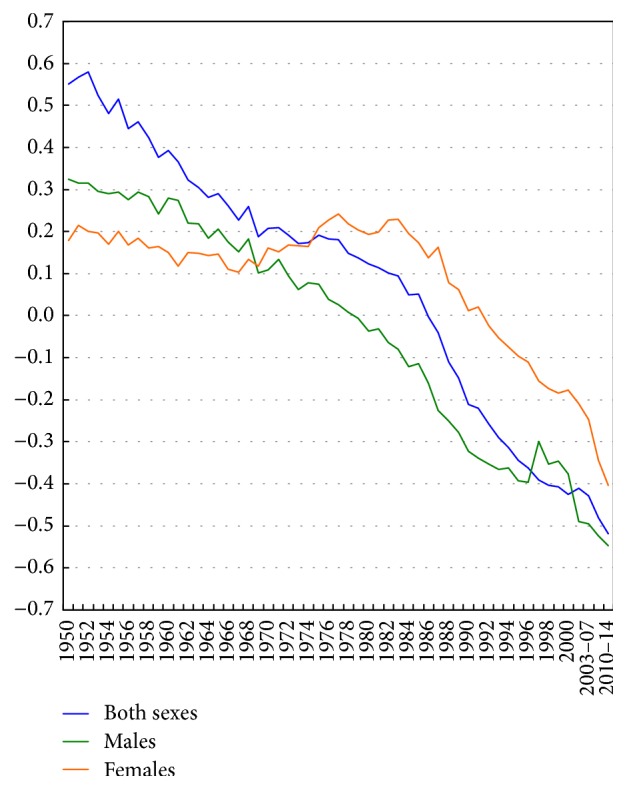
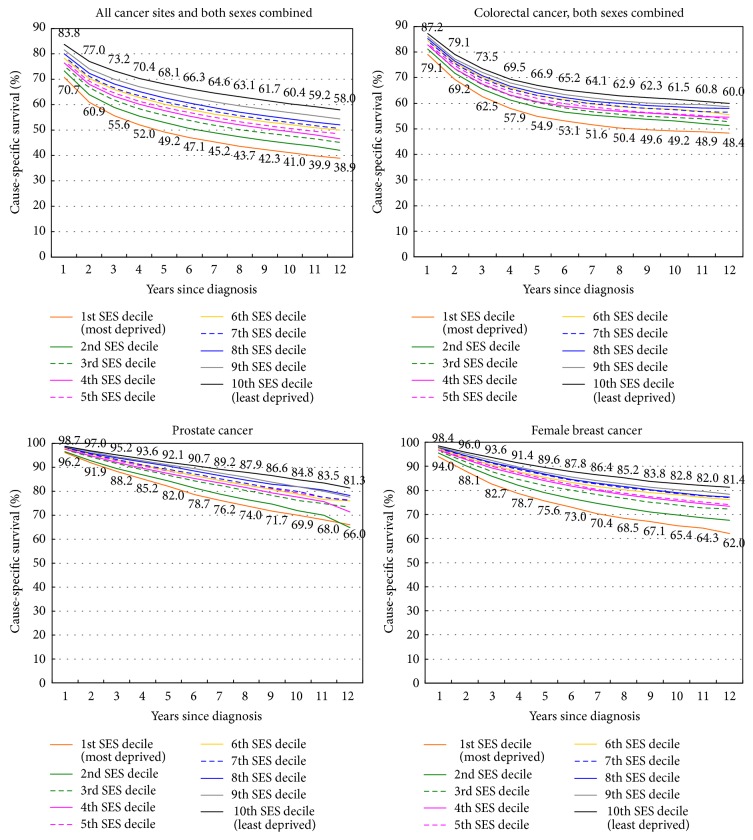
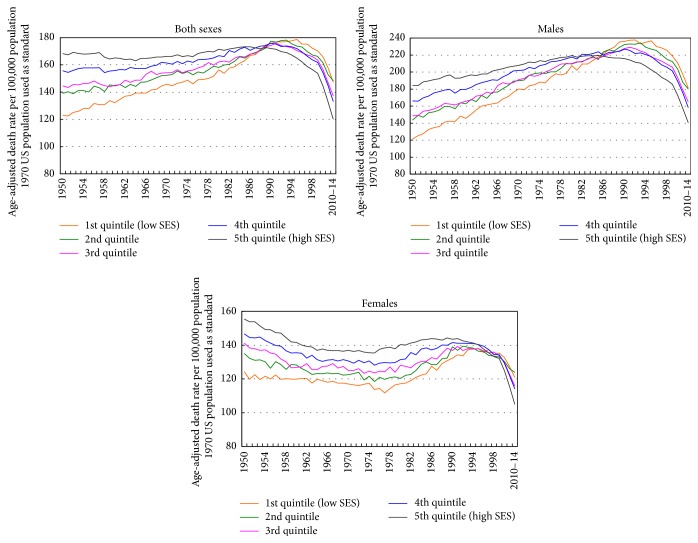
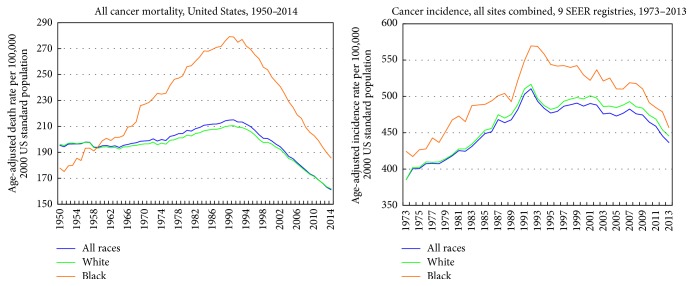
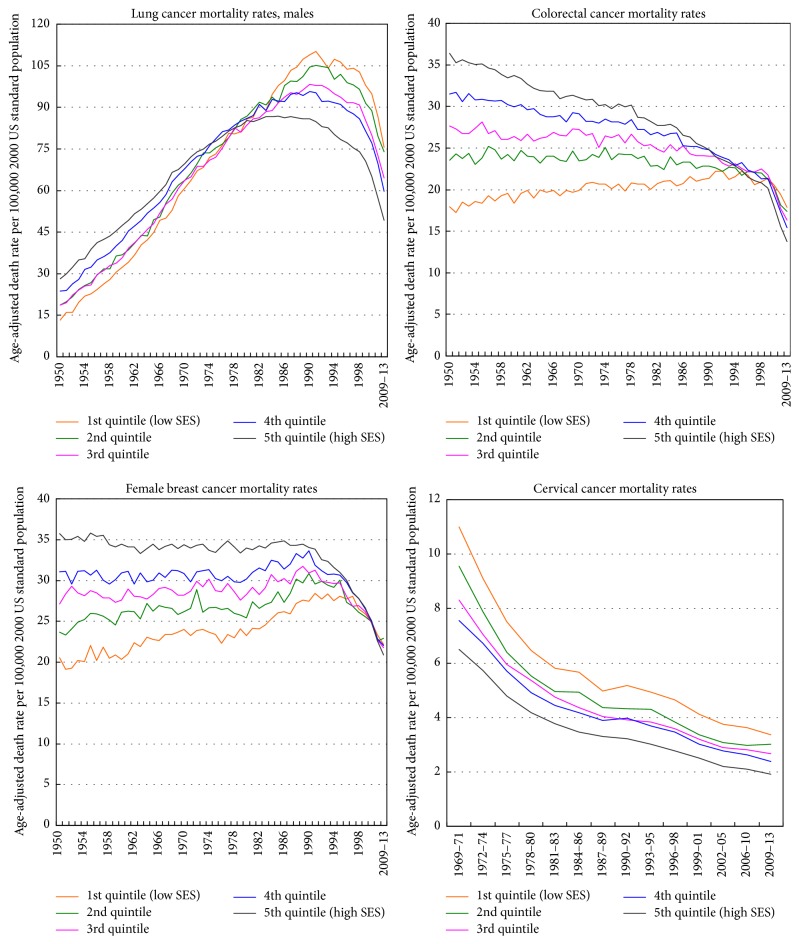
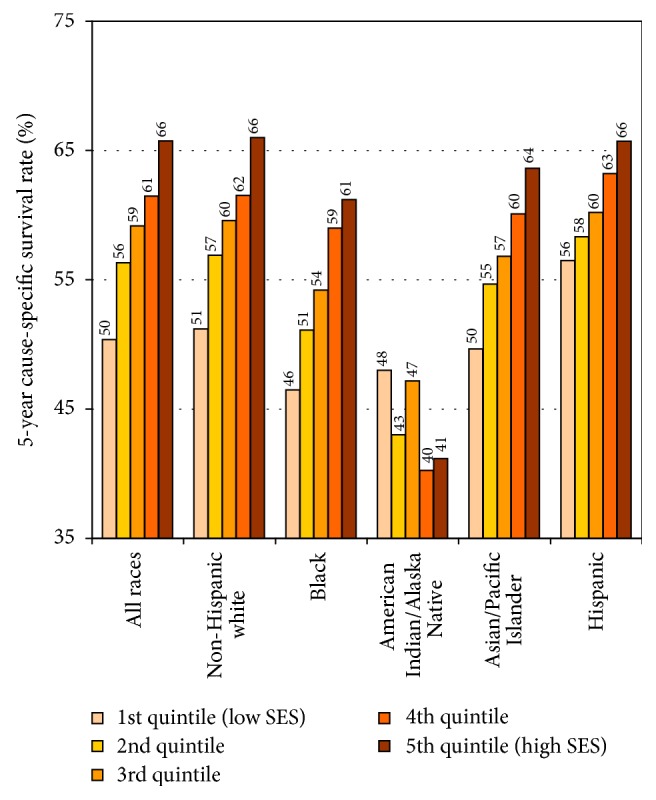
We analyzed socioeconomic and racial/ethnic disparities in US mortality, incidence, and survival rates from all-cancers combined and major cancers from 1950 to 2014. Census-based deprivation indices were linked to national mortality and cancer data for area-based socioeconomic patterns in mortality, incidence, and survival. The National Longitudinal Mortality Study was used to analyze individual-level socioeconomic and racial/ethnic patterns in mortality. Rates, risk-ratios, least squares, log-linear, and Cox regression were used to examine trends and differentials. Socioeconomic patterns in all-cancer, lung, and colorectal cancer mortality changed dramatically over time. Individuals in more deprived areas or lower education and income groups had higher mortality and incidence rates than their more affluent counterparts, with excess risk being particularly marked for lung, colorectal, cervical, stomach, and liver cancer. Education and income inequalities in mortality from all-cancers, lung, prostate, and cervical cancer increased during 1979-2011. Socioeconomic inequalities in cancer mortality widened as mortality in lower socioeconomic groups/areas declined more slowly. Mortality was higher among Blacks and lower among Asian/Pacific Islanders and Hispanics than Whites. Cancer patient survival was significantly lower in more deprived neighborhoods and among most ethnic-minority groups. Cancer mortality and incidence disparities may reflect inequalities in smoking, obesity, physical inactivity, diet, alcohol use, screening, and treatment.
我们分析了1950年至2014年美国全癌合并及主要癌症的死亡率、发病率和生存率方面的社会经济及种族/民族差异。基于人口普查的贫困指数与全国死亡率和癌症数据相关联,以了解死亡率、发病率和生存率方面基于地区的社会经济模式。利用全国纵向死亡率研究分析死亡率方面个体层面的社会经济及种族/民族模式。采用发病率、风险比、最小二乘法、对数线性法和Cox回归来研究趋势和差异。全癌、肺癌和结直肠癌死亡率的社会经济模式随时间发生了巨大变化。生活在更贫困地区或教育程度和收入较低群体中的个体,其死亡率和发病率高于较为富裕的同龄人,肺癌、结直肠癌、宫颈癌、胃癌和肝癌的额外风险尤为明显。1979年至2011年期间,全癌、肺癌、前列腺癌和宫颈癌死亡率方面的教育和收入不平等有所增加。随着社会经济地位较低群体/地区的死亡率下降更为缓慢,癌症死亡率方面的社会经济不平等加剧。黑人的死亡率高于白人,亚太岛民和西班牙裔的死亡率低于白人。在更贫困社区以及大多数少数族裔群体中,癌症患者的生存率显著较低。癌症死亡率和发病率差异可能反映出在吸烟、肥胖、身体活动不足、饮食、饮酒、筛查和治疗方面的不平等。