Seo Hyeon, Schaworonkow Natalie, Jun Sung Chan, Triesch Jochen
School of Electrical Engineering and Computer Science, Gwangju Institute of Science and Technology, Gwangju, Korea, South.
Frankfurt Institute for Advanced Studies, Frankfurt am Main, Germany.
F1000Res. 2016 Aug 10;5:1945. doi: 10.12688/f1000research.9277.3. eCollection 2016.
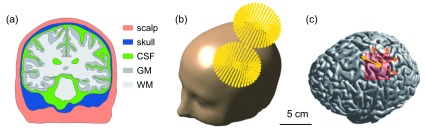
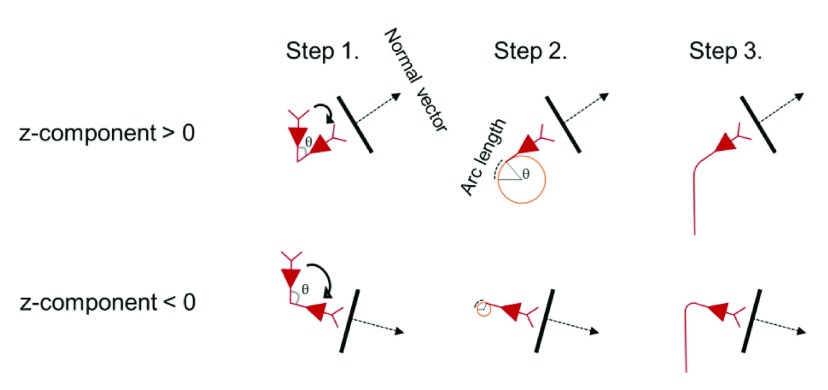
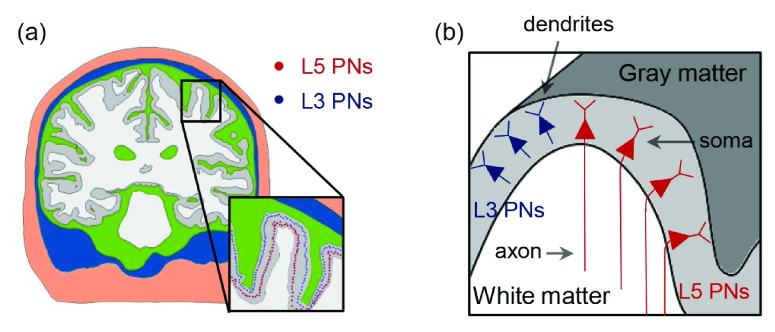
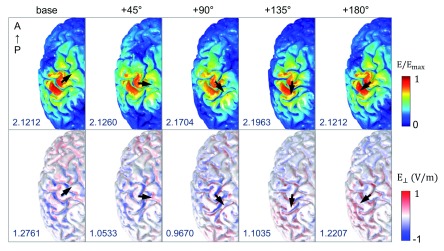
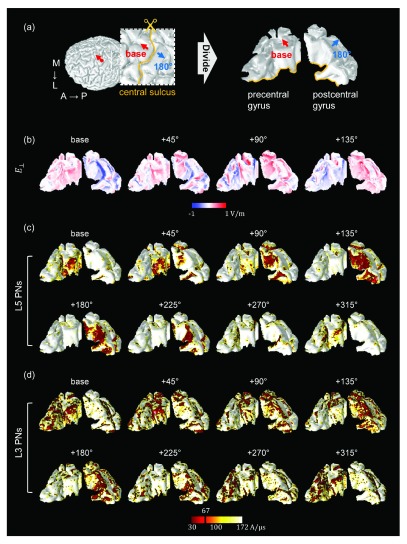
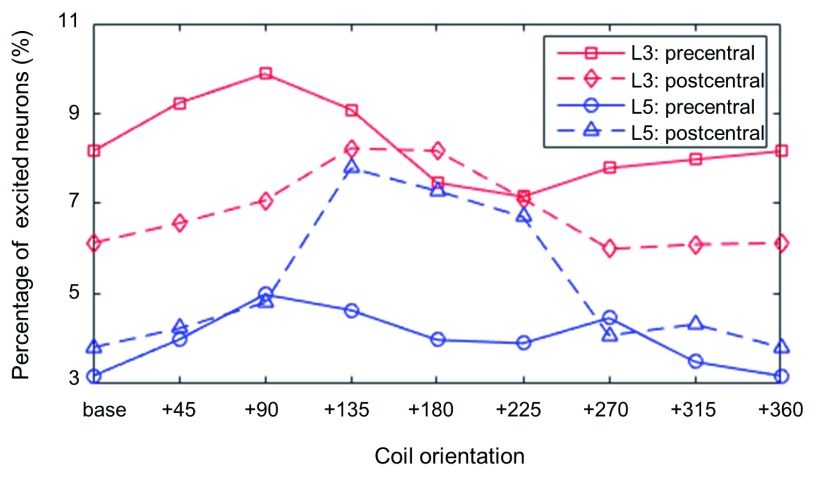
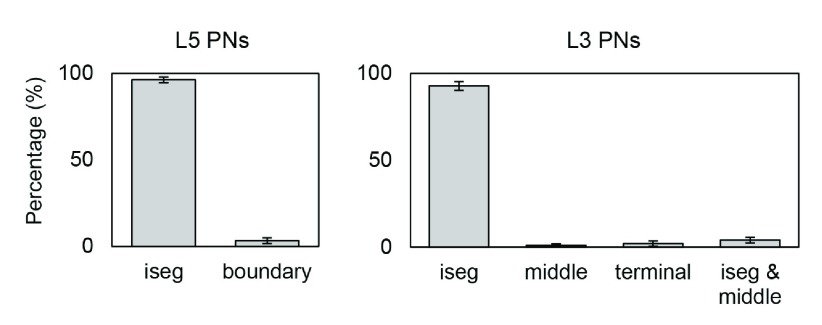
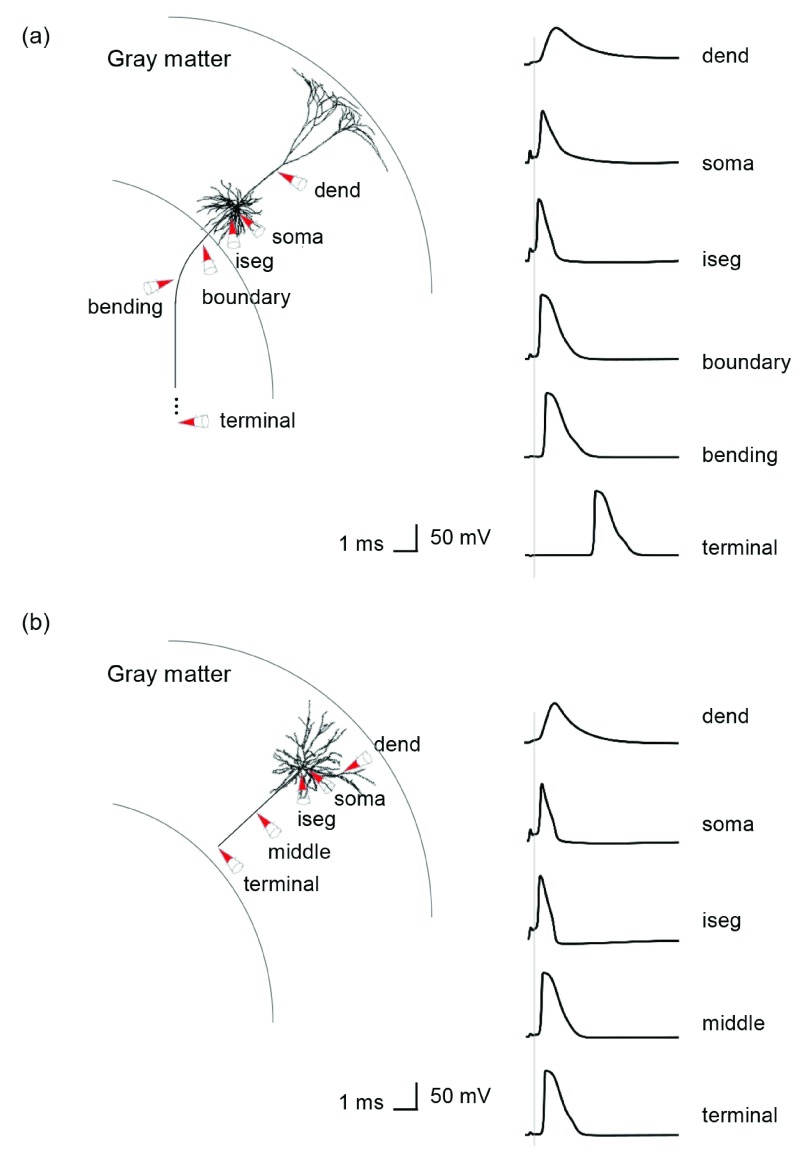
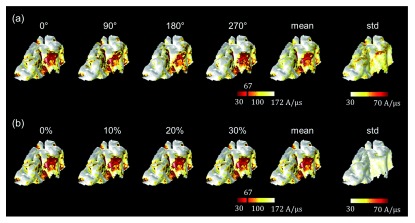
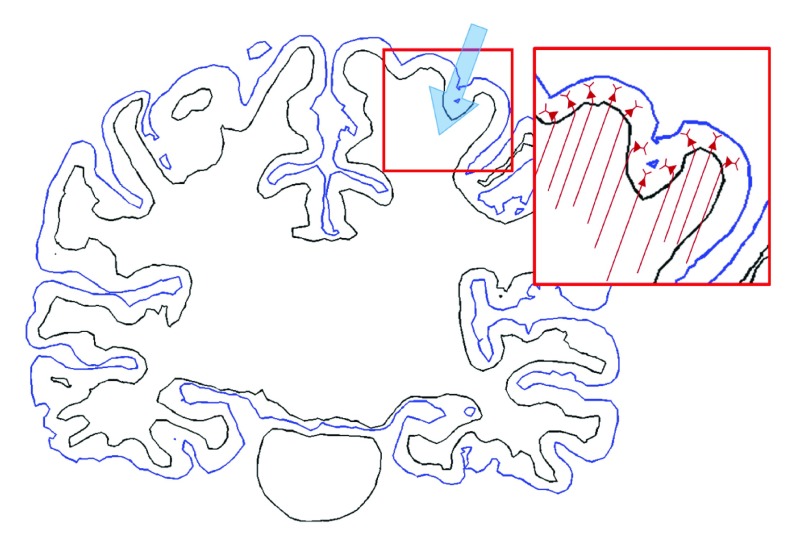
The detailed biophysical mechanisms through which transcranial magnetic stimulation (TMS) activates cortical circuits are still not fully understood. Here we present a multi-scale computational model to describe and explain the activation of different pyramidal cell types in motor cortex due to TMS. Our model determines precise electric fields based on an individual head model derived from magnetic resonance imaging and calculates how these electric fields activate morphologically detailed models of different neuron types. We predict neural activation patterns for different coil orientations consistent with experimental findings. Beyond this, our model allows us to calculate activation thresholds for individual neurons and precise initiation sites of individual action potentials on the neurons' complex morphologies. Specifically, our model predicts that cortical layer 3 pyramidal neurons are generally easier to stimulate than layer 5 pyramidal neurons, thereby explaining the lower stimulation thresholds observed for I-waves compared to D-waves. It also shows differences in the regions of activated cortical layer 5 and layer 3 pyramidal cells depending on coil orientation. Finally, it predicts that under standard stimulation conditions, action potentials are mostly generated at the axon initial segment of cortical pyramidal cells, with a much less important activation site being the part of a layer 5 pyramidal cell axon where it crosses the boundary between grey matter and white matter. In conclusion, our computational model offers a detailed account of the mechanisms through which TMS activates different cortical pyramidal cell types, paving the way for more targeted application of TMS based on individual brain morphology in clinical and basic research settings.
经颅磁刺激(TMS)激活皮层回路的详细生物物理机制仍未完全明确。在此,我们提出一个多尺度计算模型,以描述和解释TMS对运动皮层中不同锥体细胞类型的激活情况。我们的模型基于从磁共振成像得出的个体头部模型确定精确的电场,并计算这些电场如何激活不同神经元类型的形态学详细模型。我们预测了与实验结果一致的不同线圈方向的神经激活模式。除此之外,我们的模型使我们能够计算单个神经元的激活阈值以及在神经元复杂形态上单个动作电位的精确起始位点。具体而言,我们的模型预测,皮层第3层锥体神经元通常比第5层锥体神经元更容易被刺激,从而解释了与D波相比,I波观察到的较低刺激阈值。它还显示了根据线圈方向,皮层第5层和第3层锥体细胞激活区域的差异。最后,它预测在标准刺激条件下,动作电位大多在皮层锥体细胞的轴突起始段产生,而第5层锥体细胞轴突穿过灰质与白质边界的部分作为激活位点的重要性则要低得多。总之,我们的计算模型详细阐述了TMS激活不同皮层锥体细胞类型的机制,为在临床和基础研究环境中基于个体脑形态更有针对性地应用TMS铺平了道路。