Morrison Eleshia J, Novotny Paul J, Sloan Jeff A, Yang Ping, Patten Christi A, Ruddy Kathryn J, Clark Matthew M
Department of Psychiatry and Psychology, Mayo Clinic, Rochester, MN.
Department of Health Sciences Research, Mayo Clinic, Rochester, MN.
Clin Lung Cancer. 2017 Sep;18(5):497-503. doi: 10.1016/j.cllc.2017.02.008. Epub 2017 Mar 2.
Lung cancer is associated with a greater symptom burden than other cancers, yet little is known about the prevalence of emotional problems and how emotional problems may be related to the physical symptom burden and quality of life in newly diagnosed patients with lung cancer. This study aimed to identify the patient and disease characteristics of patients with lung cancer experiencing emotional problems and to examine how emotional problems relate to quality of life and symptom burden.
A total of 2205 newly diagnosed patients with lung cancer completed questionnaires on emotional problems, quality of life, and symptom burden.
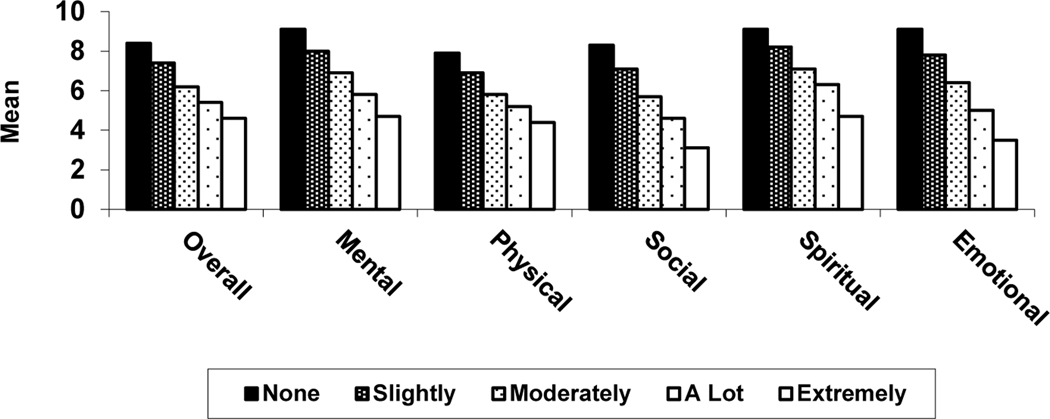
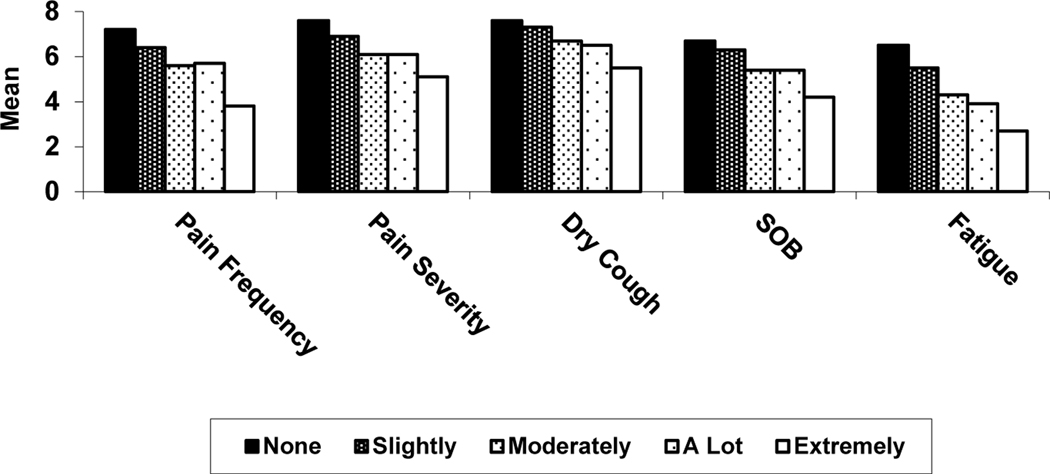
Emotional problems at diagnosis were associated with younger age, female gender, current cigarette smoking, current employment, advanced lung cancer disease, surgical or chemotherapy treatment, and a lower Eastern Cooperative Oncology Group performance score. Additionally, strong associations were found between greater severity of emotional problems, lower quality of life, and greater symptom burden.
Certain characteristics place patients with lung cancer at greater risk for emotional problems, which are associated with a reduced quality of life and greater symptom burden. Assessment of the presence of emotional problems at the time of lung cancer diagnosis provides the opportunity to offer tailored strategies for managing negative mood, and for improving the quality of life and symptom burden management of patients with lung cancer.
肺癌比其他癌症伴有更重的症状负担,但对于新诊断肺癌患者中情感问题的患病率以及情感问题与身体症状负担和生活质量之间的关系知之甚少。本研究旨在确定存在情感问题的肺癌患者的患者及疾病特征,并研究情感问题与生活质量和症状负担之间的关系。
共有2205例新诊断的肺癌患者完成了关于情感问题、生活质量和症状负担的问卷调查。
诊断时的情感问题与年龄较小、女性、目前吸烟、目前就业、晚期肺癌疾病、手术或化疗治疗以及较低的东部肿瘤协作组体能状态评分相关。此外,还发现情感问题的严重程度越高、生活质量越低和症状负担越重之间存在密切关联。
某些特征使肺癌患者出现情感问题的风险更高,而情感问题与生活质量降低和症状负担加重相关。在肺癌诊断时评估情感问题的存在情况,为提供针对性策略以管理负面情绪、改善肺癌患者的生活质量和症状负担管理提供了机会。