Griffith Boyce E, Luo Xiaoyu
Departments of Mathematics and Biomedical Engineering, Carolina Center for Interdisciplinary Applied Mathematics, and McAllister Heart Institute, University of North Carolina, Chapel Hill, NC, USA.
School of Mathematics and Statistics, University of Glasgow, Glasgow, UK.
Int J Numer Method Biomed Eng. 2017 Dec;33(12). doi: 10.1002/cnm.2888. Epub 2017 Aug 16.
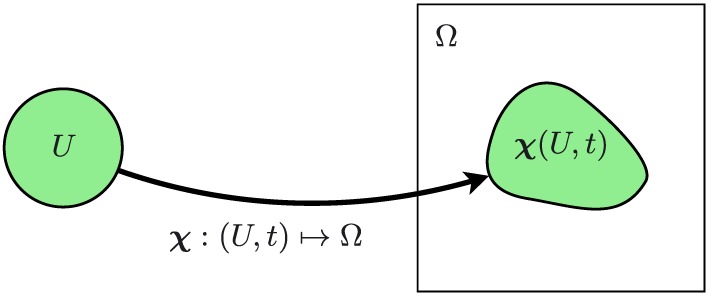
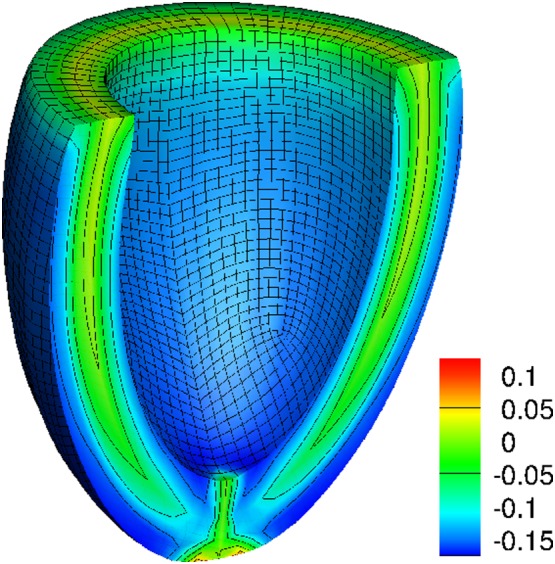
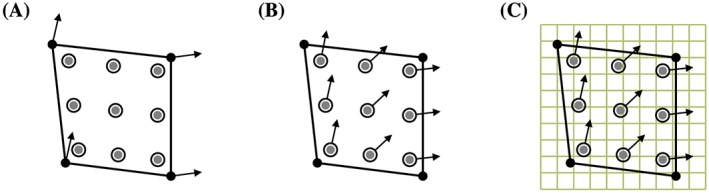
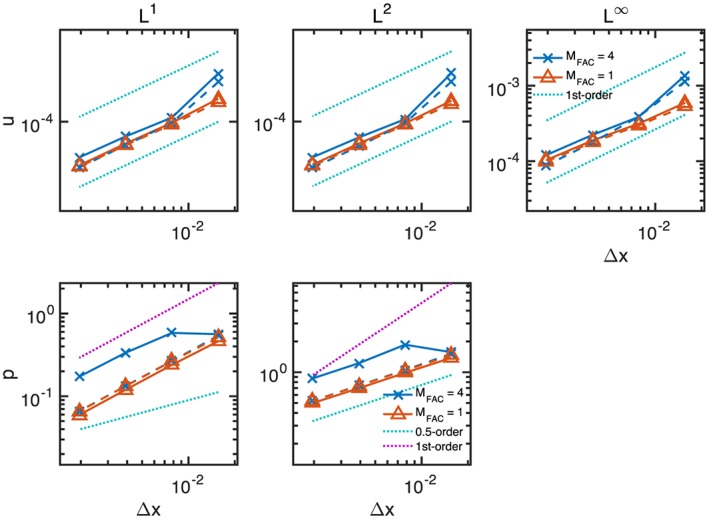
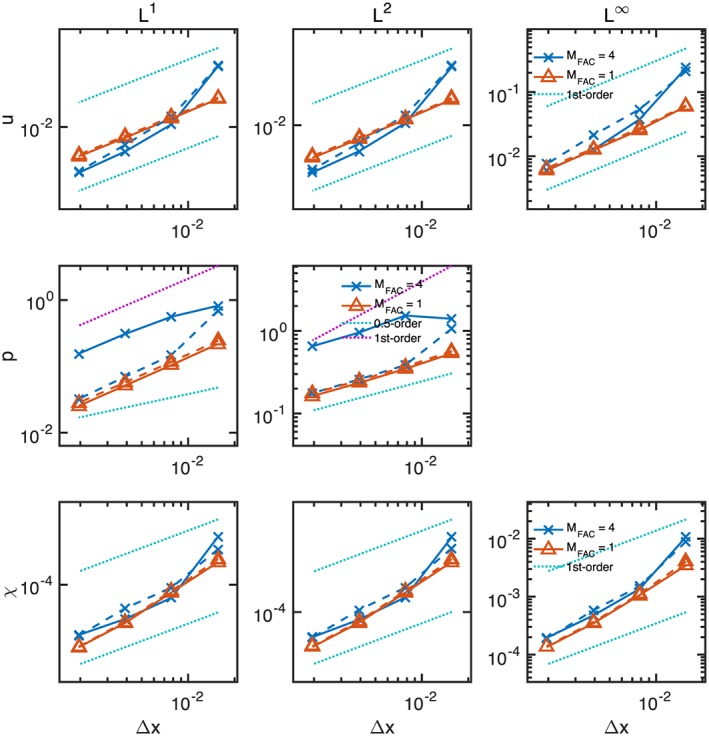
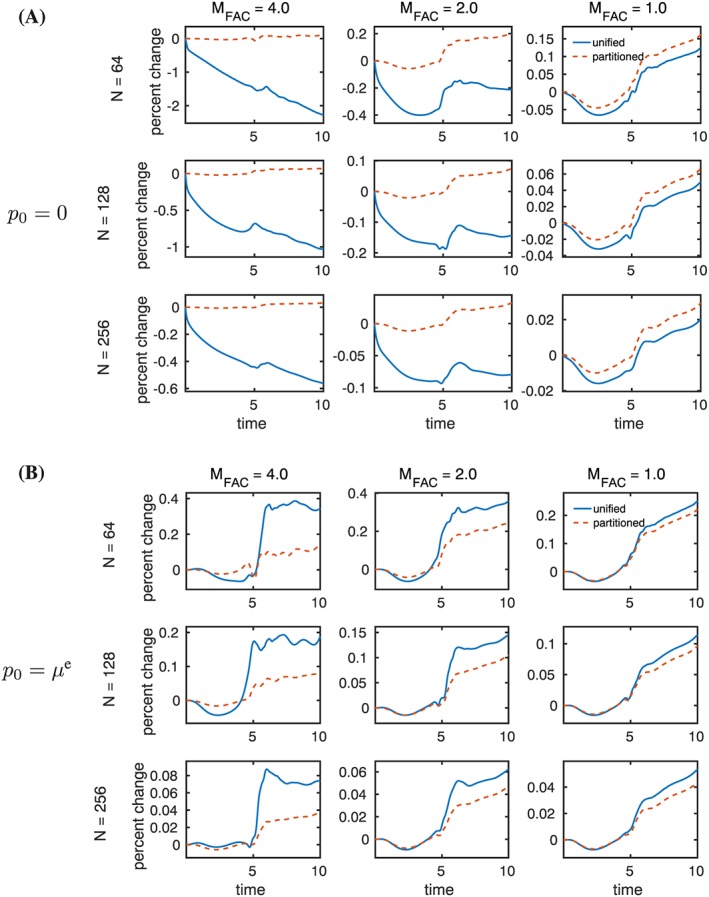
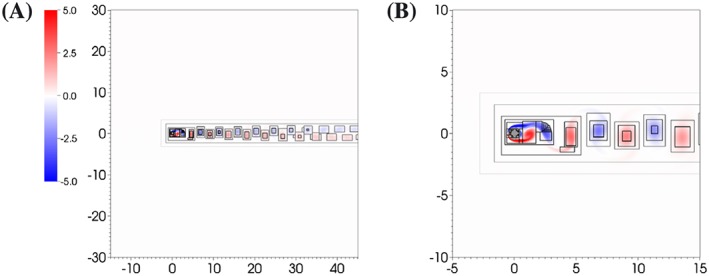
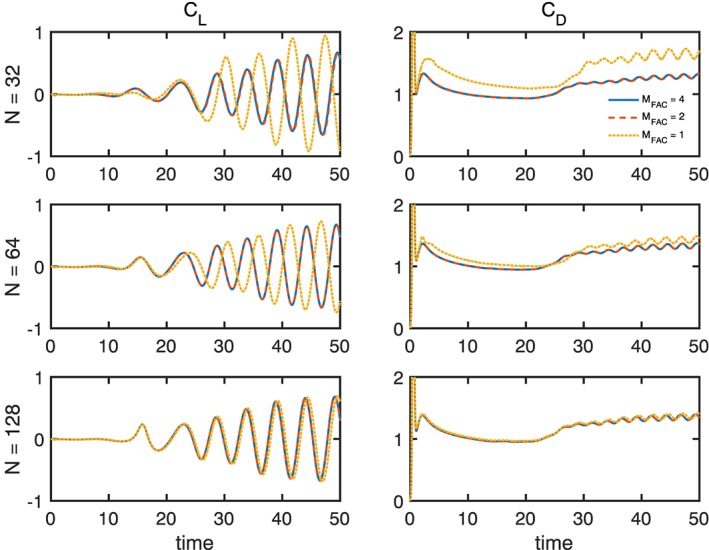
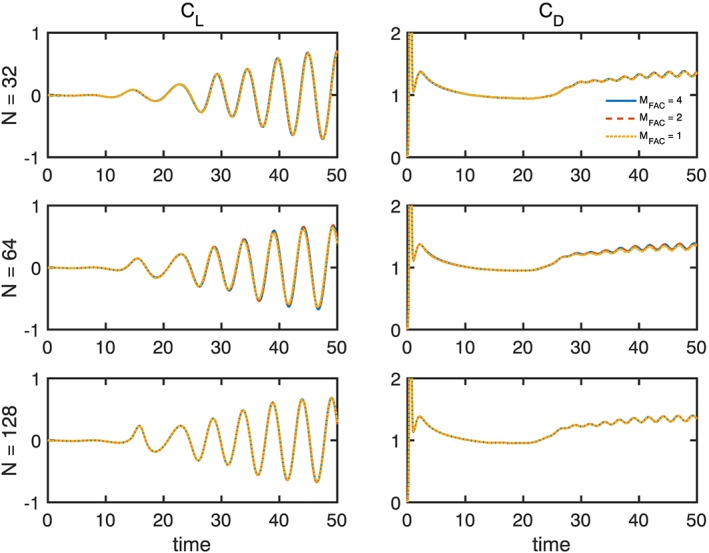
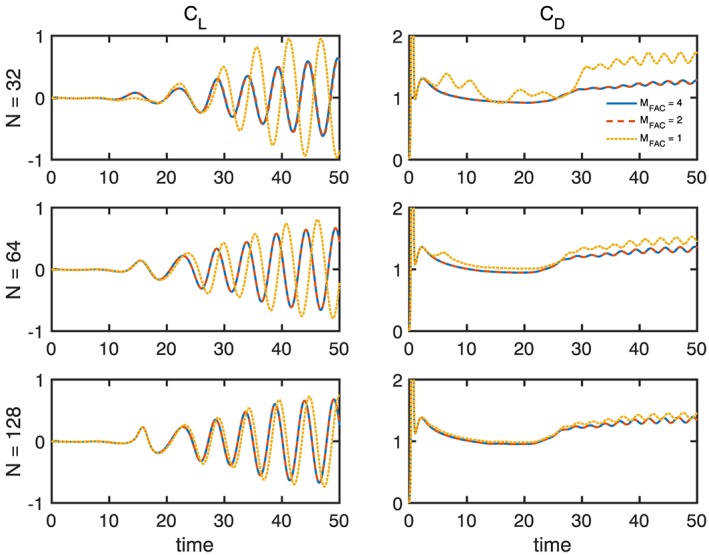
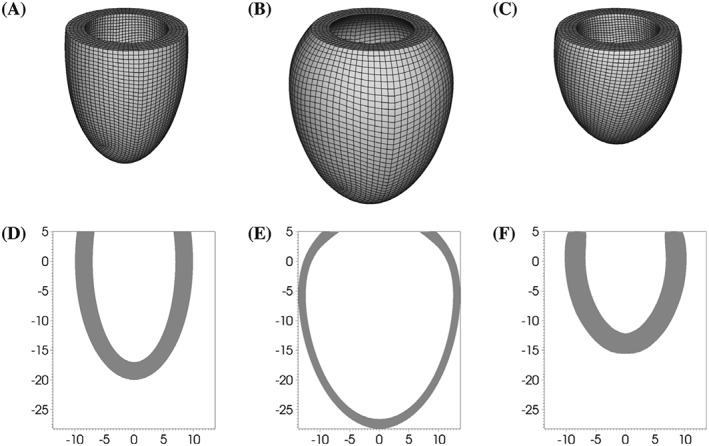
The immersed boundary method is an approach to fluid-structure interaction that uses a Lagrangian description of the structural deformations, stresses, and forces along with an Eulerian description of the momentum, viscosity, and incompressibility of the fluid-structure system. The original immersed boundary methods described immersed elastic structures using systems of flexible fibers, and even now, most immersed boundary methods still require Lagrangian meshes that are finer than the Eulerian grid. This work introduces a coupling scheme for the immersed boundary method to link the Lagrangian and Eulerian variables that facilitates independent spatial discretizations for the structure and background grid. This approach uses a finite element discretization of the structure while retaining a finite difference scheme for the Eulerian variables. We apply this method to benchmark problems involving elastic, rigid, and actively contracting structures, including an idealized model of the left ventricle of the heart. Our tests include cases in which, for a fixed Eulerian grid spacing, coarser Lagrangian structural meshes yield discretization errors that are as much as several orders of magnitude smaller than errors obtained using finer structural meshes. The Lagrangian-Eulerian coupling approach developed in this work enables the effective use of these coarse structural meshes with the immersed boundary method. This work also contrasts two different weak forms of the equations, one of which is demonstrated to be more effective for the coarse structural discretizations facilitated by our coupling approach.
浸入边界法是一种用于流固相互作用的方法,它采用拉格朗日描述来描述结构变形、应力和力,同时采用欧拉描述来描述流固系统的动量、粘性和不可压缩性。最初的浸入边界法使用柔性纤维系统来描述浸入弹性结构,即使到现在,大多数浸入边界法仍然需要比欧拉网格更精细的拉格朗日网格。本文介绍了一种浸入边界法的耦合方案,用于连接拉格朗日变量和欧拉变量,从而便于对结构和背景网格进行独立的空间离散化。该方法对结构采用有限元离散化,同时对欧拉变量保留有限差分格式。我们将此方法应用于涉及弹性、刚性和主动收缩结构的基准问题,包括心脏左心室的理想化模型。我们的测试包括这样的情况:对于固定的欧拉网格间距,较粗的拉格朗日结构网格产生的离散化误差比使用较细结构网格获得的误差小几个数量级。本文提出的拉格朗日 - 欧拉耦合方法能够在浸入边界法中有效使用这些粗结构网格。本文还对比了方程的两种不同弱形式,其中一种被证明对于我们的耦合方法所促进的粗结构离散化更有效。