Leibniz-Institute for Zoo and Wildlife Research, Alfred-Kowalke-Strasse 17, 10315 Berlin, Germany.
Institut für Virologie, Freie Universität Berlin, Robert-von-Ostertag-Str. 7-13, 14163 Berlin, Germany.
Sci Rep. 2017 Apr 21;7:46559. doi: 10.1038/srep46559.
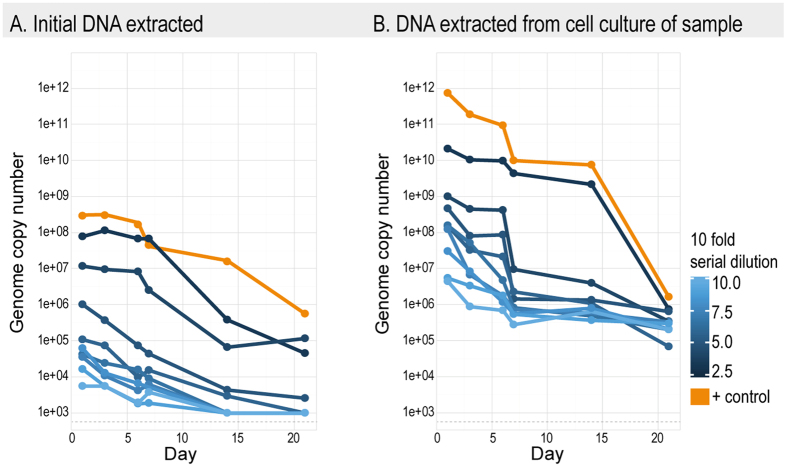
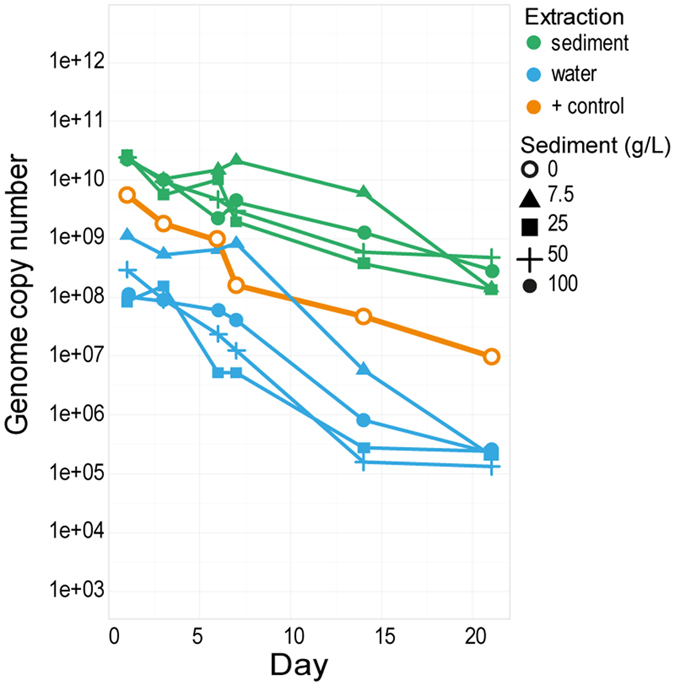
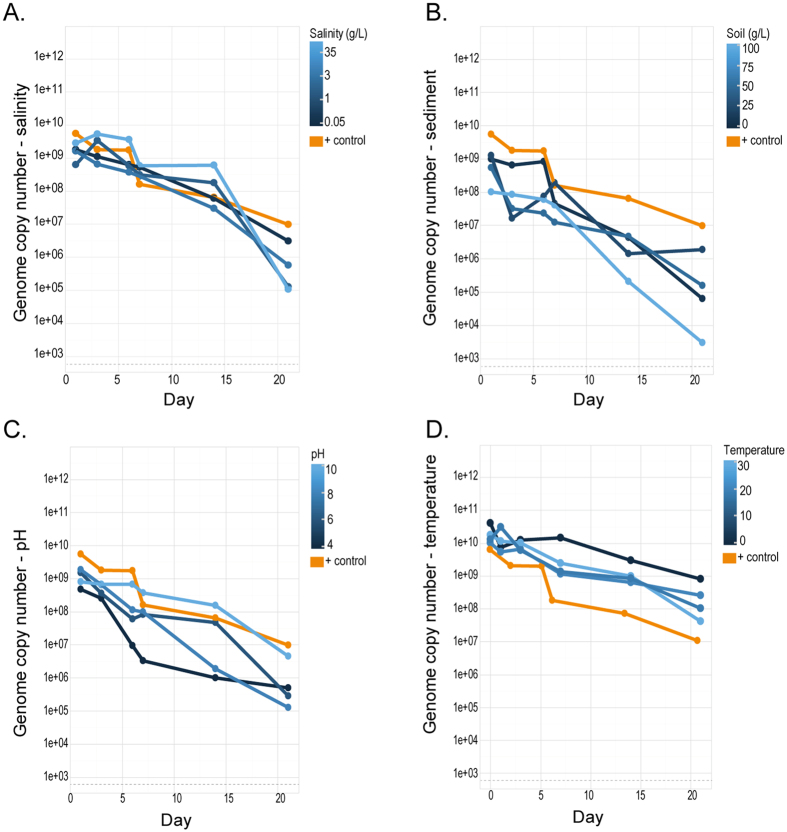
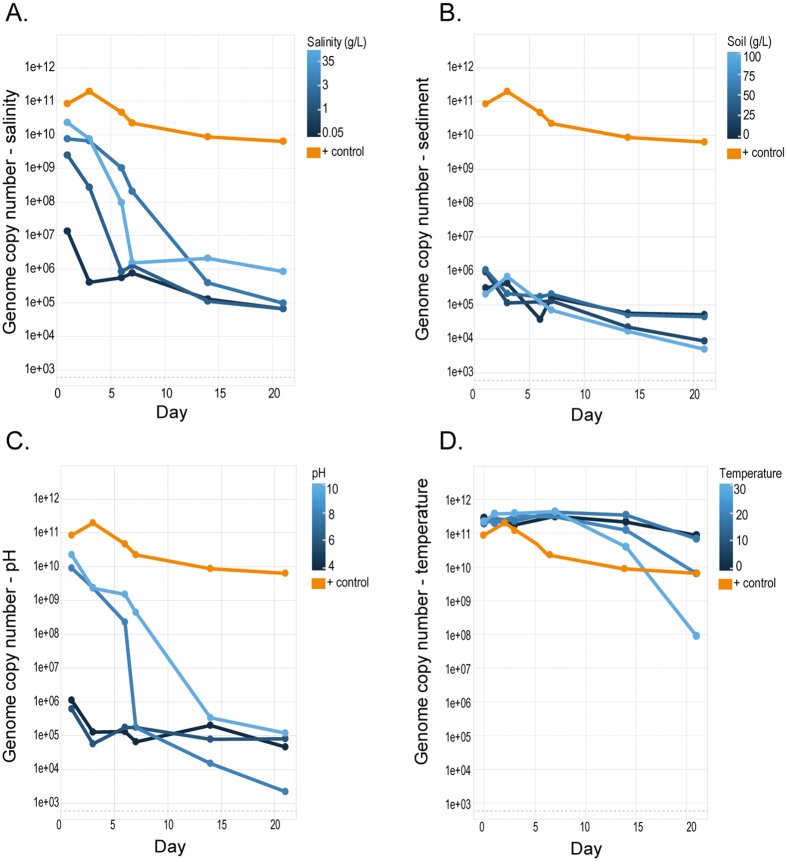
For viruses to utilize environmental vectors (hard surfaces, soil, water) for transmission, physical and chemical stability is a prerequisite. There are many factors including pH, salinity, temperature, and turbidity that are known to contribute to the ability of viruses to persist in water. Equine herpesvirus type-1 (EHV-1) is a pathogenic alphaherpesvirus associated with domestic horses and wild equids. EHV-1 and recombinants of EHV-1 and EHV-9 are able to cause infections in non-equid animal species, particularly in captive settings. Many of the captive non-equid mammals are not naturally sympatric with equids and do not share enclosures, however, in many cases water sources may overlap. Similarly, in the wild, equids encounter many species at waterholes in times of seasonal drought. Therefore, we hypothesized that EHV-1 is stable in water and that water may act as a vector for EHV-1. In order to establish the conditions promoting or hindering EHV-1 longevity, infectivity and genomic stability in water; we exposed EHV-1 to varied water environments (pH, salinity, temperature, and turbidity) in controlled experiments over 21 days. The presence and infectivity of the virus was confirmed by both qPCR and cell culture experiments. Our results show that EHV-1 remains stable and infectious under many conditions in water for up to three weeks.
为了使病毒能够利用环境载体(硬表面、土壤、水)进行传播,物理和化学稳定性是一个先决条件。有许多因素,包括 pH 值、盐度、温度和浊度,已知会影响病毒在水中的持续存在能力。马疱疹病毒 1 型(EHV-1)是一种与家马和野生马科动物相关的致病性α疱疹病毒。EHV-1 和 EHV-1 与 EHV-9 的重组病毒能够感染非马科动物物种,特别是在圈养环境中。许多圈养的非马科哺乳动物与马科动物并非自然共生,也不共享围栏,但在许多情况下,水源可能会重叠。同样,在野外,马科动物在季节性干旱时期会在水坑中遇到许多物种。因此,我们假设 EHV-1 在水中稳定,并且水可能是 EHV-1 的传播媒介。为了确定促进或阻碍 EHV-1 在水中存活时间、感染力和基因组稳定性的条件,我们在 21 天的时间里,在受控实验中使 EHV-1 暴露于各种水环境(pH 值、盐度、温度和浊度)中。通过 qPCR 和细胞培养实验证实了病毒的存在和感染力。我们的结果表明,EHV-1 在水中的许多条件下可保持稳定和感染性长达三周。