Baaghideh Mohammad, Mayvaneh Fatemeh
Dept. of Physical Geography, Faculty of Geography and Environmental Sciences, Hakim Sabzevari University, Sabzevar, Iran.
Iran J Public Health. 2017 Mar;46(3):396-407.
Weather and climate play a significant role in human health. We are accustomed to affects the weather conditions. By increasing or decreasing the environment temperature or change of seasons, some diseases become prevalent or remove. This study investigated the role of temperature in cardiovascular disease mortality of city of Mashhad in the current decade and its simulation in the future decades under conditions of climate change.
Cardiovascular disease mortality data and the daily temperatures data were used during (2004-2013) period. First, the correlation between cardiovascular disease mortality and maximum and minimum temperatures were calculated then by using General Circulation Model, Emissions Scenarios, and temperature data were extracted for the next five decades and finally, mortality was simulated.
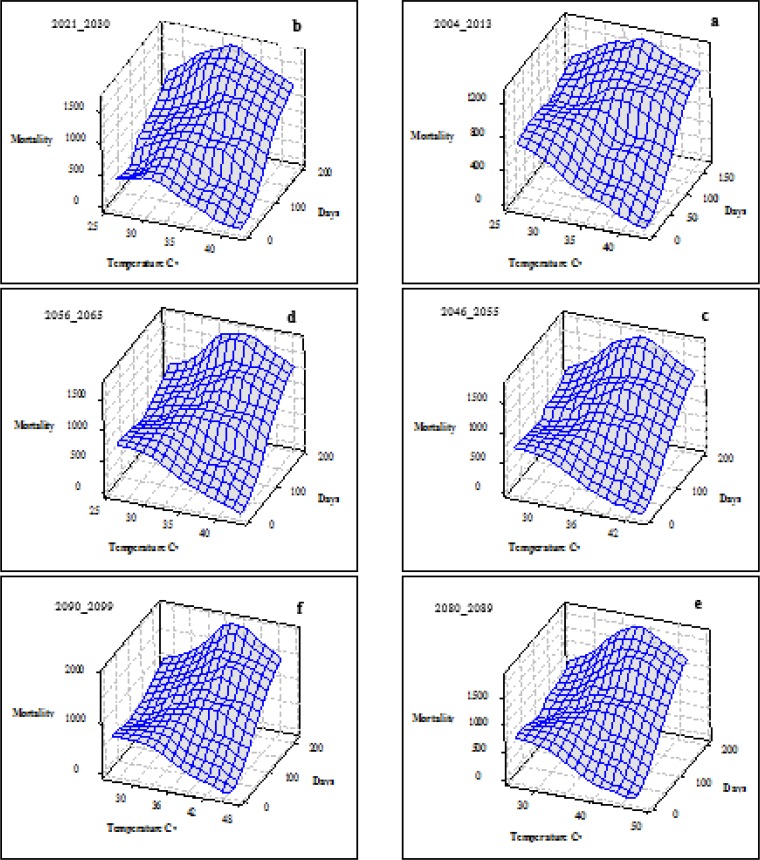
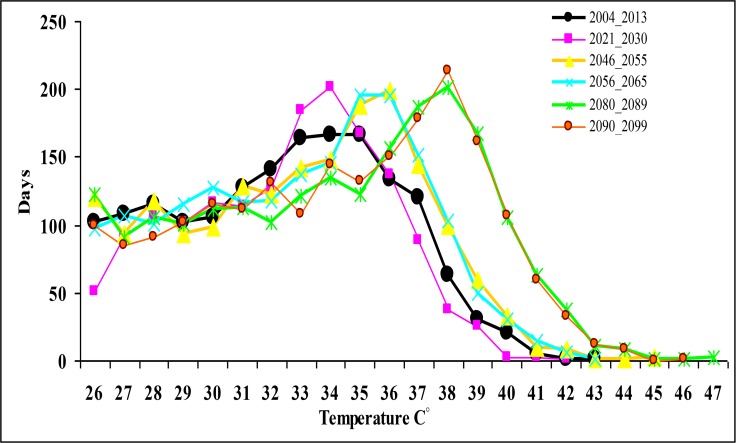
There is a strong positive association between maximum temperature and mortality (r= 0.83, -value<0.01), also observed a negative and weak but significant association between minimum temperatures and mortality. The results obtained from simulation show increased temperature in the next decades in Mashhad and a 1 °C increase in maximum temperature is associated with a 4.27% (95%CI: 0.91, 7.00) increase in Cardiovascular disease mortality.
By increasing temperature and the number of hot days the cardiovascular disease mortality increases and these increases will be intensified in the future decades. Therefore, necessary preventive measures are required to mitigate temperature effects with greater attention to vulnerable group.
天气和气候对人类健康有着重要影响。我们已经习惯了天气状况的影响。通过升高或降低环境温度或季节变化,一些疾病会变得流行或消失。本研究调查了温度在当前十年马什哈德市心血管疾病死亡率中的作用以及在气候变化条件下未来几十年的模拟情况。
使用了(2004 - 2013年)期间的心血管疾病死亡率数据和每日温度数据。首先,计算心血管疾病死亡率与最高和最低温度之间的相关性,然后利用通用环流模型、排放情景,提取未来五十年的温度数据,最后模拟死亡率。
最高温度与死亡率之间存在强正相关(r = 0.83,P值<0.01),同时也观察到最低温度与死亡率之间存在负相关且较弱但显著的关联。模拟结果显示,马什哈德未来几十年温度会升高,最高温度每升高1℃,心血管疾病死亡率会增加4.27%(95%置信区间:0.91,7.00)。
随着温度升高和炎热天数增加,心血管疾病死亡率上升,且在未来几十年这种上升将加剧。因此,需要采取必要的预防措施来减轻温度影响,尤其要更加关注弱势群体。