Van Etten James L, Agarkova Irina, Dunigan David D, Tonetti Michela, De Castro Christina, Duncan Garry A
Department of Plant Pathology and Nebraska Center for Virology, University of Nebraska-Lincoln, Lincoln, NE 68583-0900, USA.
Department of Experimental Medicine and Center of Excellence for Biomedical Research, University of Genova Viale Benedetto XV/1, 16132 Genova, Italy.
Viruses. 2017 Apr 22;9(4):88. doi: 10.3390/v9040088.
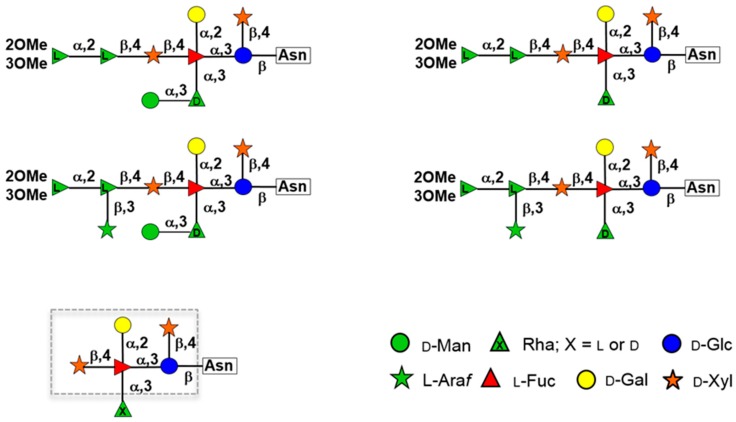
Chloroviruses are large double-stranded DNA (dsDNA) viruses that infect certain isolates of chlorella-like green algae. They contain up to approximately 400 protein-encoding genes and 16 transfer RNA (tRNA) genes. This review summarizes the unexpected finding that many of the chlorovirus genes encode proteins involved in manipulating carbohydrates. These include enzymes involved in making extracellular polysaccharides, such as hyaluronan and chitin, enzymes that make nucleotide sugars, such as GDP-L-fucose and GDP-D-rhamnose and enzymes involved in the synthesis of glycans attached to the virus major capsid proteins. This latter process differs from that of all other glycoprotein containing viruses that traditionally use the host endoplasmic reticulum and Golgi machinery to synthesize and transfer the glycans.
绿藻病毒是一种大型双链DNA(dsDNA)病毒,可感染某些小球藻样绿藻分离株。它们包含多达约400个蛋白质编码基因和16个转运RNA(tRNA)基因。本综述总结了这一意外发现:许多绿藻病毒基因编码参与碳水化合物操纵的蛋白质。这些蛋白质包括参与合成细胞外多糖(如透明质酸和几丁质)的酶、合成核苷酸糖(如GDP-L-岩藻糖和GDP-D-鼠李糖)的酶,以及参与合成与病毒主要衣壳蛋白相连聚糖的酶。后一过程不同于所有其他含糖蛋白病毒的过程,传统上这些病毒利用宿主内质网和高尔基体机制来合成和转移聚糖。