Michaelis Kai, Wenzel Jürgen J, Stark Klaus, Faber Mirko
Division of Gastrointestinal Infections, Zoonoses and Tropical Infections, Department for Infectious Disease Epidemiology, Robert Koch Institute (RKI), D-13353 Berlin, Germany.
National Consultant Laboratory for HAV and HEV, Institute of Clinical Microbiology and Hygiene, University Medical Centre Regensburg, D-93053 Regensburg, Germany.
Emerg Microbes Infect. 2017 Apr 26;6(4):e26. doi: 10.1038/emi.2017.11.
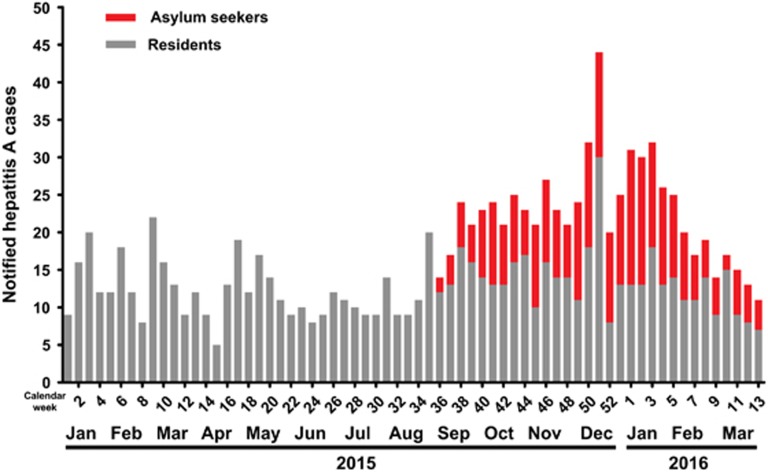
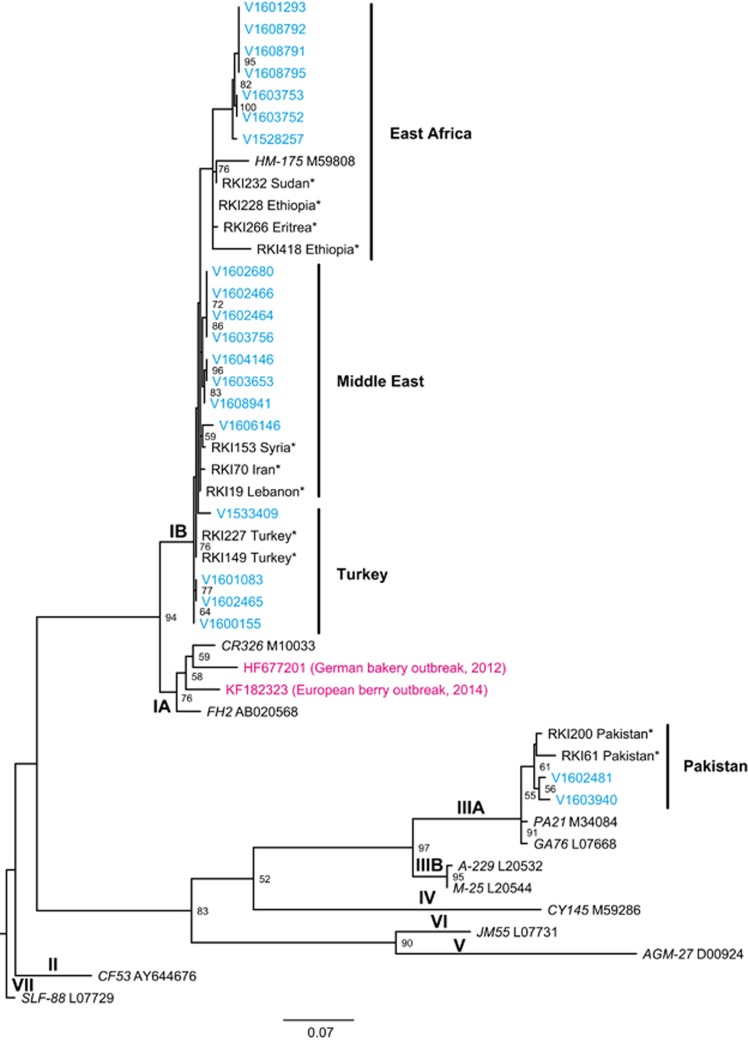
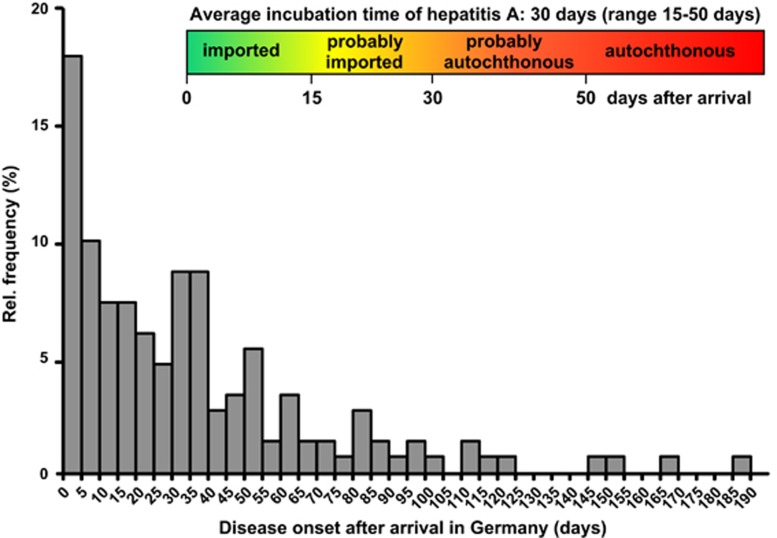
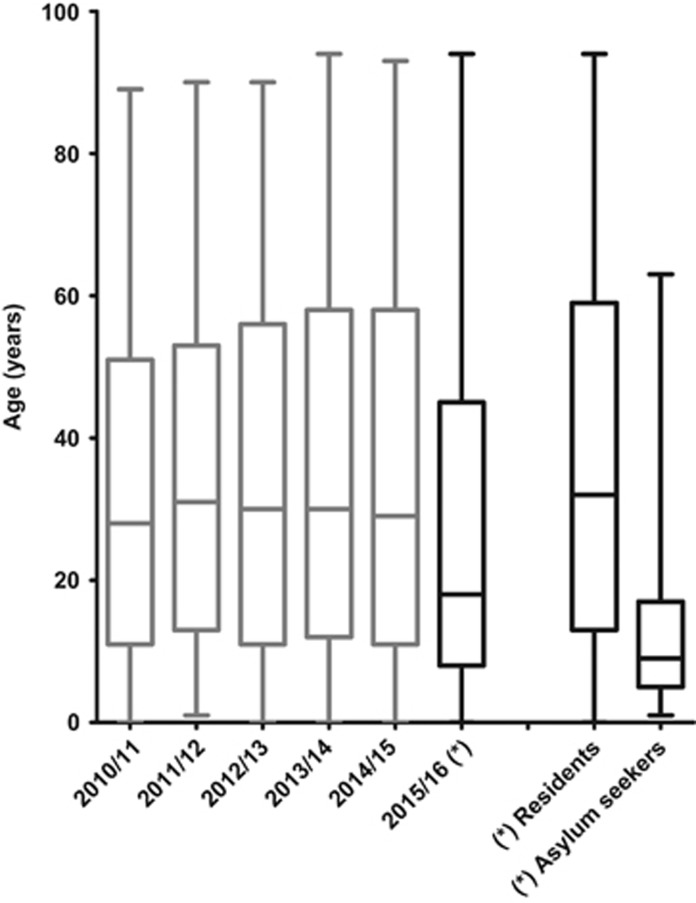
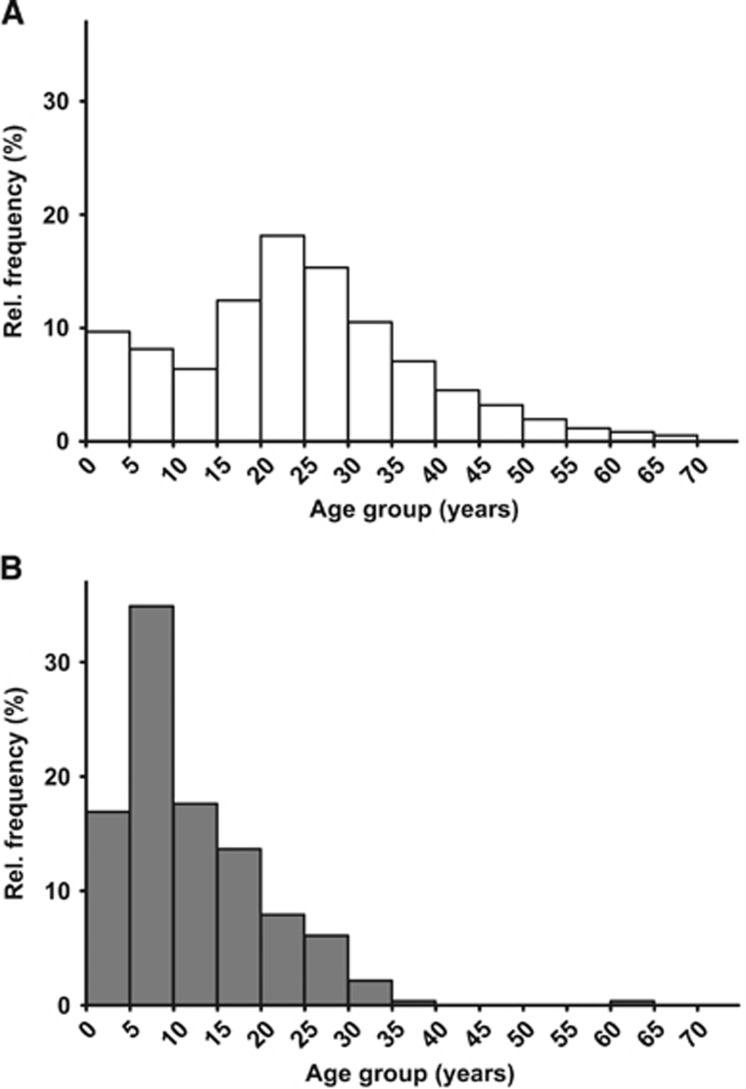
From September 2015 to March 2016, hepatitis A notifications in Germany increased by 45% to 699 cases compared to 482 cases in the same period of the previous year. Children aged five to nine years were predominantly affected (22% of all cases in this period). We hypothesized that this increase could be explained by the marked influx of asylum seekers in this time period. We analysed national surveillance data and estimated the number of imported and autochthonous hepatitis A cases in asylum seekers. We also investigated molecular signatures of hepatitis A viruses sampled from asylum seekers to identify chains of transmission. We found that 40% (278 cases) of all 699 hepatitis A cases notified between September 2015 and March 2016 in Germany concerned asylum seekers. Most infections were acquired abroad, but at least 24% accounted for autochthonous infections. Among asylum seekers, children aged five to nine years were overrepresented with 97 of 278 (35%) notified cases. The analysed hepatitis A virus sequences were primarily subgenotype IB strains and clustered with previously isolated samples from the Middle East, Turkey, Pakistan and East Africa. Except one transmission from an asymptomatic child to a nursery nurse working in a mass accommodation, we are not aware of infection chains involving asylum seekers and German residents. We conclude that asylum-seeking children and adolescents are susceptible to hepatitis A virus infections, particularly children aged five to nine years. Measures to prevent secondary infections in asylum seekers such as extended hygiene measures and post-exposure prophylaxis seem advisable.
2015年9月至2016年3月,德国甲型肝炎报告病例数较上一年同期的482例增加了45%,达699例。5至9岁的儿童受影响最为严重(占该时期所有病例的22%)。我们推测,这一增长可能是由于该时期寻求庇护者的大量涌入所致。我们分析了全国监测数据,并估算了寻求庇护者中输入性和本土甲型肝炎病例的数量。我们还调查了从寻求庇护者身上采集的甲型肝炎病毒的分子特征,以确定传播链。我们发现,在2015年9月至2016年3月期间德国报告的所有699例甲型肝炎病例中,40%(278例)与寻求庇护者有关。大多数感染是在国外获得的,但至少24%为本土感染。在寻求庇护者中,5至9岁的儿童占比过高,在278例报告病例中有97例(35%)。分析的甲型肝炎病毒序列主要是IB亚基因型毒株,与先前从中东、土耳其、巴基斯坦和东非分离出的样本聚类。除了一例从无症状儿童传播给在集体住所工作的托儿所护士外,我们未发现涉及寻求庇护者和德国居民的感染链。我们得出结论,寻求庇护的儿童和青少年易感染甲型肝炎病毒,尤其是5至9岁的儿童。采取措施预防寻求庇护者中的二次感染,如加强卫生措施和暴露后预防,似乎是可取的。