Jones Jason J, Bond Robert M, Bakshy Eytan, Eckles Dean, Fowler James H
Department of Sociology, Stony Brook University, Stony Brook, New York, United States of America.
Institute for Advanced Computational Science, Stony Brook University, Stony Brook, New York, United States of America.
PLoS One. 2017 Apr 26;12(4):e0173851. doi: 10.1371/journal.pone.0173851. eCollection 2017.
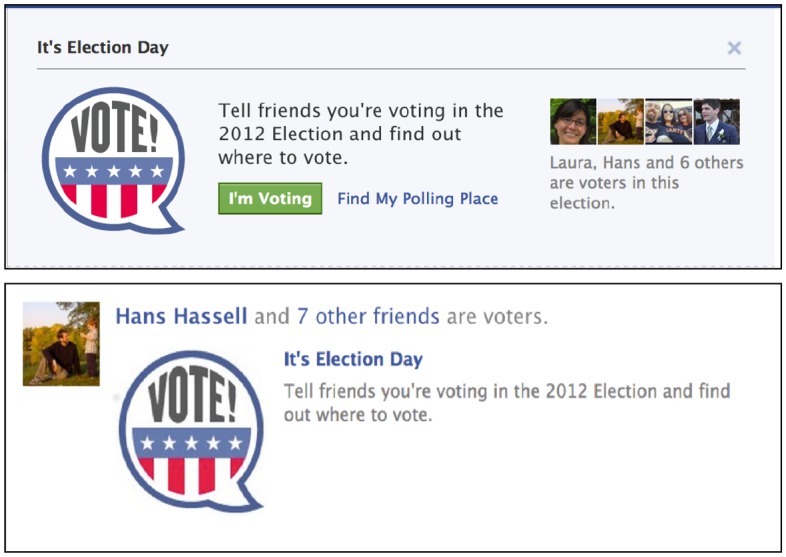
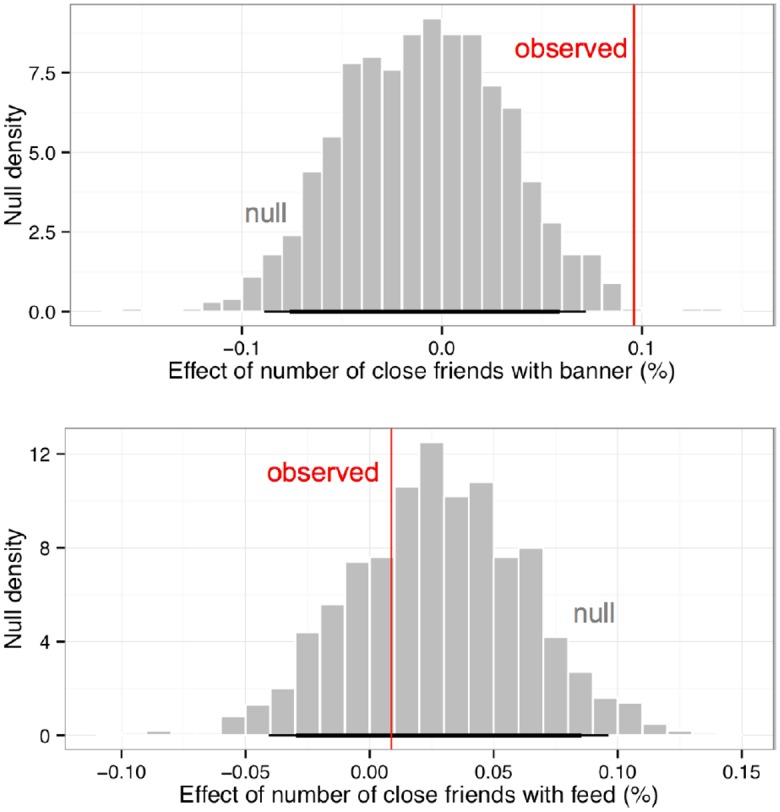
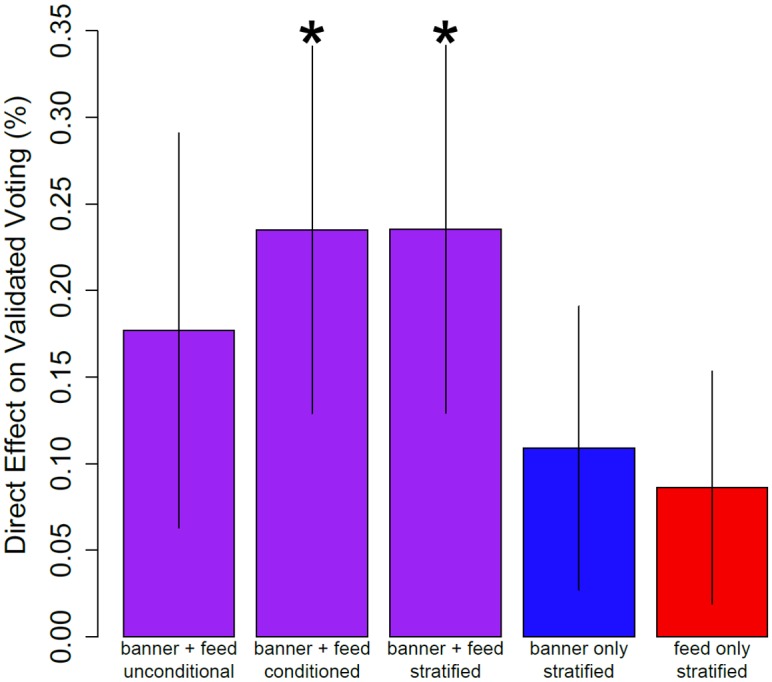
A large-scale experiment during the 2010 U.S. Congressional Election demonstrated a positive effect of an online get-out-the-vote message on real world voting behavior. Here, we report results from a replication of the experiment conducted during the U.S. Presidential Election in 2012. In spite of the fact that get-out-the-vote messages typically yield smaller effects during high-stakes elections due to saturation of mobilization efforts from many sources, a significant increase in voting was again observed. Voting also increased significantly among the close friends of those who received the message to go to the polls, and the total effect on the friends was likely larger than the direct effect, suggesting that understanding social influence effects is potentially even more important than understanding the direct effects of messaging. These results replicate earlier work and they add to growing evidence that online social networks can be instrumental for spreading offline behaviors.
2010年美国国会选举期间的一项大规模实验表明,一条在线投票动员信息对现实世界中的投票行为产生了积极影响。在此,我们报告2012年美国总统选举期间该实验的重复结果。尽管由于来自多个渠道的动员努力达到饱和,投票动员信息在高风险选举中通常产生较小的影响,但投票率再次显著上升。收到前往投票站信息的人的密友的投票率也显著上升,对朋友的总体影响可能大于直接影响,这表明理解社会影响效应可能比理解信息的直接影响更为重要。这些结果重复了早期的研究工作,并进一步证明了在线社交网络有助于传播线下行为。