Long Yan-Min, Hu Li-Gang, Yan Xue-Ting, Zhao Xing-Chen, Zhou Qun-Fang, Cai Yong, Jiang Gui-Bin
State Key Laboratory of Environmental Chemistry and Ecotoxicology, Research Center for Eco-Environmental Sciences, Beijing, China.
Institute of Environment and Health, Jianghan University, Wuhan, Hubei, China.
Int J Nanomedicine. 2017 Apr 18;12:3193-3206. doi: 10.2147/IJN.S132327. eCollection 2017.
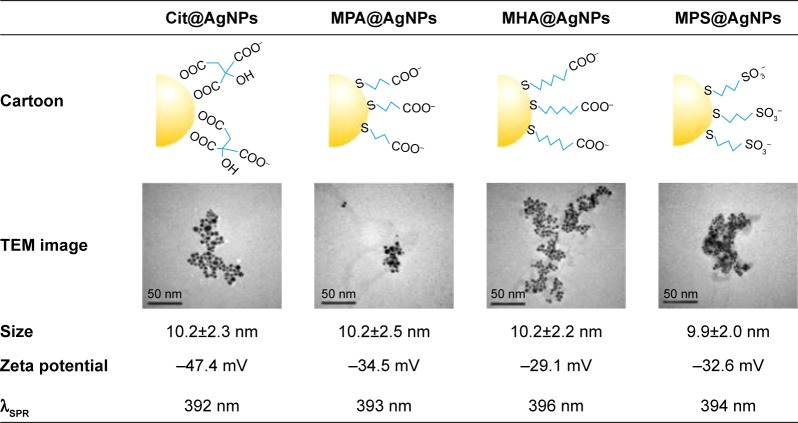
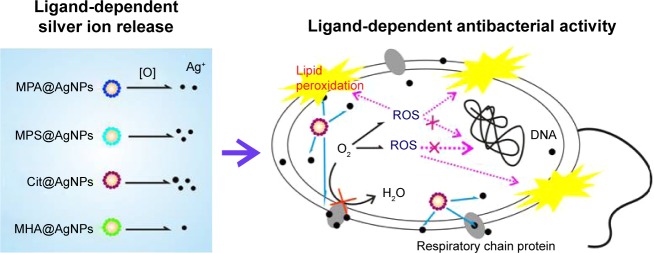
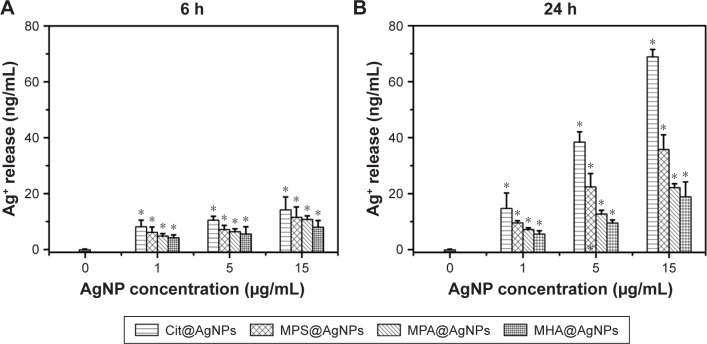
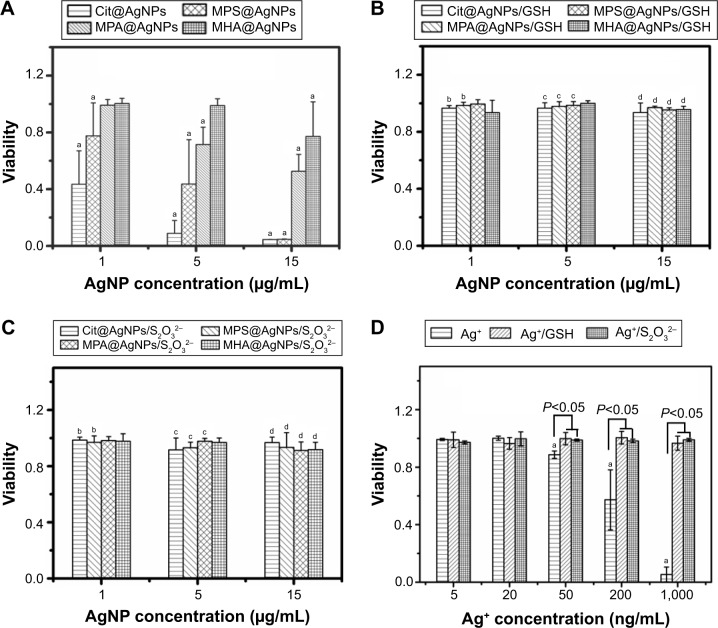
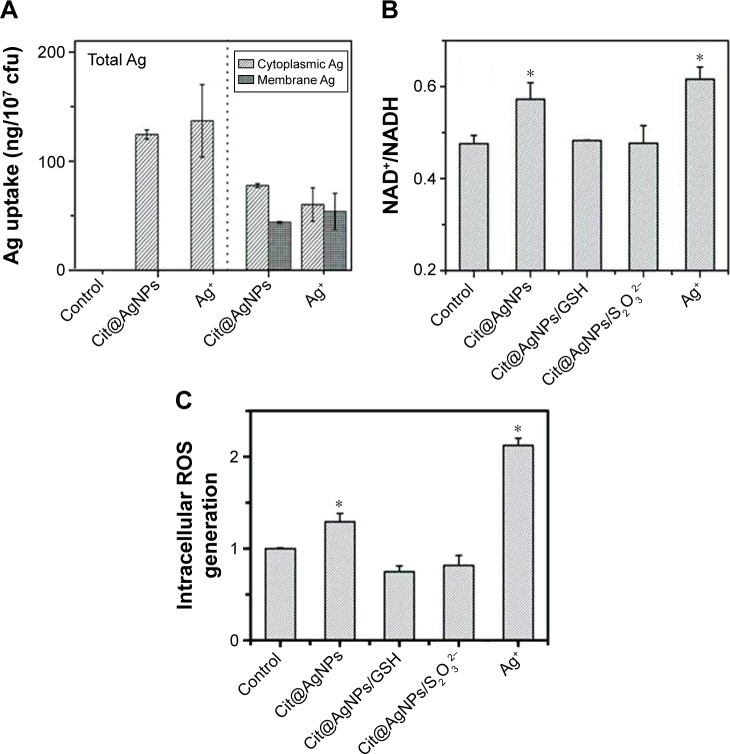
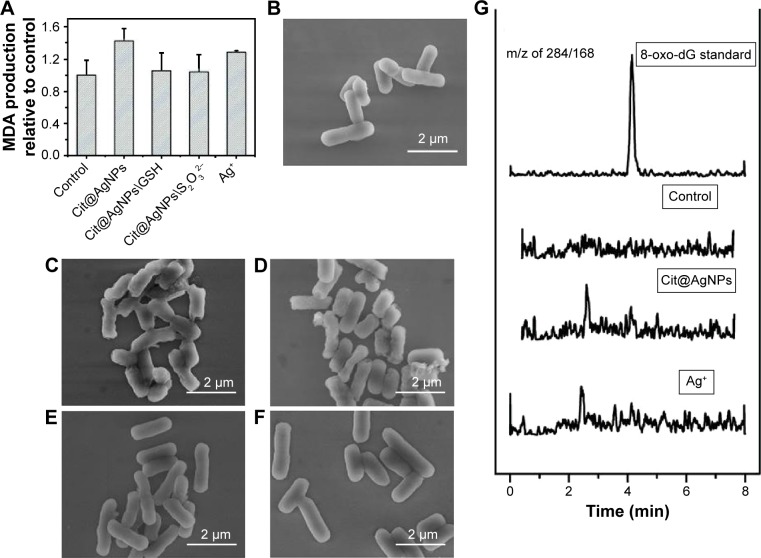
Understanding the mechanism of nanosilver-dependent antibacterial activity against microorganisms helps optimize the design and usage of the related nanomaterials. In this study, we prepared four kinds of 10 nm-sized silver nanoparticles (AgNPs) with dictated surface chemistry by capping different ligands, including citrate, mercaptopropionic acid, mercaptohexanoic acid, and mercaptopropionic sulfonic acid. Their surface-dependent chemistry and antibacterial activities were investigated. Owing to the weak bond to surface Ag, short carbon chain, and low silver ion attraction, citrate-coated AgNPs caused the highest silver ion release and the strongest antibacterial activity against , when compared to the other tested AgNPs. The study on the underlying antibacterial mechanisms indicated that cellular membrane uptake of Ag, NAD/NADH ratio increase, and intracellular reactive oxygen species (ROS) generation were significantly induced in both AgNP and silver ion exposure groups. The released silver ions from AgNPs inside cells through a Trojan-horse-type mechanism were suggested to interact with respiratory chain proteins on the membrane, interrupt intracellular O reduction, and induce ROS production. The further oxidative damages of lipid peroxidation and membrane breakdown caused the lethal effect on . Altogether, this study demonstrated that AgNPs exerted antibacterial activity through the release of silver ions and the subsequent induction of intracellular ROS generation by interacting with the cell membrane. The findings are helpful in guiding the controllable synthesis through the regulation of surface coating for medical care purpose.
了解纳米银对微生物的抗菌活性机制有助于优化相关纳米材料的设计和使用。在本研究中,我们通过包覆不同的配体(包括柠檬酸盐、巯基丙酸、巯基己酸和巯基丙磺酸)制备了四种具有特定表面化学性质的10纳米尺寸的银纳米颗粒(AgNP)。研究了它们的表面依赖性化学性质和抗菌活性。与其他测试的AgNP相比,由于与表面银的键较弱、碳链短以及银离子吸引力低,柠檬酸盐包覆的AgNP导致最高的银离子释放和对[具体微生物名称未给出]最强的抗菌活性。对潜在抗菌机制的研究表明,在AgNP和银离子暴露组中,银的细胞膜摄取、NAD/NADH比值增加以及细胞内活性氧(ROS)生成均显著诱导。通过特洛伊木马型机制从细胞内的AgNP释放的银离子被认为与膜上的呼吸链蛋白相互作用,中断细胞内的氧还原,并诱导ROS产生。脂质过氧化和膜破裂的进一步氧化损伤对[具体微生物名称未给出]产生致死作用。总之,本研究表明AgNP通过释放银离子以及随后与细胞膜相互作用诱导细胞内ROS生成来发挥抗菌活性。这些发现有助于指导通过调节表面涂层进行可控合成以用于医疗目的。