Mealer Meredith, Jones Jacqueline, Meek Paula
Meredith Mealer is an assistant professor, Department of Physical Medicine and Rehabilitation, Department of Medicine, University of Colorado School of Medicine, Aurora, Colorado, and Rocky Mountain Mental Illness, Research, Education, and Clinical Center (MIRECC), Denver VA Health, Denver, Colorado. Jacqueline Jones is an associate professor, and Paula Meek is a professor, College of Nursing, University of Colorado Anschutz Medical Campus, Aurora, Colorado.
Am J Crit Care. 2017 May;26(3):184-192. doi: 10.4037/ajcc2017798.
Job stress and cumulative exposure to traumatic events experienced by critical care nurses can lead to psychological distress and the development of burnout syndrome and posttraumatic stress disorder. Resilience can mitigate symptoms associated with these conditions.
To identify factors that affect resilience and to determine if the factors have direct or indirect effects on resilience in development of posttraumatic stress disorder.
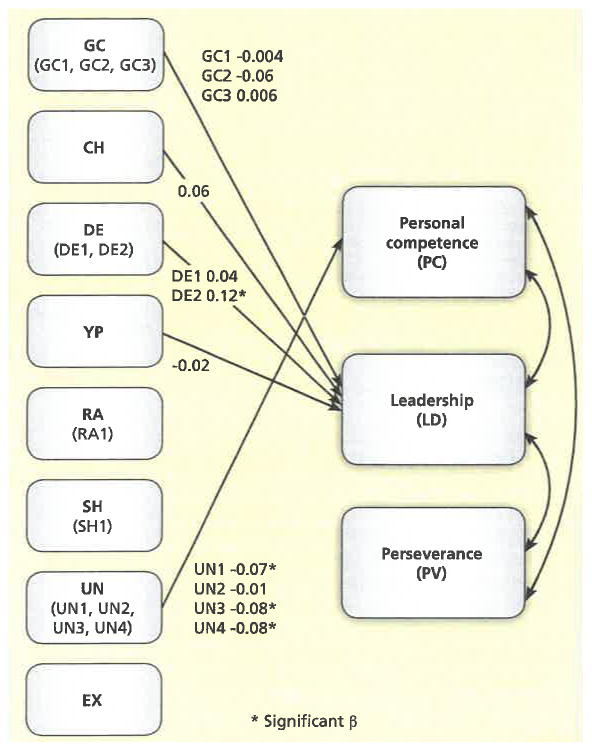
Data from 744 respondents to a survey mailed to 3500 critical care nurses who were members of the American Association of Critical-Care Nurses were analyzed. Mplus was used to analyze a mediation model.
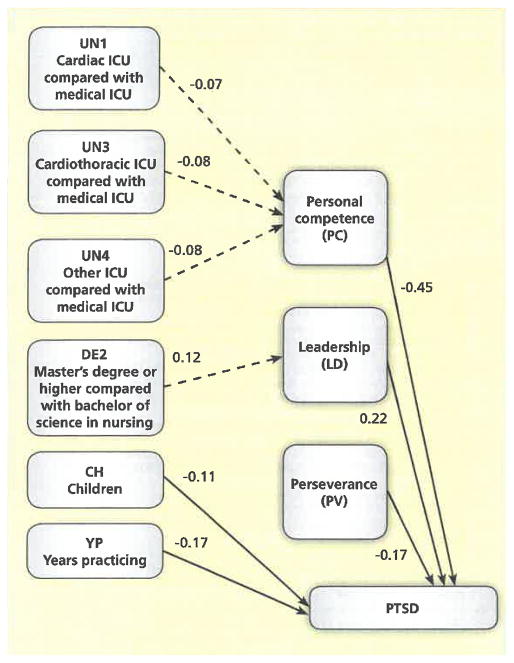
Nurses who worked in any type of intensive care unit other than the medical unit and had high scores for resilience were 18% to 50% less likely to experience post-traumatic stress disorder than were nurses with low scores. Nurses with a graduate degree in nursing were 18% more likely to experience posttraumatic stress disorder than were nurses with a bachelor's degree.
Because of their effects on resilience, working in a medical intensive care unit and having a graduate degree may influence the development of posttraumatic stress disorder. Future research is needed to better understand the impact of resilience on health care organizations, development of preventive therapies and treatment of posttraumatic stress disorder for critical care nurses, and the most appropriate mechanism to disseminate and implement strategies to address posttraumatic stress disorder.
重症监护护士所面临的工作压力以及累积接触创伤性事件,可能导致心理困扰、职业倦怠综合征和创伤后应激障碍的发生。心理韧性可以减轻与这些状况相关的症状。
确定影响心理韧性的因素,并确定这些因素在创伤后应激障碍发生过程中对心理韧性是否具有直接或间接影响。
对邮寄给3500名美国重症护理护士协会成员的重症监护护士的744份调查问卷回复数据进行分析。使用Mplus软件分析中介模型。
在除内科重症监护病房以外的任何类型重症监护病房工作且心理韧性得分高的护士,发生创伤后应激障碍的可能性比得分低的护士低18%至50%。拥有护理学研究生学位的护士发生创伤后应激障碍的可能性比拥有学士学位的护士高18%。
由于其对心理韧性的影响,在内科重症监护病房工作以及拥有研究生学位可能会影响创伤后应激障碍的发生。需要开展进一步研究,以更好地了解心理韧性对医疗保健机构的影响、针对重症监护护士的创伤后应激障碍预防疗法和治疗方法的开发,以及传播和实施应对创伤后应激障碍策略的最合适机制。