de Assis Gilmara G, de Almondes Katie Moraes
Department of Psychology and Postgraduate Program in Psychobiology, Federal University of Rio Grande do NorteNatal, Brazil.
Front Psychol. 2017 Apr 19;8:584. doi: 10.3389/fpsyg.2017.00584. eCollection 2017.
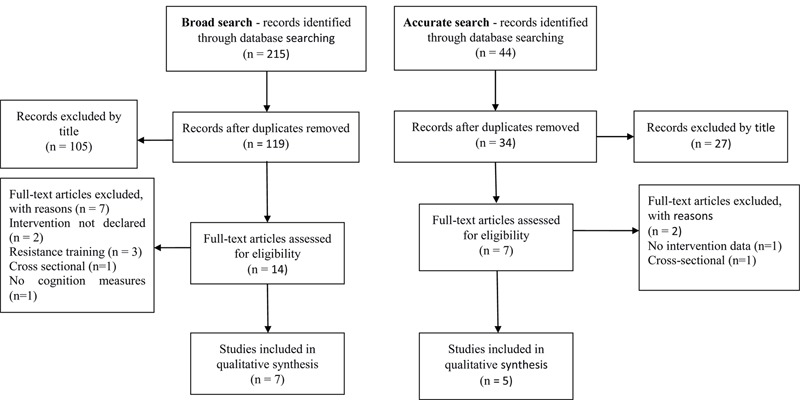
Aging naturally triggers a decline in cognition as result of deterioration in cerebral circuits, thus the executive functions (EFs) suffer changes that progress from mild to severe states of impairment. Exercise instead, works as a strategy for cognitive enhancement by modulating neuronal plasticity through the regulation of BDNF. However, whether the exercise-dependent BDNF may improve higher complexity processes such as the EFs is still in a studying process. Current data on exercise-dependent BDNF changes for aging individuals in a course of cognitive impairment was summarized to investigate whether the exercise regulation of BDNF is effective to pronounce long term changes on executive controls. While the exercise-dependent regulation of BDNF is currently undeniable, the role of exercise dependent BDNF as a tool for the improvement of EFs in individuals with dementia is still less clear and seldom discussed. The summary of findings indicate a limited number of studies addressing exercise in order to discuss parameters related to either BDNF or executive functioning in such population conditions ( = 215), further narrowing to a total of 5 studies presenting analysis of both parameters. Nonetheless, positive outcomes from BDNF and EF variables were displayed by all the populations exposed to exercise across studies. Aerobic exercise was shown to be a major source for the enhancement of the BDNF-dependent executive functioning, when compared to cognitive stimulation. Moreover, the effect of exercise-dependent BDNF on domains of executive functioning appears to occur in a dose-dependent manner for the aging individuals, independently of cognitive condition.
自然衰老会因脑回路退化而引发认知能力下降,因此执行功能会发生从轻度到重度受损状态的变化。相反,运动作为一种认知增强策略,通过调节脑源性神经营养因子(BDNF)来调节神经元可塑性。然而,运动依赖的BDNF是否能改善诸如执行功能等更高复杂性的过程仍在研究中。总结了目前关于认知障碍过程中衰老个体运动依赖的BDNF变化的数据,以研究BDNF的运动调节是否能有效地对执行控制产生长期变化。虽然目前运动对BDNF的调节作用不可否认,但运动依赖的BDNF作为改善痴呆症患者执行功能的工具,其作用仍不太明确,也很少被讨论。研究结果总结表明,在这种人群条件下(=215),为讨论与BDNF或执行功能相关参数而进行的涉及运动的研究数量有限,进一步缩小到总共5项同时分析这两个参数的研究。尽管如此,在所有研究中,所有进行运动的人群在BDNF和执行功能变量方面都显示出积极结果。与认知刺激相比,有氧运动被证明是增强BDNF依赖的执行功能的主要来源。此外,运动依赖的BDNF对衰老个体执行功能领域的影响似乎以剂量依赖的方式出现,与认知状况无关。