Ho Hung-Yao, Lin Yu-Ting, Lin Gigin, Wu Pei-Ru, Cheng Mei-Ling
Graduate Institute of Biomedical Sciences, College of Medicine, Chang Gung University, Taoyuan 33302, Taiwan; Healthy Aging Research Center, Chang Gung University, Taoyuan 33302, Taiwan; Metabolomics Core Laboratory, Chang Gung University, Taoyuan 33302, Taiwan; Clinical Phenome Center, Chang Gung Memorial Hospital, Linkou, Taoyuan 33302, Taiwan; Department of Medical Biotechnology and Laboratory Science, College of Medicine, Chang Gung University, Taoyuan 33302, Taiwan.
Graduate Institute of Biomedical Sciences, College of Medicine, Chang Gung University, Taoyuan 33302, Taiwan.
Redox Biol. 2017 Aug;12:916-928. doi: 10.1016/j.redox.2017.04.035. Epub 2017 Apr 29.
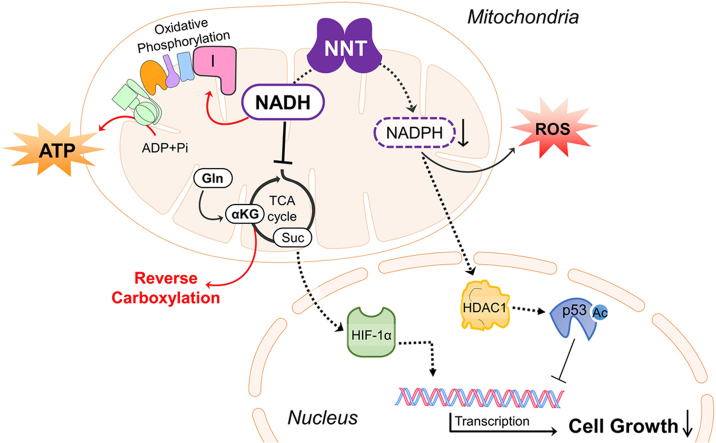
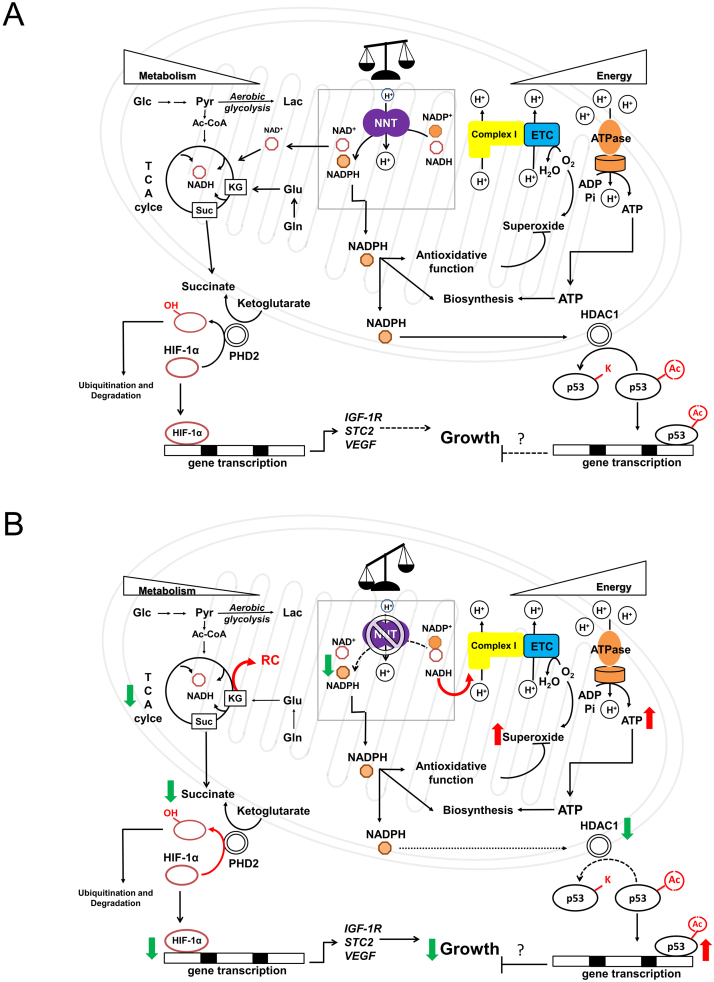
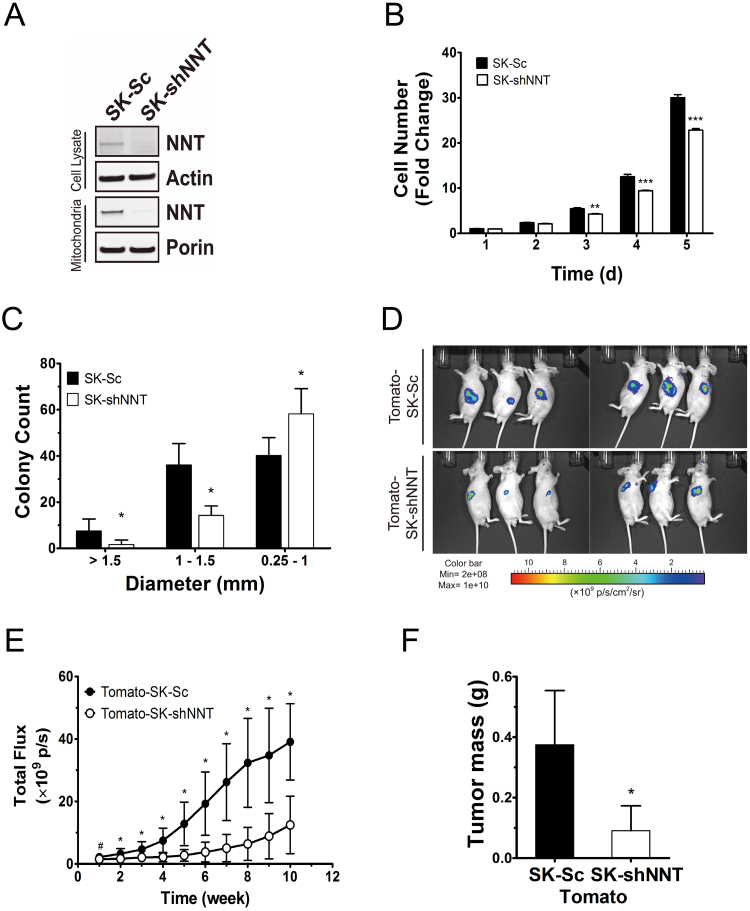
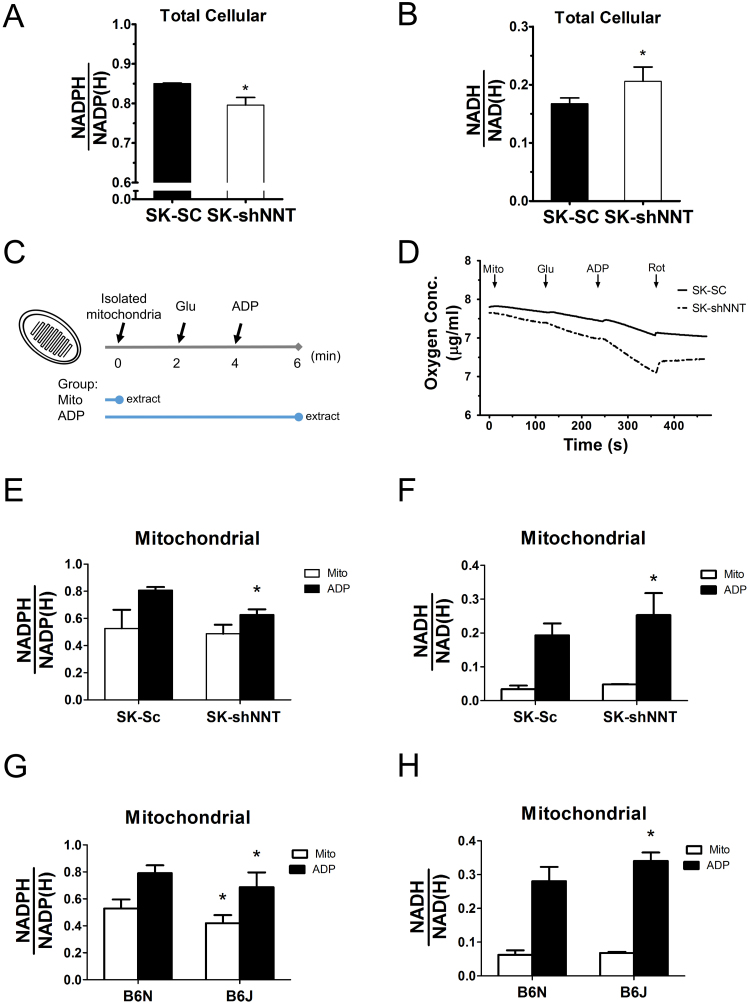
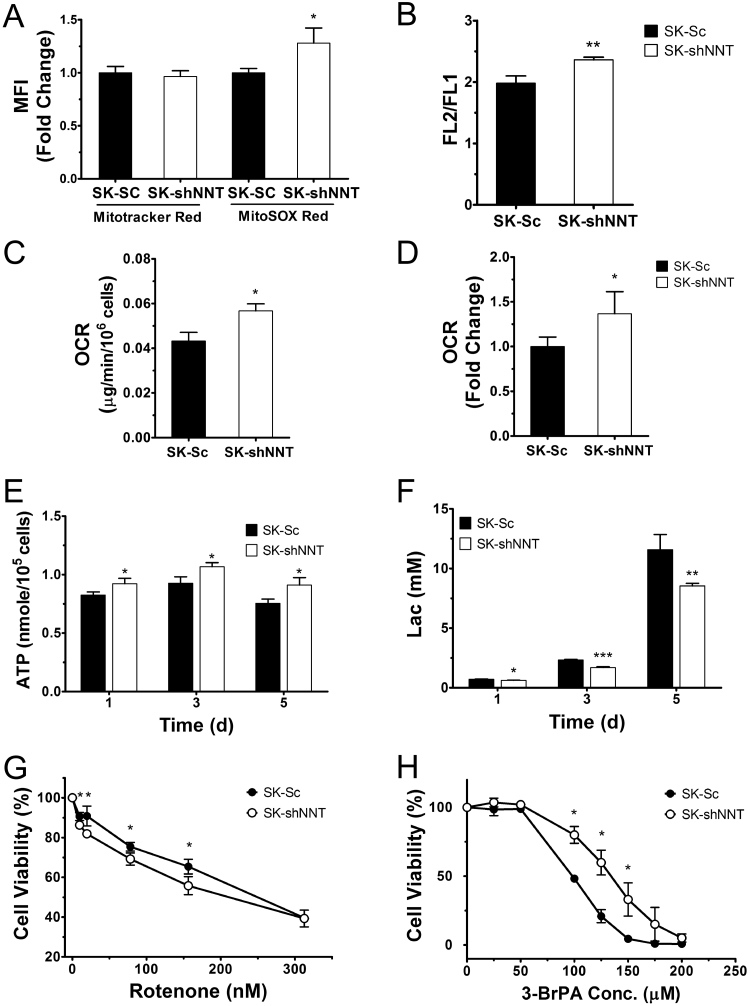
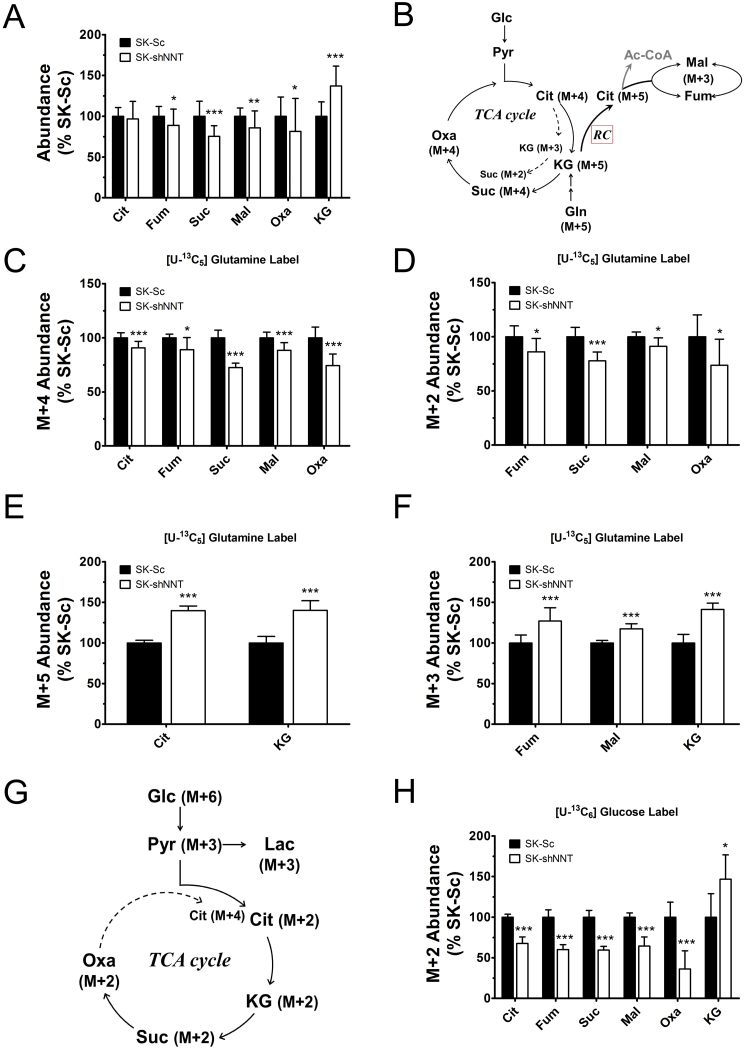
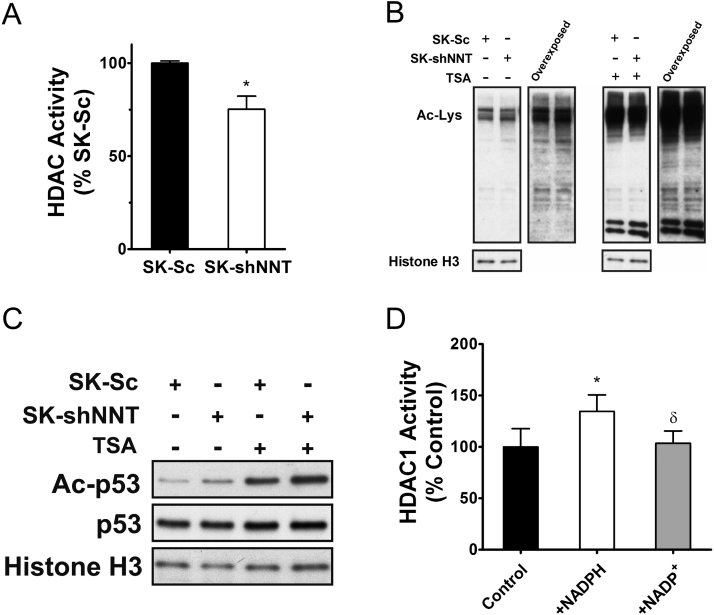
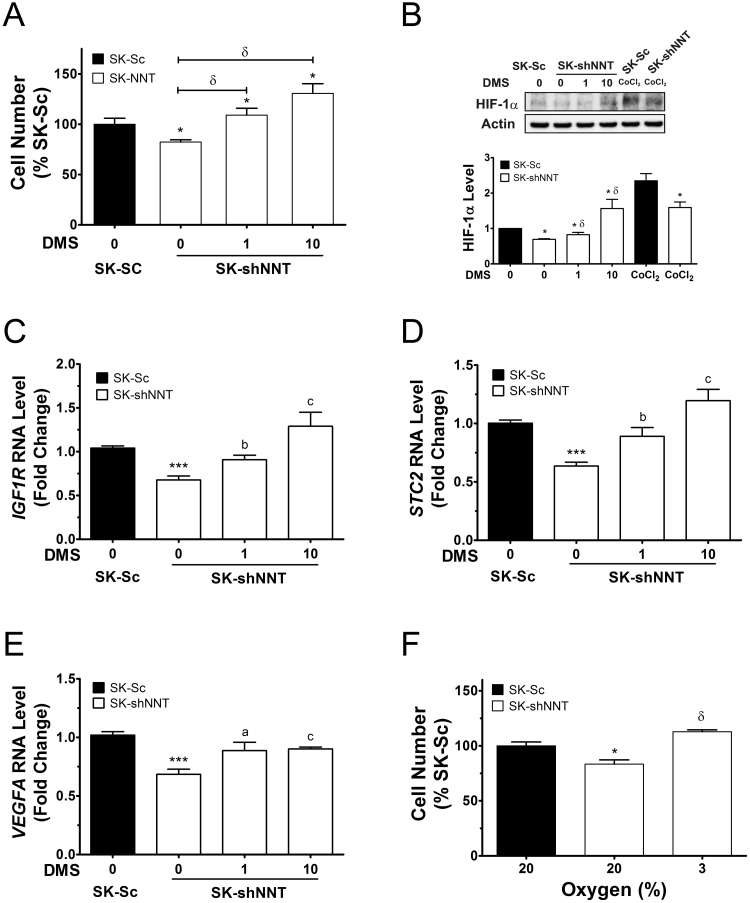
To study the physiological roles of NADH and NADPH homeostasis in cancer, we studied the effect of NNT knockdown on physiology of SK-Hep1 cells. NNT knockdown cells show limited abilities to maintain NAD and NADPH levels and have reduced proliferation and tumorigenicity. There is an increased dependence of energy production on oxidative phosphorylation. Studies with stable isotope tracers have revealed that under the new steady-state metabolic condition, the fluxes of TCA and glycolysis decrease while that of reductive carboxylation increases. Increased [α-ketoglutarate]/[succinate] ratio in NNT-deficient cells results in decrease in HIF-1α level and expression of HIF-1α regulated genes. Reduction in NADPH level leads to repression of HDAC1 activity and an increase in p53 acetylation. These findings suggest that NNT is essential to homeostasis of NADH and NADPH pools, anomalies of which affect HIF-1α- and HDAC1-dependent pathways, and hence retrograde response of mitochondria.
为了研究NADH和NADPH稳态在癌症中的生理作用,我们研究了NNT基因敲低对SK-Hep1细胞生理功能的影响。NNT基因敲低的细胞维持NAD和NADPH水平的能力有限,增殖和致瘤性降低。能量产生对氧化磷酸化的依赖性增加。使用稳定同位素示踪剂的研究表明,在新的稳态代谢条件下,三羧酸循环(TCA)和糖酵解的通量降低,而还原羧化的通量增加。NNT缺陷细胞中[α-酮戊二酸]/[琥珀酸]比值的增加导致HIF-1α水平降低以及HIF-1α调控基因的表达减少。NADPH水平的降低导致HDAC1活性受到抑制,p53乙酰化增加。这些发现表明,NNT对于NADH和NADPH池的稳态至关重要,其异常会影响HIF-1α和HDAC1依赖性途径,进而影响线粒体的逆行反应。