Kaushik Ujjwal, Aeri Vidhu, Showkat R Mir, Ali Mohammad
Faculty of Pharmacy, Department of Pharmacognosy and Phytochemistry, Hamdard University, New Delhi, India.
Pharmacogn Mag. 2017 Jan;13(Suppl 1):S115-S121. doi: 10.4103/0973-1296.203991. Epub 2017 Apr 7.
Few vegetables that are commonly consumed in India as part of diet have been claimed for their antidiabetic potential.
The present study was aimed at evaluating preventive effects of cucurbit vegetables namely, and belonging to family in diabetic hyperglycemia.
The fruits of and were extracted with chloroform and fractionated with hexane to prepare an extract rich in moderately polar components. These extracts were used for evaluating the effect of these cucurbits in nicotinamide/streptozotocin-induced type 2 diabetes. Streptozotocin-nicotinamide-induced diabetic animals were orally treated with chloroform extract of fruits (250 mg/kg BW) given daily for a week separately.
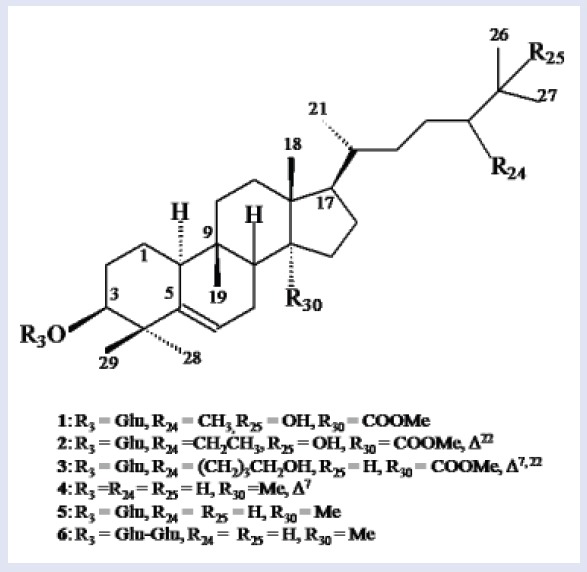
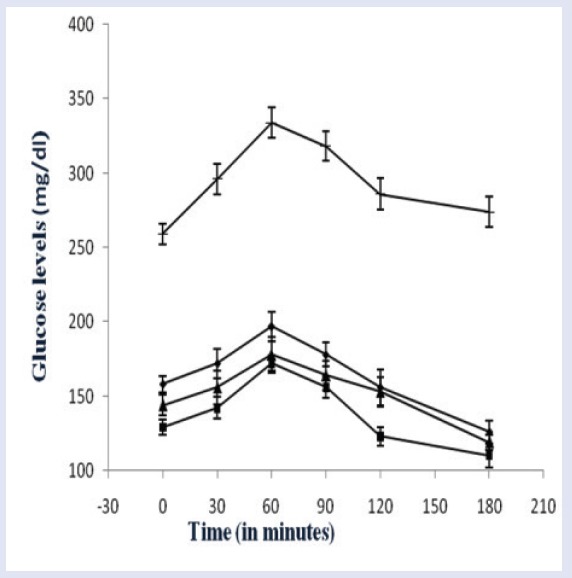
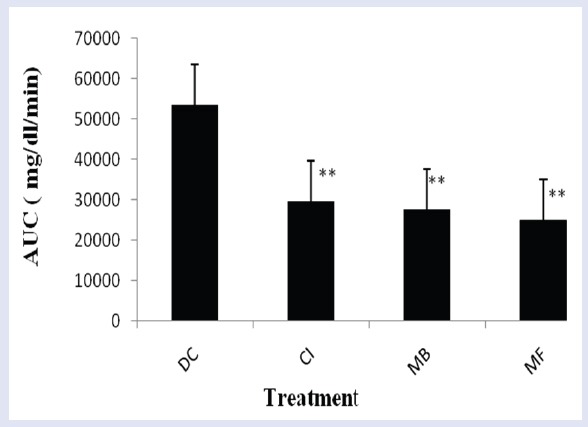
Both the extracts reduced fasting blood glucose significantly ( < 0.05 versus diabetic control) when estimated on seventh day of treatments. Pretreatment with fruit extracts for 7 days also blunted the OGTT (oral glucose tolerance test) curve. Results indicated that and fruits possess beneficial effects in diabetes by lowering elevated blood glucose level. Six cucurbitane-type triterpenoids were isolated from bioactive extracts of ((1-3) and (4-6). The structures of these compounds were elucidated on the basis of spectroscopic data analysis.
The study concludes that the inclusion of and fruits in food can be useful for newly diagnosed diabetic patients or highrisk group of population for glycemic control.
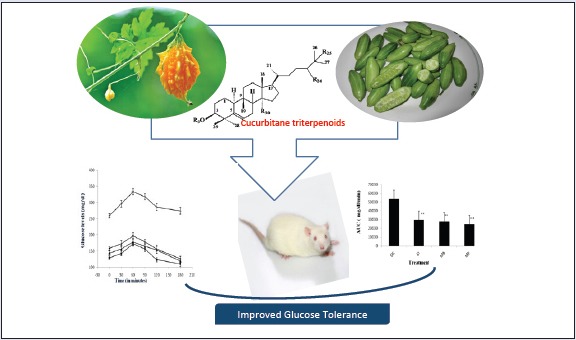
"Cucurbitane-type triterpenoids from the blood glucose-lowering extracts of and fruit" The beneficial effects of chloroform extracts of vegetal cucurbits namely (Ivy gourd) and (Balsam apple) in streptozotocin-nicotinamide (STZ-NA)-induced diabetic rats has been evaluated.The isolation and characterization of six cucurbitacins from bioactive extracts of (Coccinoside A, B, and C) and (cucurbit-5, 7-dien-3ß-ol, cucurbita-5-en-3ß-ol-3--ß-d-glucopyranoside, and cucurbit-5-en-3ß-ol-3-O-ß-d-glucopyranosyl-(4'→1")--ß-d-glucopyranoside) have been reported for the first time.The study concludes that the inclusion of and fruits in food can be useful for newly diagnosed diabetic patients or high risk group of population for glycemic control. C: indica (Coccinia indica), M: balsamina (Momordica balsamina), Kbr: Potassium bromide, FTIR: Fourier transform infrared spectroscopy, COSY: Corelated Spectroscopy, DEPT: Distortionless Enhancement by Polarization Transfer, DMSO: Dimethyl sulfoxide, TMS: tetramethylsilane, ESI-MS: Electrospray Ionization mass spectrometry, TLC: thin layer chromatography, STZ-NA: Streptozotocin-nicotinamide, CMC: carboxy methyl cellulose, BW: body weight, ANOVA: analysis of variance, AUC: area under curve.
在印度,作为日常饮食一部分而被普遍食用的蔬菜中,鲜少有因其抗糖尿病潜力而受到关注的。
本研究旨在评估葫芦科蔬菜印度栝楼和苦瓜对糖尿病高血糖的预防作用。
用氯仿提取印度栝楼和苦瓜的果实,并依次用正己烷进行分离,以制备富含中等极性成分的提取物。这些提取物用于评估这些葫芦科植物对烟酰胺/链脲佐菌素诱导的2型糖尿病的影响。将链脲佐菌素 - 烟酰胺诱导的糖尿病动物分为两组,分别连续一周每天口服给予果实的氯仿提取物(250mg/kg体重)。
在治疗的第七天进行检测时,两种提取物均能显著降低空腹血糖(与糖尿病对照组相比,P<0.05)。用果实提取物预处理7天也能使口服葡萄糖耐量试验(OGTT)曲线变平缓。结果表明,印度栝楼和苦瓜的果实通过降低升高的血糖水平对糖尿病具有有益作用。从印度栝楼的生物活性提取物中分离出6种葫芦烷型三萜类化合物(1 - 3),从苦瓜中分离出另外6种(4 - 6)。这些化合物的结构通过光谱数据分析得以阐明。
该研究得出结论,在食物中加入印度栝楼和苦瓜的果实对新诊断的糖尿病患者或高风险人群控制血糖可能有益。
“来自印度栝楼和苦瓜果实降血糖提取物中的葫芦烷型三萜类化合物” 已评估了植物葫芦科蔬菜印度栝楼(栝楼)和苦瓜(苦瓜)的氯仿提取物对链脲佐菌素 - 烟酰胺(STZ - NA)诱导的糖尿病大鼠的有益作用。首次报道了从印度栝楼(Coccinoside A、B和C)和苦瓜(葫芦 - 5,7 - 二烯 - 3β - 醇、葫芦 - 5 - 烯 - 3β - 醇 - 3 - O - β - D - 吡喃葡萄糖苷以及葫芦 - 5 - 烯 - 3β - 醇 - 3 - O - β - D - 吡喃葡萄糖基 - (4'→1'') - β - D - 吡喃葡萄糖苷)的生物活性提取物中分离和鉴定出6种葫芦素。该研究得出结论,在食物中加入印度栝楼和苦瓜的果实对新诊断的糖尿病患者或高风险人群控制血糖可能有益。C:indica(印度栝楼),M:balsamina(苦瓜),Kbr:溴化钾,FTIR:傅里叶变换红外光谱,COSY:相关光谱,DEPT:无畸变极化转移增强法,DMSO:二甲基亚砜,TMS:四甲基硅烷,ESI - MS:电喷雾电离质谱,TLC:薄层色谱,STZ - NA:链脲佐菌素 - 烟酰胺,CMC:羧甲基纤维素,BW:体重,ANOVA:方差分析,AUC:曲线下面积