Wrann Christiane D
Dana-Farber Cancer Institute and Department of Cell Biology, Harvard Medical School, 44 Binney Street, Boston, MA 02115, USA.
Brain Plast. 2015;1(1):55-61. doi: 10.3233/BPL-150019.
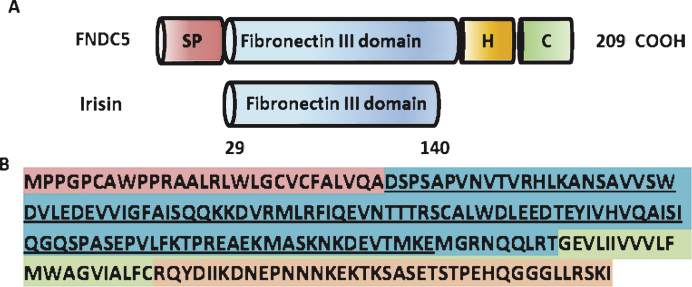
Exercise can improve cognitive function and the outcome of neurodegenerative diseases, like Alzheimer's disease. This effect has been linked to the increased expression of brain-derived neurotrophic factor (BDNF). However, the underlying molecular mechanisms driving the elevation of this neurotrophin remain unknown. Recently, we have reported a PGC-1α-FNDC5/irisin pathway, which is activated by exercise in the hippocampus in mice and induces a neuroprotective gene program, including . This review will focus on FNDC5 and its secreted form "irisin", a newly discovered myokine, and their role in the nervous system and its therapeutic potential. In addition, we will briefly discuss the role of other exercise-induced myokines on positive brain effects.
运动可以改善认知功能以及神经退行性疾病(如阿尔茨海默病)的预后。这种作用与脑源性神经营养因子(BDNF)表达增加有关。然而,驱动这种神经营养因子水平升高的潜在分子机制仍不清楚。最近,我们报道了一条PGC-1α-FNDC5/鸢尾素通路,该通路在小鼠海马体中被运动激活,并诱导一个神经保护基因程序,包括……。本综述将聚焦于FNDC5及其分泌形式“鸢尾素”(一种新发现的肌动蛋白),以及它们在神经系统中的作用及其治疗潜力。此外,我们将简要讨论其他运动诱导的肌动蛋白对大脑积极效应的作用。