Qabaha Khaled, Ras Sari Abu, Abbadi Jehad, Al-Rimawi Fuad
Department of Medical Laboratory Sciences, Faculty of Allied Health Sciences, Arab American University, Jenin, Palestine.
Biology Department, Faculty of Science and Technology, Al-Quds University, P.O.Box 20002, East Jerusalem, Palestine.
Afr J Tradit Complement Altern Med. 2016 Aug 12;13(5):1-6. doi: 10.21010/ajtcam.v13i5.1. eCollection 2016.
spp. and are among the Palestinian trees that are traditionally used in folkloric medicine in treating many diseases; leaves of which are thought to have anti-inflammatory, antibacterial and antioxidant effects. The goal of this study is to evaluate the inhibitory effect of . and extracts on Lipopolysacaride (LPS)-induced Interlukin-6 (Il-6) and Tumor Necrosis Factor-α (TNF-α) by polymorphonuclear Cells (PMNCs).
Polymorphonuclear cells were isolated from the whole blood using Histopaque (Ficol-1077) method and then cultured in an enriched Roswell Park Memorial Institute (RBMI) medium. Supernatants' Interlukin-6 (IL-6) and Tumor Necrosis Factor (TNF-α) levels were determined 24 hour after LPS stimulation. HPLC was employed to determine the concentration of phenolic compounds in the extracts. The concentrations of TNF-α and IL-6 were compared using paired-samples t test.
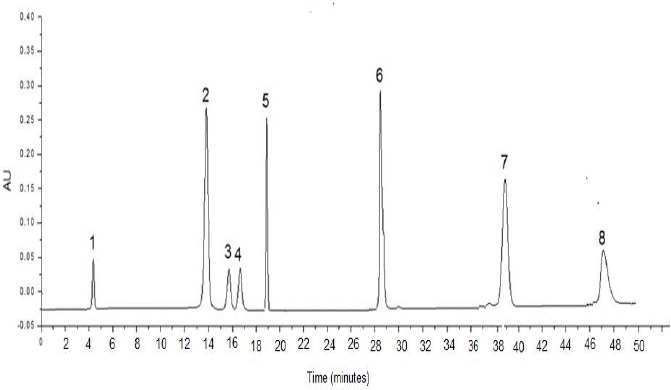
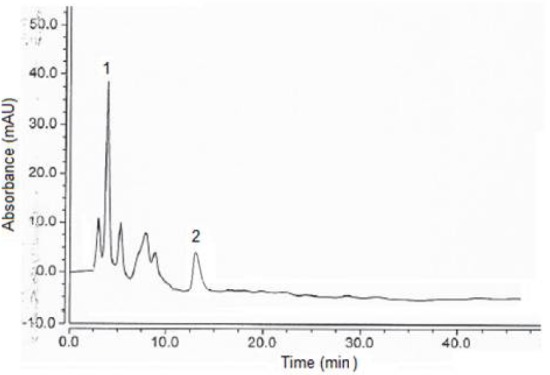
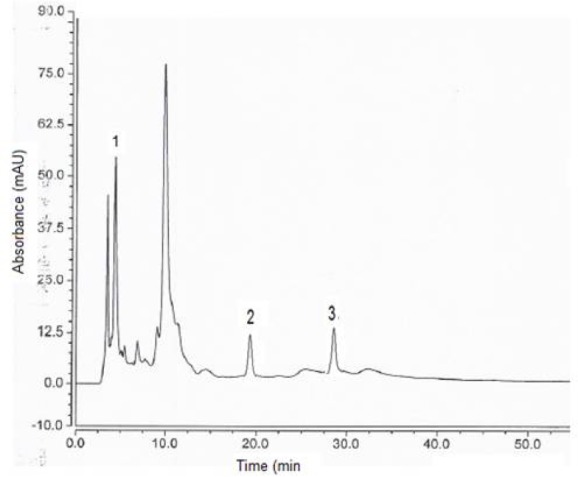
. and leaves extracts have shown significant reduction in the levels of both Il-6 and TNF-α Gallic acid; a strong anti-inflammatory agent was found to be the major phenolic compound in both leaf extracts. However, other anti-inflammatory phenolic compounds were detected in extract including syringic acid and p-coumaric acid, while chlorogenic acid was detected in . leaf extract.
Reduction in the levels of Il-6 and TNF-α upon the effect of both . and extract is an indication of their anti-inflammatory effects. Our results may also indicate that the observed anti-inflammatory effect of the above extracts may be due to the presence of gallic acid and other phenolic compounds. LPS: Lipopolysacaride, Il-6: Interlukin-6, TNF-α: Tumor Necrosis Factor-α, PMNCs: Polymorphonuclear Cells, HPLC: High Performance Liquid Chromatography, ELISA: Enzyme Linked Immune Sorbent Assay, EDTA: Ethylene Diamine Tetra Acetic acid, PBS: phosphate buffered saline, RPMI: Roswell Park Memorial Institute medium FBS: Fetal Bovine Serum.
[植物名称1]和[植物名称2]是巴勒斯坦的树木,传统上用于民间医学治疗多种疾病;人们认为其叶子具有抗炎、抗菌和抗氧化作用。本研究的目的是评估[植物名称1]和[植物名称2]提取物对脂多糖(LPS)诱导的多形核细胞(PMNCs)产生白细胞介素-6(Il-6)和肿瘤坏死因子-α(TNF-α)的抑制作用。
使用Histopaque(Ficol-1077)方法从全血中分离多形核细胞,然后在富含罗斯威尔公园纪念研究所(RBMI)培养基中培养。在LPS刺激24小时后测定上清液中白细胞介素-6(IL-6)和肿瘤坏死因子(TNF-α)的水平。采用高效液相色谱法(HPLC)测定提取物中酚类化合物的浓度。使用配对样本t检验比较TNF-α和IL-6的浓度。
[植物名称1]和[植物名称2]叶子提取物显示Il-6和TNF-α水平显著降低;没食子酸是一种强效抗炎剂,被发现是两种叶子提取物中的主要酚类化合物。然而,在[植物名称1]提取物中还检测到其他抗炎酚类化合物,包括丁香酸和对香豆酸,而在[植物名称2]叶子提取物中检测到绿原酸。
[植物名称1]和[植物名称2]提取物作用后Il-6和TNF-α水平降低表明它们具有抗炎作用。我们的结果还可能表明,上述提取物观察到的抗炎作用可能归因于没食子酸和其他酚类化合物的存在。LPS:脂多糖,Il-6:白细胞介素-6,TNF-α:肿瘤坏死因子-α,PMNCs:多形核细胞,HPLC:高效液相色谱法,ELISA:酶联免疫吸附测定,EDTA:乙二胺四乙酸,PBS:磷酸盐缓冲盐水,RPMI:罗斯威尔公园纪念研究所培养基,FBS:胎牛血清。