Moraes Ana Claudia Oliveira de, Oliveira Priscilla Caroliny de, Fonseca-Neto Olival Cirilo Lucena da
Instituto Israelita Albert Einstein, São Paulo, SP, Brazil.
Arq Bras Cir Dig. 2017 Jan-Mar;30(1):65-68. doi: 10.1590/0102-6720201700010018.
Liver transplantation is intended to increase the survival of patients with chronic liver disease in terminal phase, as well as improved quality of life. Since the first transplant until today many changes have occurred in the organ allocation system.
To review the literature on the Model for End-stage Liver Disease (MELD) and analyze its correlation with survival after liver transplantation.
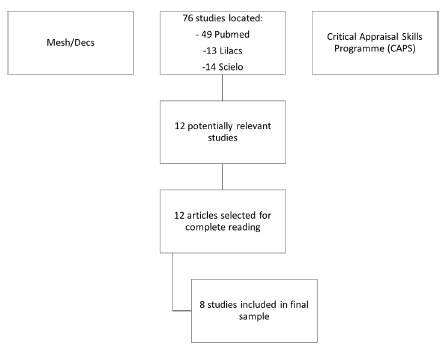
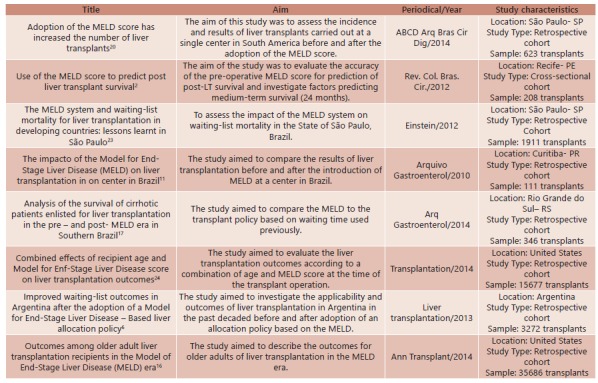
An integrative literature review in Lilacs, SciELO, and Pubmed in October 2015, was realized. Were included eight studies related to the MELD score and its impact on liver transplant.
There was predominance of transplants in male between 45-55 y. The main indications were hepatitis C, hepatocellular carcinoma and alcoholic cirrhosis. The most important factors post-surgery were related to the MELD score, the recipient age, expanded donor criteria and hemotransfusion.
The MELD system reduced the death rate in patients waiting for a liver transplant. However, this score by itself is not a good predictor of survival after liver transplantation.
肝移植旨在提高终末期慢性肝病患者的生存率,并改善生活质量。从首例移植至今,器官分配系统发生了许多变化。
回顾关于终末期肝病模型(MELD)的文献,并分析其与肝移植后生存率的相关性。
2015年10月在Lilacs、SciELO和Pubmed数据库进行了综合文献回顾。纳入了八项与MELD评分及其对肝移植影响相关的研究。
45至55岁男性的移植占主导。主要适应症为丙型肝炎、肝细胞癌和酒精性肝硬化。术后最重要的因素与MELD评分、受者年龄、扩大的供体标准和输血有关。
MELD系统降低了等待肝移植患者的死亡率。然而,该评分本身并不是肝移植后生存率的良好预测指标。