Li Kun, Wei Peng, Qin Yanwen, Wei Yongxiang
Department of Otolaryngology, Beijing An Zhen Hospital, Capital Medical University, Beijing, China.
Medicine (Baltimore). 2017 May;96(19):e6850. doi: 10.1097/MD.0000000000006850.
Obstructive sleep apnea (OSA) is a common disease, distinguished by recurrent episodes of upper airway obstruction during sleep, with an inflammatory component. C-reactive protein (CRP) and high-sensitivity C-reactive protein (hs-CRP) are markers of systemic inflammation and may serve as biomarkers of OSA.
Scientific studies published from January 1, 2006, to January 1, 2016 were obtained via searches of PubMed, Embase, SCI, and China National Knowledge Internet (CNKI) using relevant terms. Studies concerning serum CRP level/ hs-CRP in OSA patients were reviewed by 2 independent reviewers. Studies were included if they conform with our specific criteria of inclusion. Eligible studies were subjected to quality review, data extraction, and meta-analysis by using RevMan (version 5.2) and STATA (version 12.0).
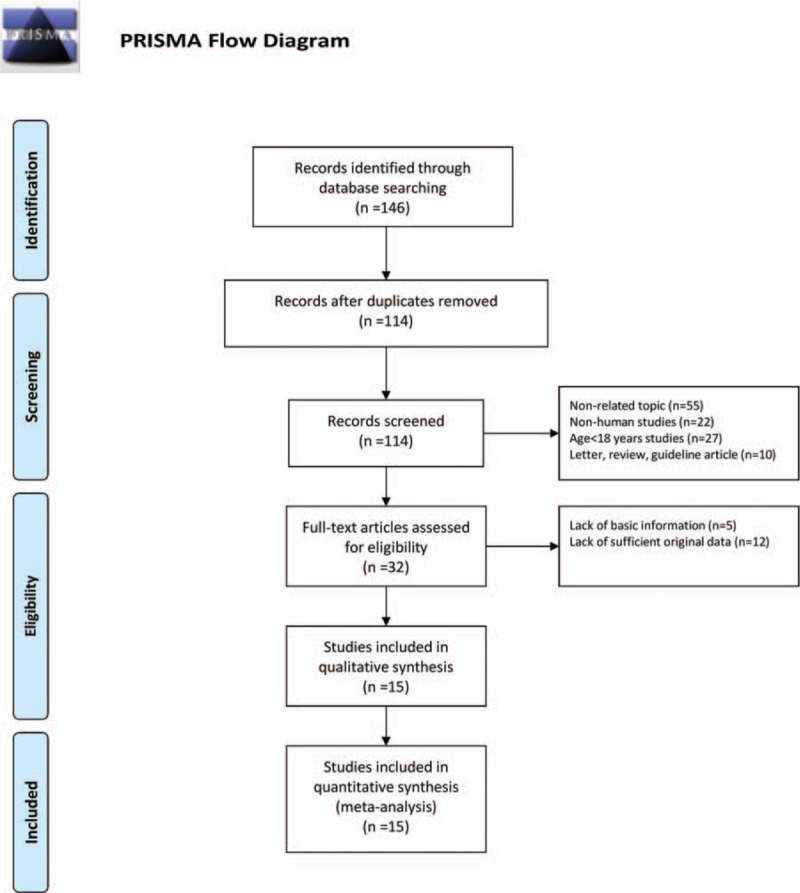
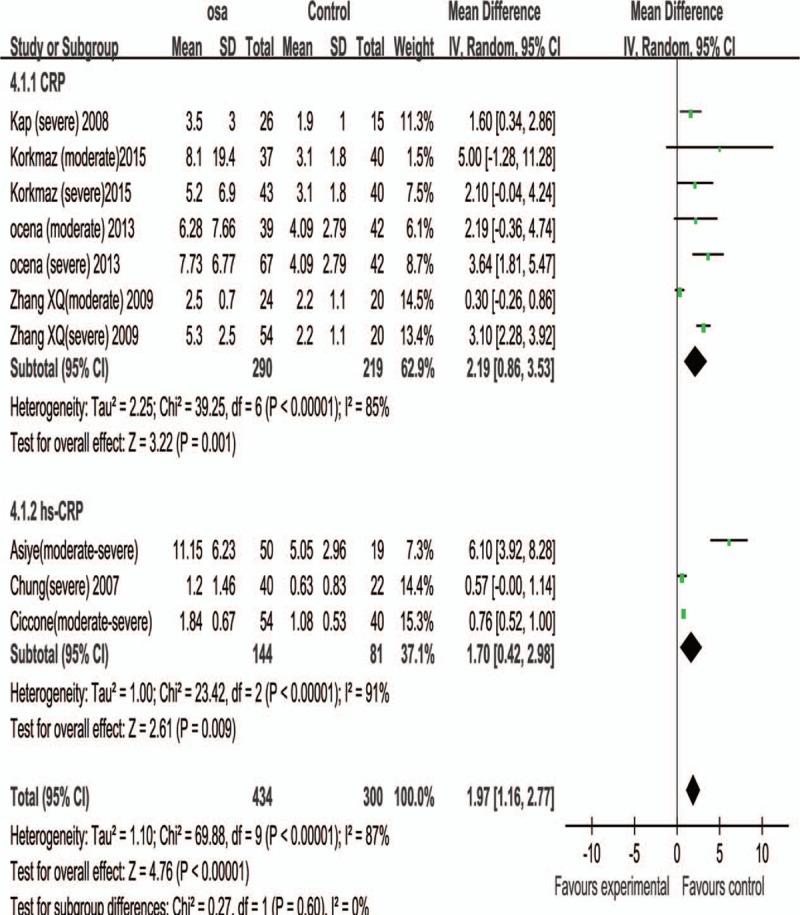
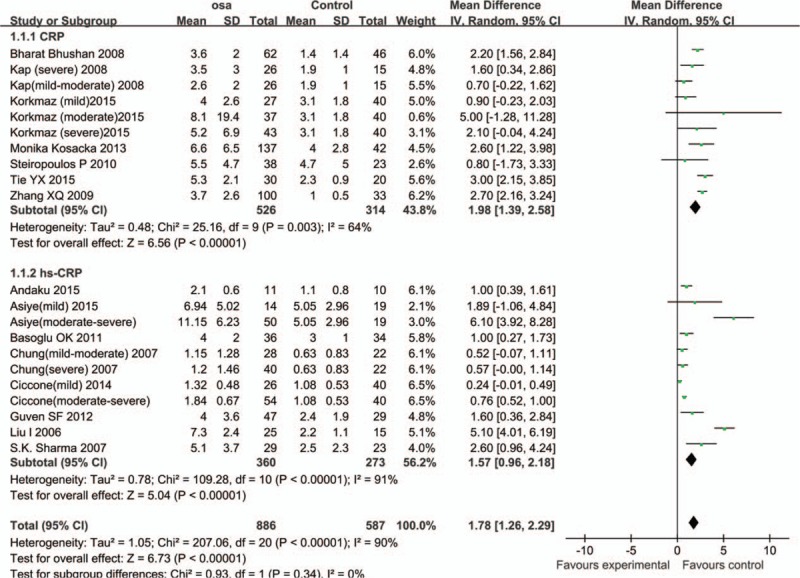
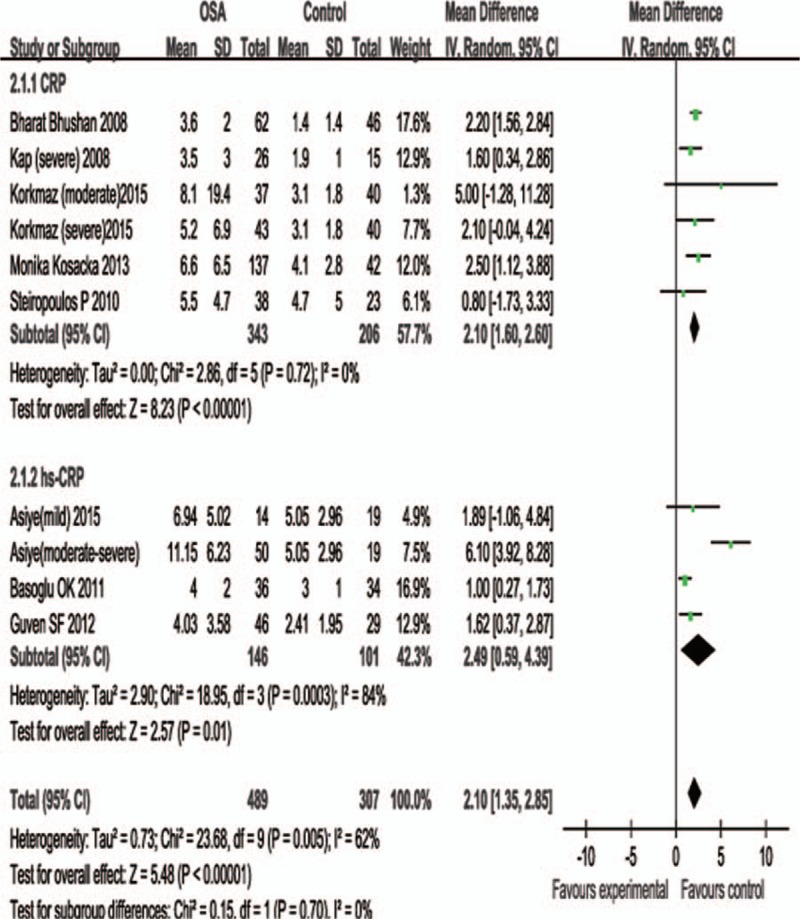
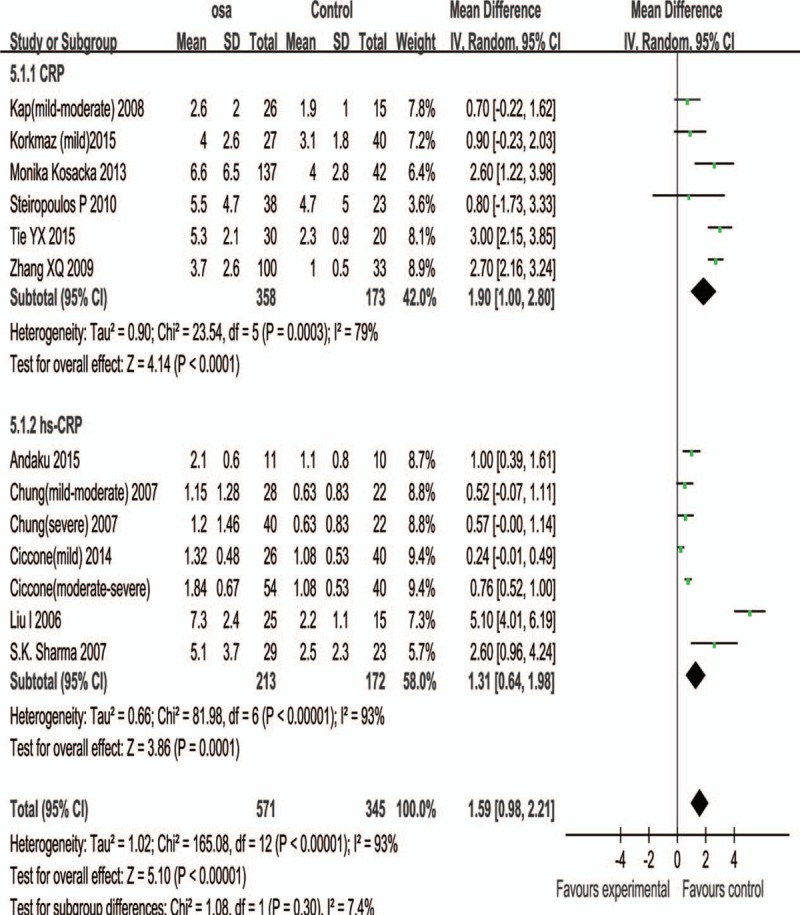
There were 15 studies that met inclusion criteria that included a total of 1297 subjects. Meta-analysis revealed that serum CRP levels in the OSA group were 1.98 mmol/L higher than those in control group (95% confidence interval: 1.39-2.58, P < .01). Similarly, serum hs-CRP levels in the OSA group were 1.57 mmol/L higher than that in the control group (95% confidence interval: 0.96-2.18, P < .01). Subgroup analysis showed greater differences between OSA patients and controls in the setting of obesity (body mass index)> = 30. The total weighted mean difference (WMD) between OSA and controls within the subgroup of subjects who had a CRP was 2.10; for hs-CRP, the WMD was 2.49. Comparing OSA patients of mean apnea hypopnea index> = 15 and controls, the total WMD for the CRP subgroup was 2.19; for the hs-CRP subgroup, the WMD was 1.70.
In our meta-analysis, serum CRP/hs-CRP levels were discovered to be higher in OSA patients compared with control subjects. Those with higher body mass index and apnea hyponea index demonstrated larger differences in CRP/hs-CRP levels. These data are consistent with an inflammatory component of OSA pathophysiology and support the role of CRP/hs-CRP as a biomarker in this disease.
阻塞性睡眠呼吸暂停(OSA)是一种常见疾病,其特征为睡眠期间上呼吸道反复阻塞,并伴有炎症成分。C反应蛋白(CRP)和高敏C反应蛋白(hs-CRP)是全身炎症的标志物,可能作为OSA的生物标志物。
通过使用相关术语检索PubMed、Embase、SCI和中国知网(CNKI),获取2006年1月1日至2016年1月1日发表的科学研究。由2名独立评审员对有关OSA患者血清CRP水平/hs-CRP的研究进行综述。符合我们特定纳入标准的研究被纳入。使用RevMan(5.2版)和STATA(12.0版)对符合条件的研究进行质量评估、数据提取和荟萃分析。
有15项研究符合纳入标准,共纳入1297名受试者。荟萃分析显示,OSA组血清CRP水平比对照组高1.98 mmol/L(95%置信区间:1.39 - 2.58,P <.01)。同样,OSA组血清hs-CRP水平比对照组高1.57 mmol/L(95%置信区间:0.96 - 2.18,P <.01)。亚组分析显示,在肥胖(体重指数)>= 30的情况下,OSA患者与对照组之间的差异更大。在有CRP的受试者亚组中,OSA与对照组之间的总加权平均差(WMD)为2.10;对于hs-CRP,WMD为2.49。比较平均呼吸暂停低通气指数>= 15的OSA患者与对照组,CRP亚组的总WMD为2.19;对于hs-CRP亚组,WMD为1.70。
在我们的荟萃分析中,发现OSA患者的血清CRP/hs-CRP水平高于对照组。体重指数和呼吸暂停低通气指数较高者在CRP/hs-CRP水平上差异更大。这些数据与OSA病理生理学的炎症成分一致,并支持CRP/hs-CRP作为该疾病生物标志物的作用。