Škopić Mateja Klika, Salamon Hazem, Bugain Olivia, Jung Kathrin, Gohla Anne, Doetsch Lara J, Dos Santos Denise, Bhat Avinash, Wagner Bernd, Brunschweiger Andreas
Department of Chemistry and Chemical Biology , TU Dortmund University , Otto-Hahn-Str. 6 , 44227 Dortmund , Germany . Email:
Chem Sci. 2017 May 1;8(5):3356-3361. doi: 10.1039/c7sc00455a. Epub 2017 Feb 28.
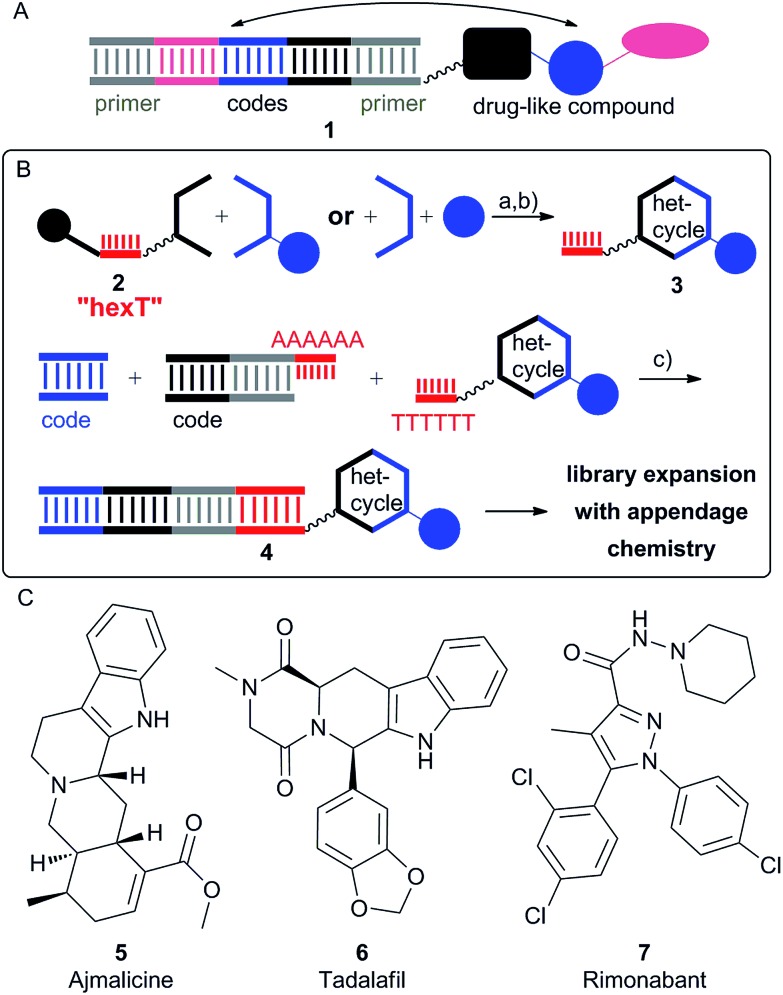
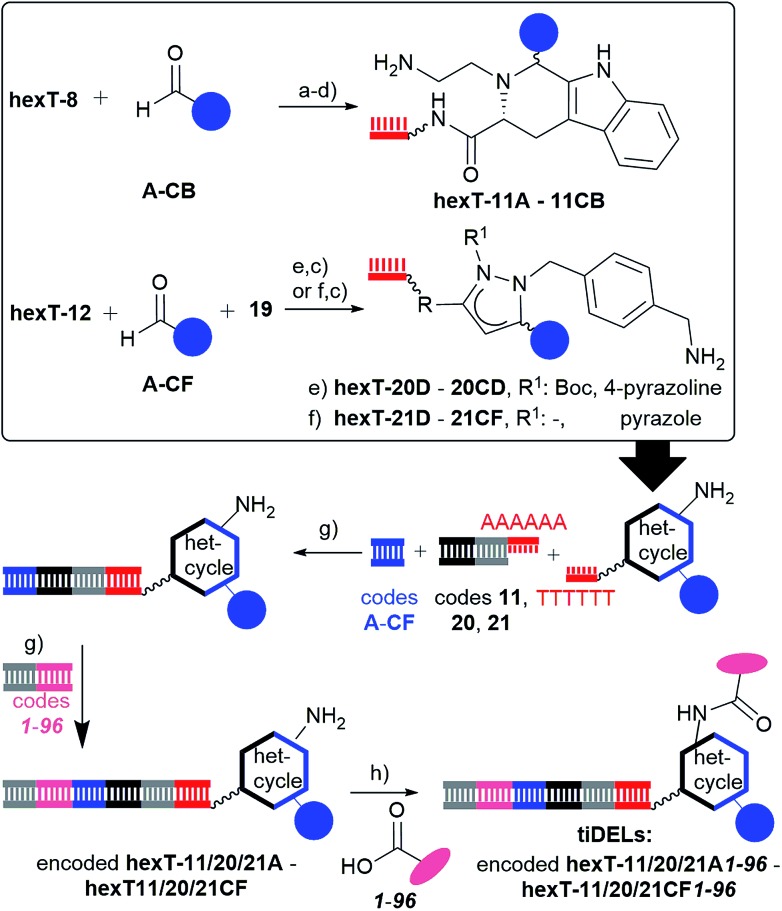
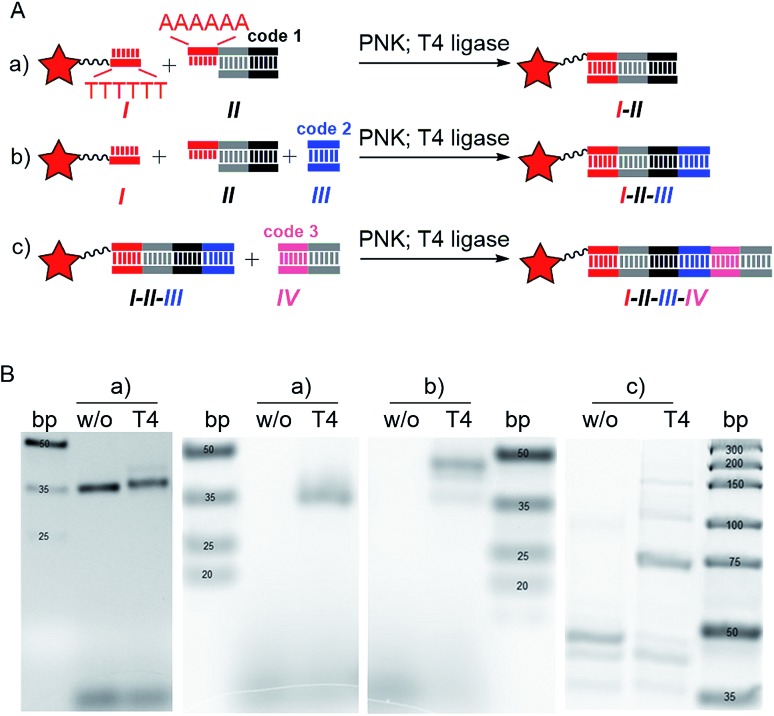
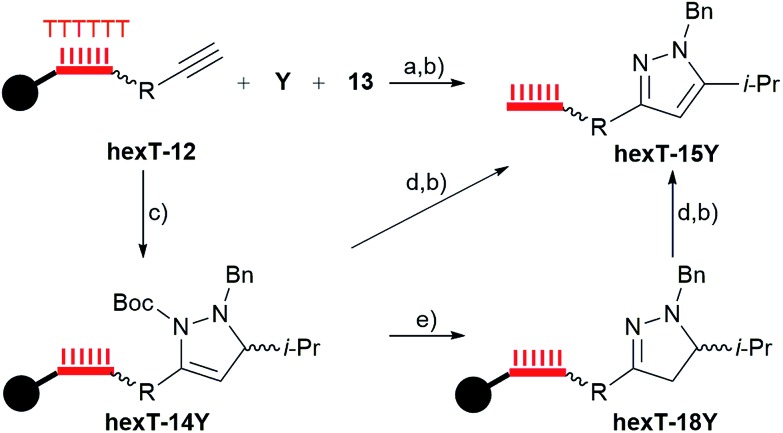
Libraries of DNA-tagged compounds are a validated screening technology for drug discovery. They are synthesized through combinatorial iterations of alternated coding and preparative synthesis steps. Thus, large chemical space can be accessed for target-based screening. However, the need to preserve the functionality of the DNA tag severely restricts the choice of chemical methods for library synthesis. Acidic organocatalysts, transition metals, and oxidants furnish diverse drug-like structures from simple starting materials, but cause loss of genetic information by depurination. A hexathymidine oligonucleotide, called "" allows the chemist utilizing these classes of catalysts to access a potentially broad variety of structures in the initial step of library synthesis. We exploited its catalyst tolerance to efficiently synthesize diverse substituted β-carbolines, pyrazolines, and pyrazoles from readily available starting materials as conjugates by acid- and Au(i)-catalysis, respectively. The conjugates were ligated to coding DNA sequences yielding encoded screening libraries inspired by drug structures.
DNA标记化合物库是一种经过验证的药物发现筛选技术。它们通过交替编码和制备合成步骤的组合迭代来合成。因此,可以访问大量化学空间用于基于靶点的筛选。然而,保留DNA标签功能的需求严重限制了库合成化学方法的选择。酸性有机催化剂、过渡金属和氧化剂能从简单的起始原料提供多样的类药物结构,但会通过脱嘌呤导致遗传信息丢失。一种名为“”的六聚胸苷寡核苷酸使化学家能够在库合成的初始步骤中利用这些类型的催化剂获得潜在广泛的结构。我们利用其对催化剂的耐受性,分别通过酸催化和金(I)催化,从容易获得的起始原料高效合成了多种取代的β-咔啉、吡唑啉和吡唑作为缀合物。这些缀合物与编码DNA序列连接,产生受药物结构启发的编码筛选库。