Arora Kalpana, Sharma Satyawati, Krishna Suresh B N, Adam Jamila K, Kumar Ashwani
Centre for Rural Development and Technology, Indian Institute of Technology DelhiNew Delhi, India.
Centre for Technology and Development, Society for Economic and Social StudiesNew Delhi, India.
Front Microbiol. 2017 May 2;8:753. doi: 10.3389/fmicb.2017.00753. eCollection 2017.
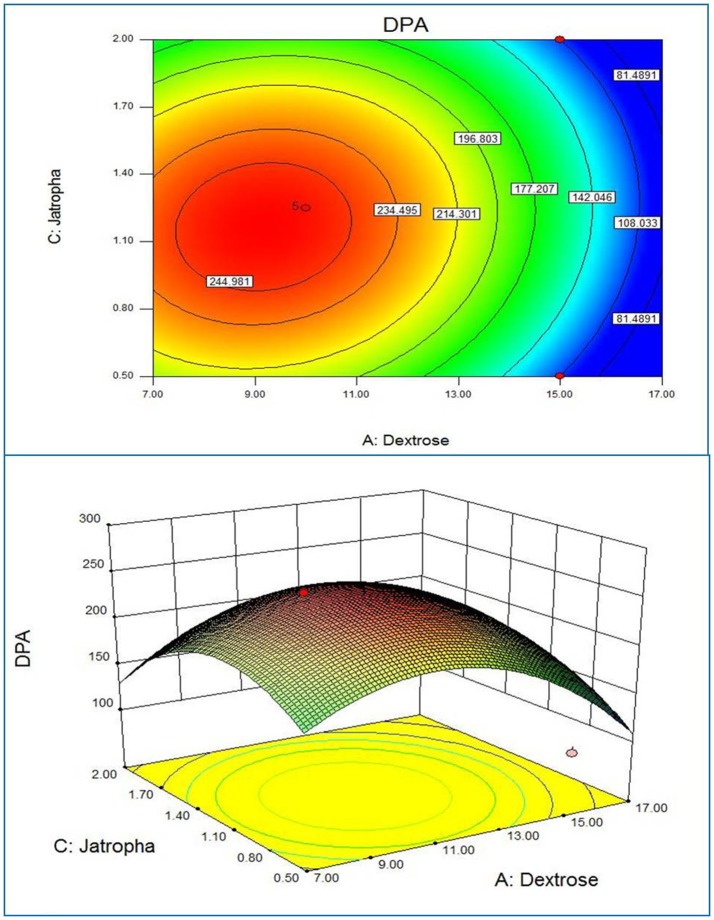
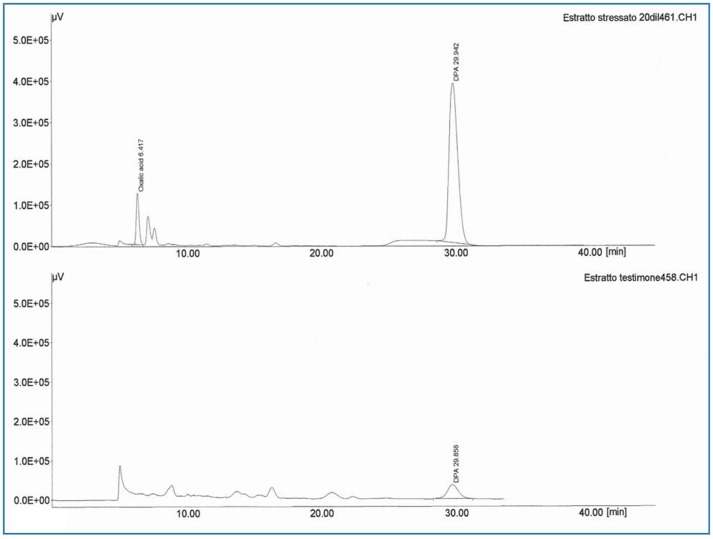
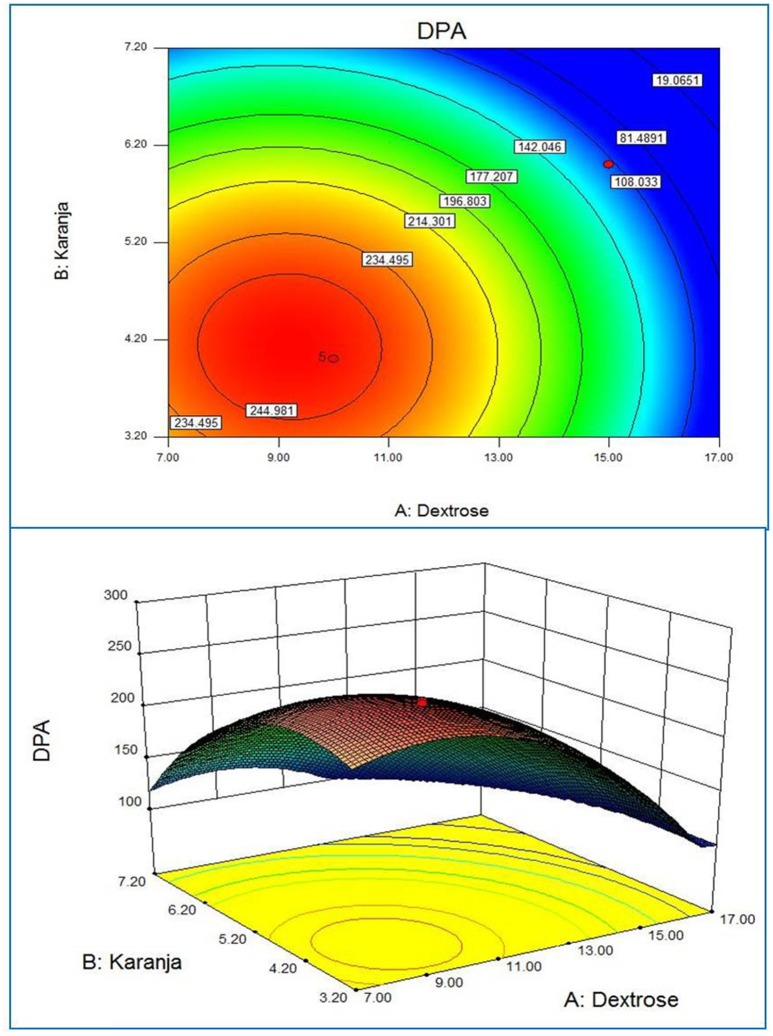
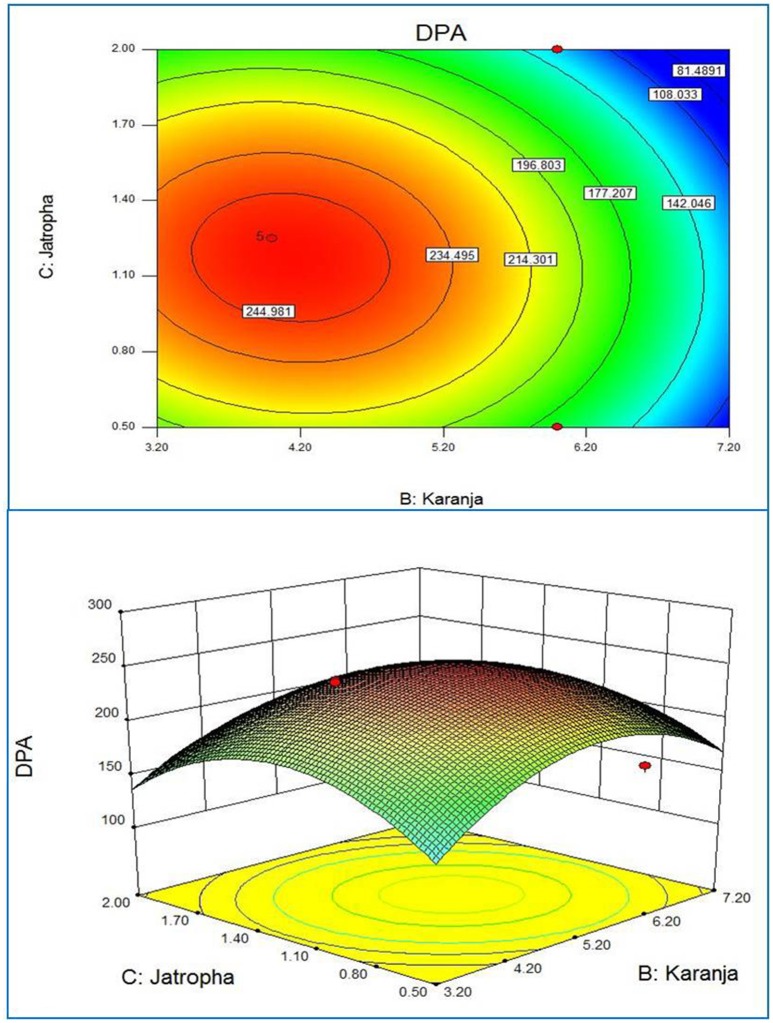
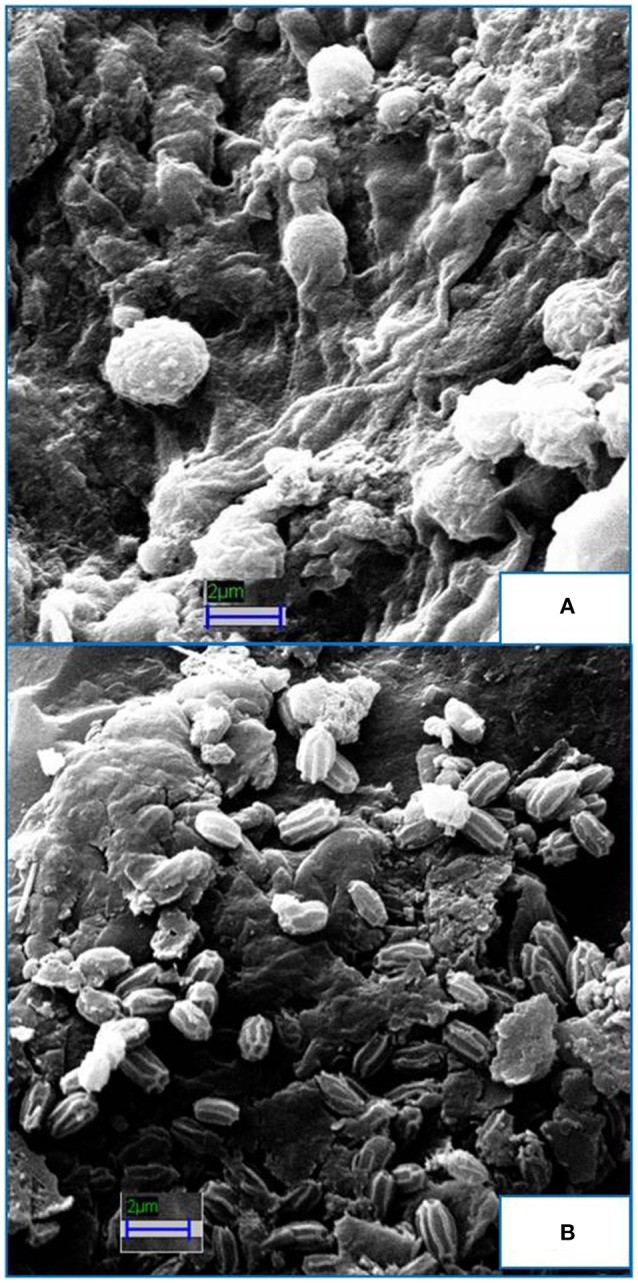
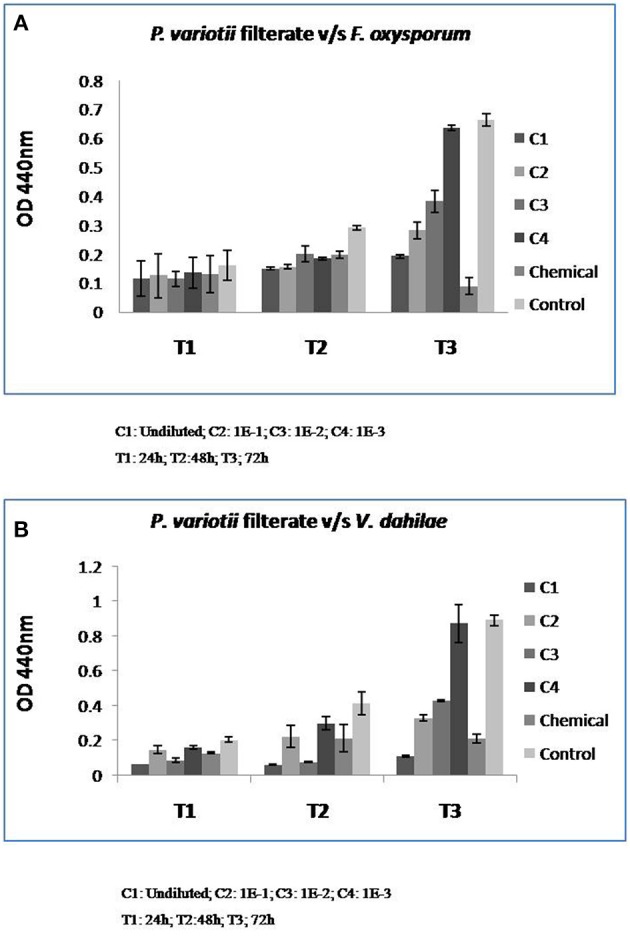
The present study investigated the use of waste non-edible oil cakes (Jatropha, Karanja, Neem, and Mahua) as a substrate for the growth of and dipicolinic acid (DPA) production. Previous researches proved the efficacy of DPA in suppressing certain pathogens that are deleterious to the plants in the rhizosphere. DPA production was statistical optimized by amending non-edible oil cakes in growing media as nitrogen and sugars (Dextrose, Glucose, and Lactose) as carbon source. Plackett-Burman design (PBD), indicated that Jatropha cake, Karanja cake, and Dextrose were the most significant components ( < 0.05) of the media and were further optimized using response surface methodology (RSM). Jatropha cake, Karanja cake, and Dextrose at the concentration of 12.5, 4.5, and 10 g/l, respectively, yielded 250 mg/l of DPA, which was 2.5 fold more than that obtained from basal medium. HPLC analysis of the optimized medium (peak at retention time of 30 min) confirmed the enhanced DPA production by . The scanning electron microscopy (SEM) images showed that optimized medium impose a stress like condition (due to less C:N ratio) for the fungus and generated more spores as compared to the basal medium in which carbon source is easily available for the mycelial growth. The antimicrobial activity of the fungal extract was tested and found to be effective even at 10 dilution after 72 h against two plant pathogens, and . Statistical experimental design of this study and the use of non-edible oil cakes as a substrate offer an efficient and viable approach for DPA production by .
本研究调查了使用废弃非食用油饼(麻风树、卡兰贾、印楝和马胡阿)作为底物用于[真菌名称未给出]生长和二吡啶甲酸(DPA)生产的情况。先前的研究证明了DPA在抑制根际中对植物有害的某些病原体方面的功效。通过在生长培养基中添加非食用油饼作为氮源,并添加糖(葡萄糖、右旋糖和乳糖)作为碳源,对DPA的生产进行了统计优化。Plackett-Burman设计(PBD)表明,麻风树饼、卡兰贾饼和葡萄糖是培养基中最显著的成分(P<0.05),并使用响应面法(RSM)进一步优化。分别以浓度为12.5、4.5和10 g/l的麻风树饼、卡兰贾饼和葡萄糖,产生了250 mg/l的DPA,这比从基础培养基中获得的产量高出2.5倍。对优化培养基的HPLC分析(保留时间为30分钟处的峰)证实了[真菌名称未给出]提高了DPA的产量。扫描电子显微镜(SEM)图像显示,优化后的培养基对真菌施加了类似胁迫的条件(由于碳氮比低),与基础培养基相比产生了更多的孢子,在基础培养基中碳源易于用于菌丝体生长。测试了真菌提取物的抗菌活性,发现即使在72小时后以10倍稀释对两种植物病原体[病原体名称未给出]仍有效。本研究的统计实验设计以及使用非食用油饼作为底物为[真菌名称未给出]生产DPA提供了一种高效且可行的方法。