Austvoll-Dahlgren Astrid, Semakula Daniel, Nsangi Allen, Oxman Andrew David, Chalmers Iain, Rosenbaum Sarah, Guttersrud Øystein
Norwegian Institute of Public Health, Oslo, Norway.
Makerere University College of Health Sciences, Kampala, Uganda.
BMJ Open. 2017 May 17;7(5):e013184. doi: 10.1136/bmjopen-2016-013184.
To describe the development of the Claim Evaluation Tools, a set of flexible items to measure people's ability to assess claims about treatment effects.
Methodologists and members of the community (including children) in Uganda, Rwanda, Kenya, Norway, the UK and Australia.
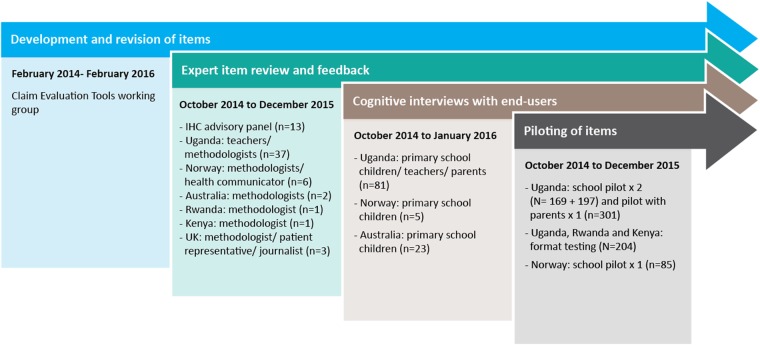
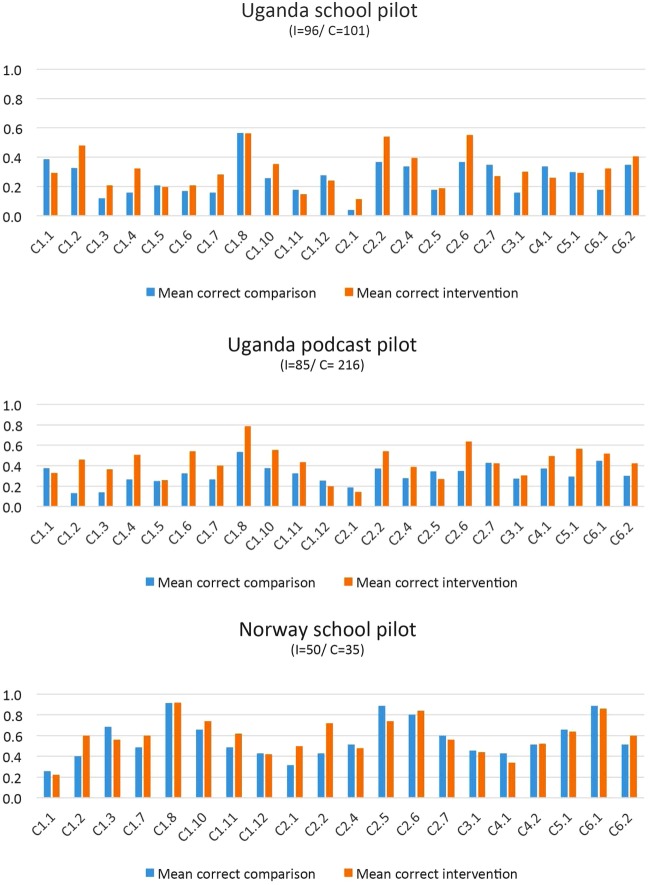
In the iterative development of the items, we used purposeful sampling of people with training in research methodology, such as teachers of evidence-based medicine, as well as patients and members of the public from low-income and high-income countries. Development consisted of 4 processes: (1) determining the scope of the Claim Evaluation Tools and development of items; (2) expert item review and feedback (n=63); (3) cognitive interviews with children and adult end-users (n=109); and (4) piloting and administrative tests (n=956).
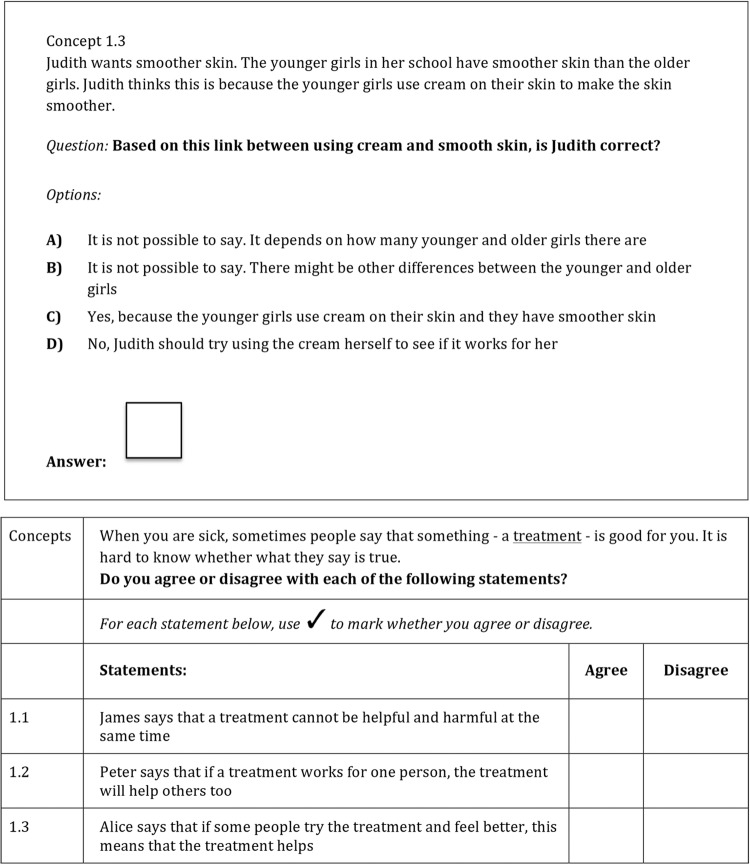
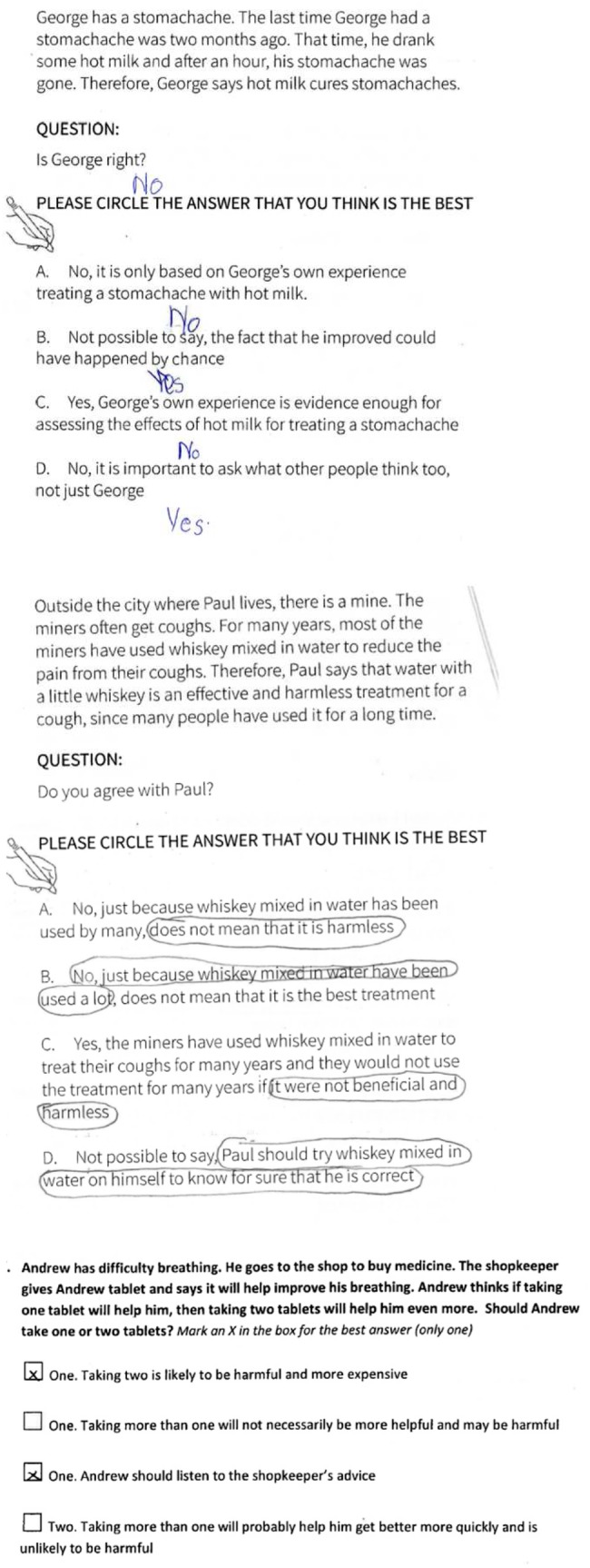
The Claim Evaluation Tools database currently includes a battery of multiple-choice items. Each item begins with a scenario which is intended to be relevant across contexts, and which can be used for children (from age 10 and above), adult members of the public and health professionals. People with expertise in research methods judged the items to have face validity, and end-users judged them relevant and acceptable in their settings. In response to feedback from methodologists and end-users, we simplified some text, explained terms where needed, and redesigned formats and instructions.
The Claim Evaluation Tools database is a flexible resource from which researchers, teachers and others can design measurement instruments to meet their own requirements. These evaluation tools are being managed and made freely available for non-commercial use (on request) through Testing Treatments (testingtreatments.org).
PACTR201606001679337 and PACTR201606001676150; Pre-results.
描述“索赔评估工具”的开发情况,这是一套灵活的项目,用于衡量人们评估有关治疗效果的索赔的能力。
乌干达、卢旺达、肯尼亚、挪威、英国和澳大利亚的方法学家及社区成员(包括儿童)。
在项目的迭代开发过程中,我们对具有研究方法培训背景的人员进行了有目的的抽样,比如循证医学教师,以及来自低收入和高收入国家的患者和公众。开发过程包括4个步骤:(1)确定“索赔评估工具”的范围并开发项目;(2)专家对项目进行评审并提供反馈(n = 63);(3)对儿童和成年最终用户进行认知访谈(n = 109);(4)进行试点和管理测试(n = 956)。
“索赔评估工具”数据库目前包含一系列多项选择题。每个项目都以一个场景开头,该场景旨在适用于各种情况,可用于儿童(10岁及以上)、成年公众和卫生专业人员。具有研究方法专业知识的人员认为这些项目具有表面效度,最终用户认为它们在各自的环境中相关且可接受。根据方法学家和最终用户的反馈,我们简化了一些文本,在需要的地方解释了术语,并重新设计了格式和说明。
“索赔评估工具”数据库是一个灵活的资源,研究人员、教师和其他人员可以从中设计测量工具以满足他们自己的需求。这些评估工具正在通过“测试治疗”网站(testingtreatments.org)进行管理,并可应要求免费提供用于非商业用途。
PACTR201606001679337和PACTR201606001676150;预结果。