Li Zi, Lan Yungang, Zhao Kui, Lv Xiaoling, Ding Ning, Lu Huijun, Zhang Jing, Yue Huiqing, Shi Junchao, Song Deguang, Gao Feng, He Wenqi
Key Laboratory of Zoonosis, Ministry of Education, College of Veterinary Medicine, Jilin UniversityChangchun, China.
Key Laboratory of Zoonosis, Ministry of Education, Institute of Zoonosis, Jilin UniversityChangchun, China.
Front Cell Infect Microbiol. 2017 May 3;7:155. doi: 10.3389/fcimb.2017.00155. eCollection 2017.
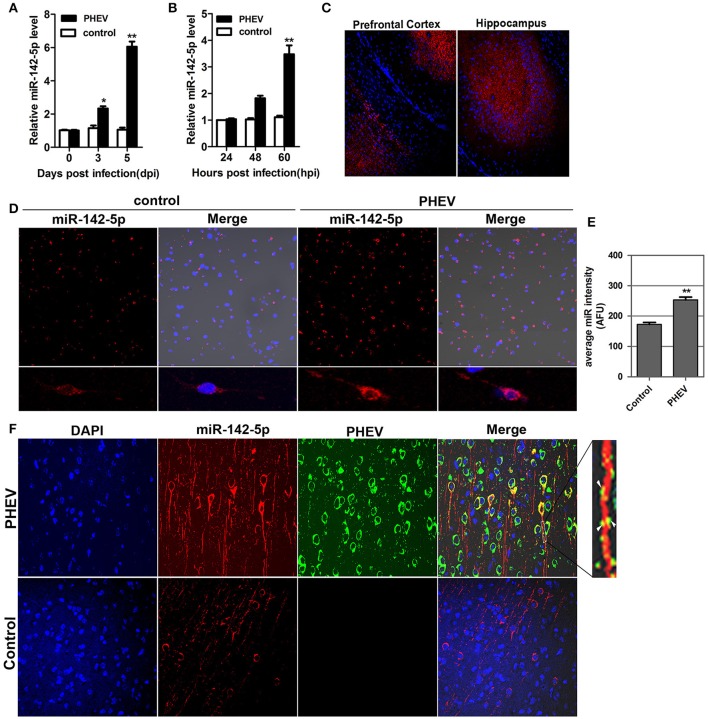
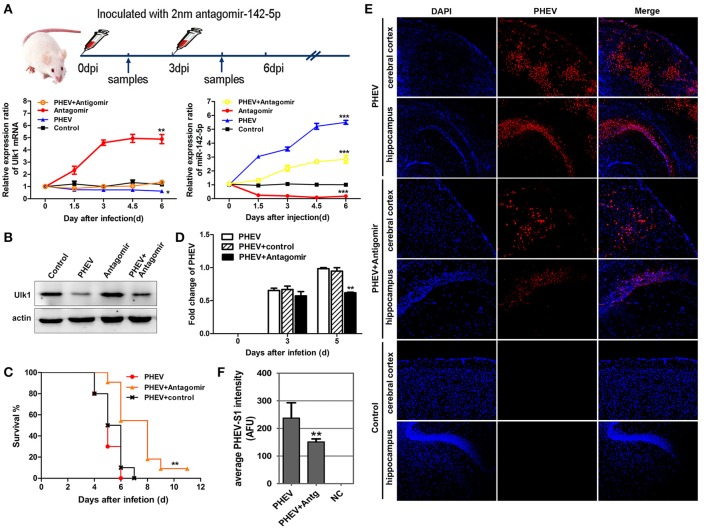
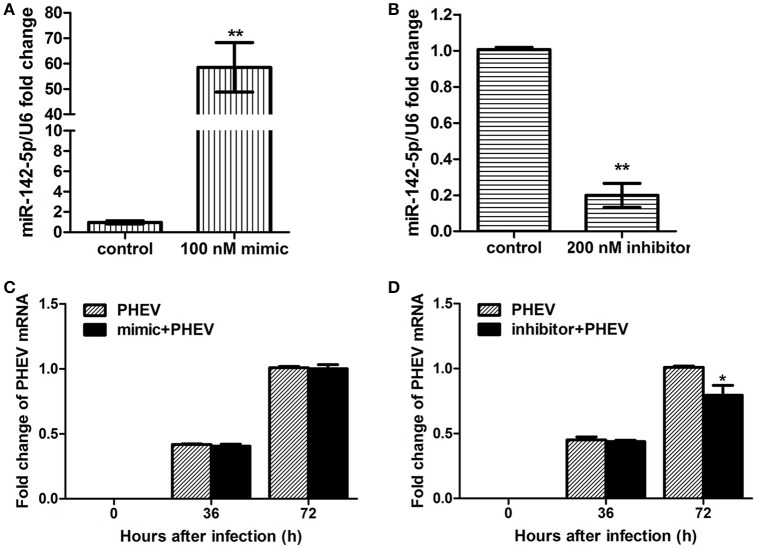
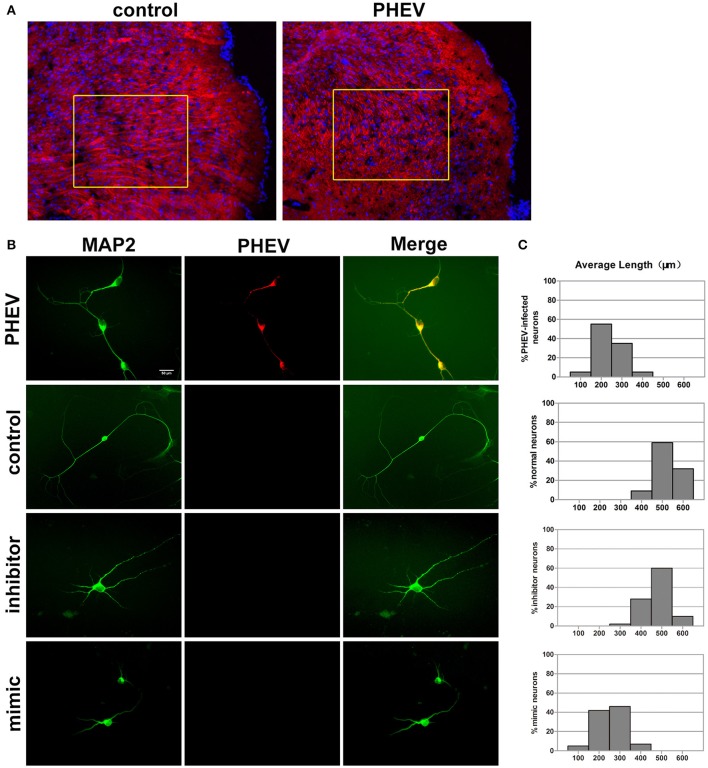
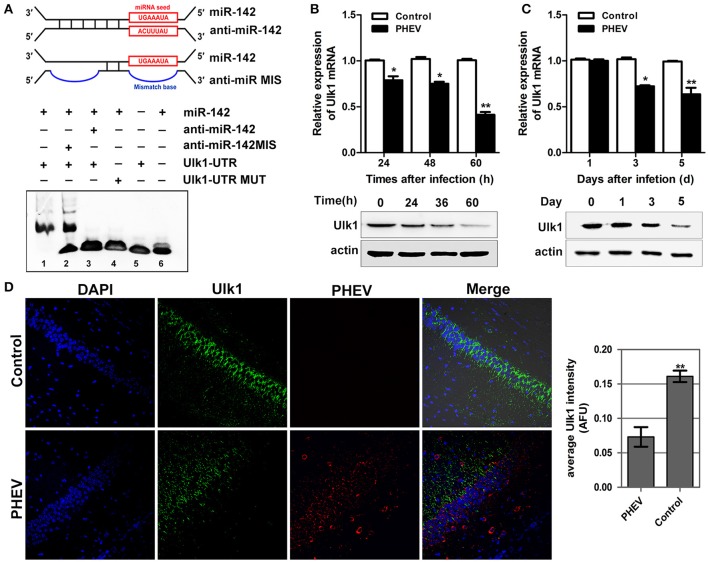
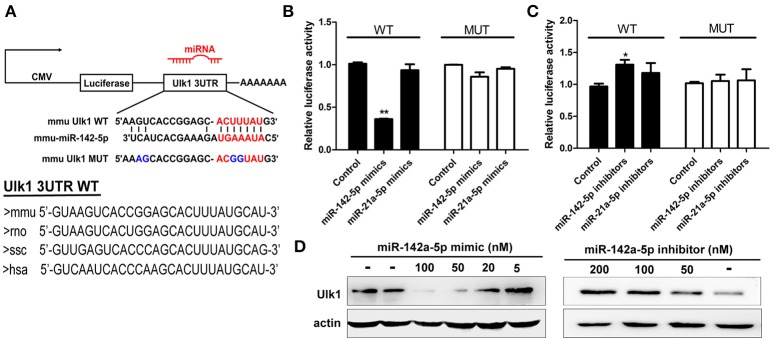
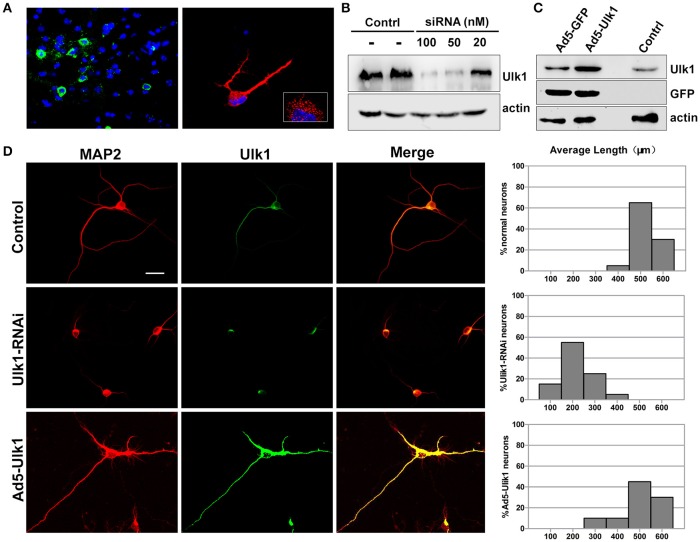
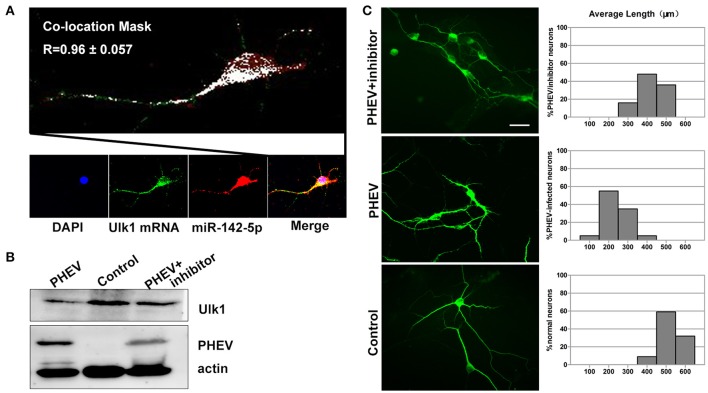
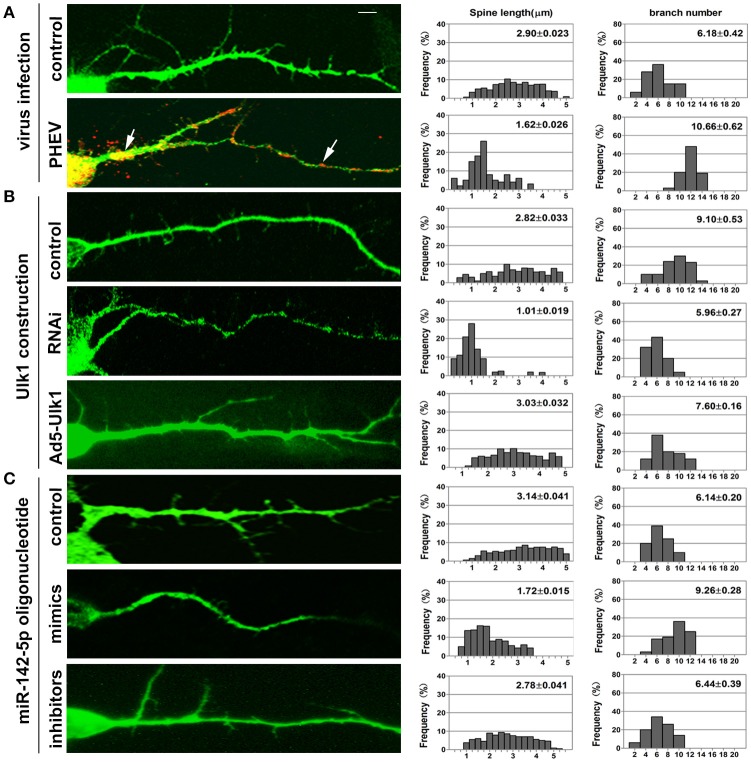
Porcine hemagglutinating encephalomyelitis virus (PHEV) invades the central nervous system (CNS) and causes neurodegenerative disease in suckling piglets, but the understanding of its neuropathogenicity for neurological dysfunction remains limited. Here, we report that miR-142-5p is localized to neurons and negatively regulates neuronal morphogenesis in porcine hemagglutinating encephalomyelitis (PHE). This phenotype was mediated by miR-142-5p inhibition of an mRNA encoding unc-51-like-kinase1 (Ulk1), which controls axon outgrowth and dendrite formation. Modulating miR-142-5p activity by microRNA mimics or inhibitors induced neurodegeneration, including stunted axon elongation, unstable dendritic spine formation, and irregular swelling and disconnection in neurites. Relieving Ulk1 mRNA repression in primary cortical neurons by miR-142-5p antagomirs or replication-deficient adenoviruses encoding Ulk1 (Ad5-Ulk1), which improved rescue of nerve injury, restricted viral replication, and increased survival rate in mice underlying PHEV infection. In contrast, disrupting Ulk1 in RNAi-expressing neurons mostly led to significantly shortened axon elongation and/or an abnormally large number of branched dendrites. Taken together, we demonstrated that the abnormal neuronal morphogenesis underlying PHEV infection was mainly caused by functional mRNA repression of the miR-142-5p target Ulk1. Our data revealed that PHEV adapted to use spatiotemporal control of host microRNAs to invade CNS, and provided new insights into the virus-associated neurological dysfunction microenvironment.
猪血凝性脑脊髓炎病毒(PHEV)侵入中枢神经系统(CNS),并在哺乳仔猪中引起神经退行性疾病,但对于其导致神经功能障碍的神经致病性的了解仍然有限。在此,我们报告miR-142-5p定位于神经元,并在猪血凝性脑脊髓炎(PHE)中负向调节神经元形态发生。这种表型是由miR-142-5p对编码unc-51样激酶1(Ulk1)的mRNA的抑制介导的,Ulk1控制轴突生长和树突形成。通过微小RNA模拟物或抑制剂调节miR-142-5p活性会诱导神经退行性变,包括轴突伸长受阻、树突棘形成不稳定以及神经突不规则肿胀和断开。通过miR-142-5p拮抗剂或编码Ulk1的复制缺陷型腺病毒(Ad5-Ulk1)减轻原代皮质神经元中Ulk1 mRNA的抑制,这改善了神经损伤的挽救、限制了病毒复制并提高了PHEV感染小鼠的存活率。相反,在表达RNAi的神经元中破坏Ulk1大多会导致轴突伸长显著缩短和/或树突分支异常增多。综上所述,我们证明PHEV感染引起的异常神经元形态发生主要是由miR-142-5p靶标Ulk1的功能性mRNA抑制引起的。我们的数据表明,PHEV适应利用宿主微小RNA的时空控制来侵入中枢神经系统,并为病毒相关的神经功能障碍微环境提供了新的见解。